Guide
Summer Power Outage Prep: How to Survive a Heat Wave Without AC

TL;DR
Summer outages in 2026 are projected to break records as grid demand surges during heat waves. Here's how to prepare your home, protect vulnerable family members, and make the most of portable power when AC isn't an option.
Last August, I spent three days at my sister’s house when our power went out during a heat wave. Our home hit 94°F indoors by day two — dangerous territory for my mother-in-law, who has a heart condition. That experience reshaped how I think about summer outage prep. Cold-weather outages are about surviving. Hot-weather outages are about preventing heat emergencies.
Summer 2026 is projected to be another record-stressed grid year. The combination of climate-driven heat waves and rising AC demand creates conditions where rolling blackouts and unplanned outages are increasingly common in many regions. Here’s what I’ve learned about preparing for — and surviving — summer outages.
The Unique Danger of Summer Outages
Summer outages are more dangerous than winter outages for one simple reason: heat kills faster than cold.
In cold-weather outages, you can layer clothing, huddle together, and use a propane heater to stay warm in one room. In heat-wave outages, if you don’t have AC or an active cooling strategy, indoor temperatures can rise to dangerous levels within hours:
- First 2 hours: Indoor temperature rises 2-5°F above ambient
- After 4 hours: Homes without AC can reach 85-90°F in hot climates
- After 12+ hours: Temperatures of 95-100°F indoors are common during heat waves
- Overnight without cooling: Temperatures don’t drop significantly, sleep becomes impossible, and heat stress accumulates
Vulnerable populations (infants, elderly adults, people with chronic illness, people on certain medications) face elevated risks above 90°F. Healthy adults face risks above 95°F with prolonged exposure.
For detailed outage response steps, see our power outage survival guide.
The Priority Hierarchy for Summer Outages
Priority 1: Keep Someone Cool
Don’t try to cool the whole house. Pick one room, cool it hard, and gather everyone there.
The “cool room” setup:
- Smallest interior room with fewest exterior walls
- Close doors to unused rooms
- Cover windows with blackout curtains or reflective material
- Run fans to create cross-ventilation (once outside is cooler than inside)
- Use battery-powered or power-station-run fans continuously
Fans are the unsung hero of outage prep. A 30W desk fan running 24 hours uses 720Wh. A 1,000Wh power station runs multiple fans for a full day — enough to keep one room bearable.
Priority 2: Protect Medical Equipment
CPAP machines, refrigerated medications (insulin), and electric medical devices all need power. A dedicated power station just for medical devices is one of the most important investments for households with health needs.
See our best power station for medical devices guide for specific recommendations by use case.
Priority 3: Food Safety in Hot Weather
Summer outages compound the food safety problem. Ambient temperatures that would be merely uncomfortable in winter become actively dangerous for refrigerated food.
The cycled fridge strategy (from my 11-day Hurricane Irma experience):
- Keep the fridge door closed as much as possible
- Plug the fridge into the power station for 20 minutes every 2-3 hours
- This uses approximately 100Wh per cycle vs. 1,200Wh/day for continuous running
- A 1,000Wh power station keeps the fridge alive for 4-5 days this way
Note: this only works if the fridge has been properly maintained and sealed. A fridge with worn door gaskets won’t hold cold efficiently.
Priority 4: Communication and Information
Your phone is your lifeline to:
- Utility restoration estimates
- Cooling centers and emergency resources
- Friends, family, and neighbors
- Weather alerts (new storms or heat warnings)
Keep phones at 100% when possible. A 15W phone charge takes 5 minutes and uses 1-2Wh. This is the most efficient use of your power station.
The Summer Outage Power Kit
Cooling gear (add $50-200 to standard outage prep)
- Multiple fans (box fan, desk fan, tower fan) — $25-80 each
- Spray bottles for evaporative cooling on skin
- Cooling towels ($15-25 for a pack) — stay cold for hours
- Electrolyte drinks/tablets for hydration
Power gear (standard prep applies)
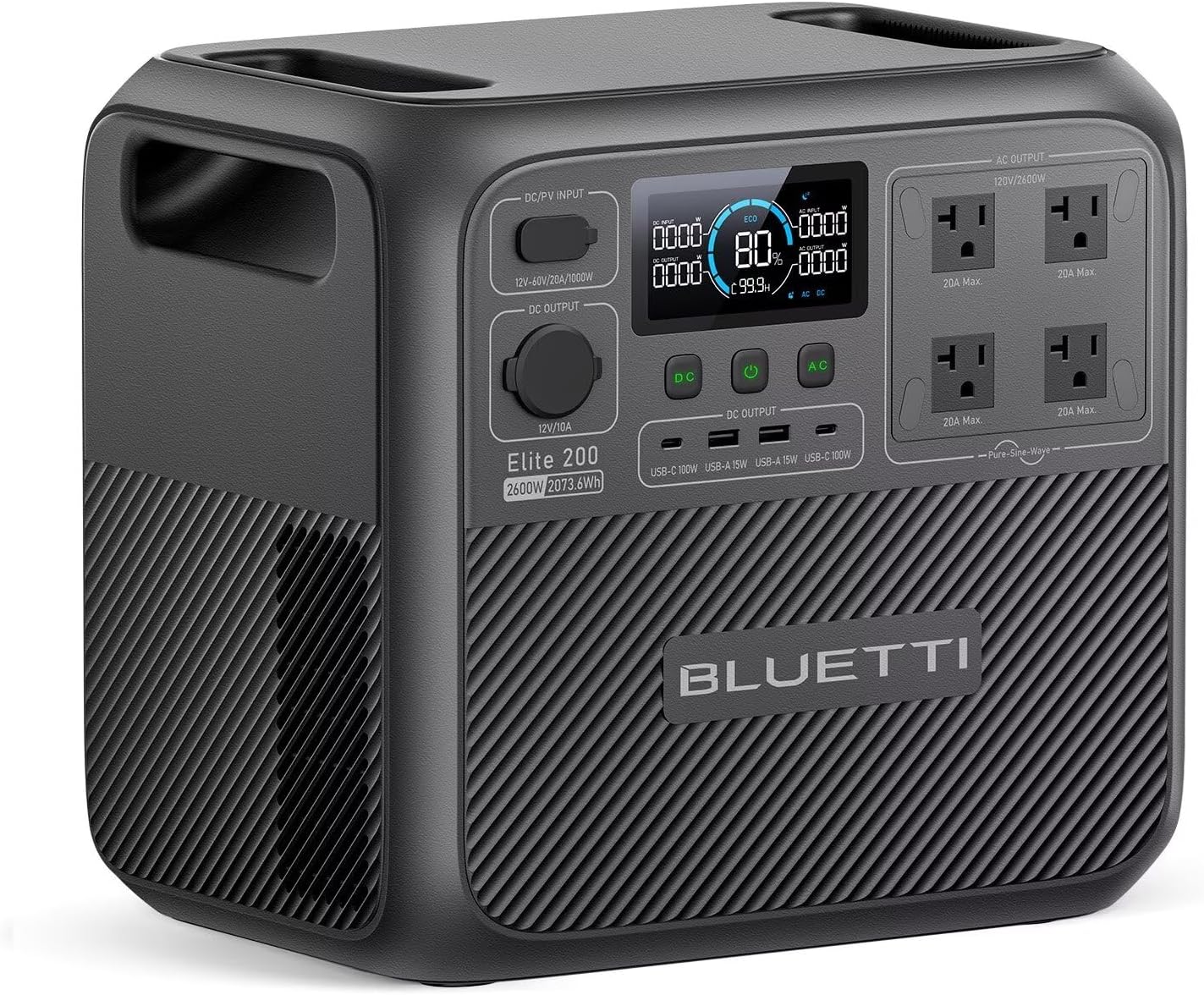
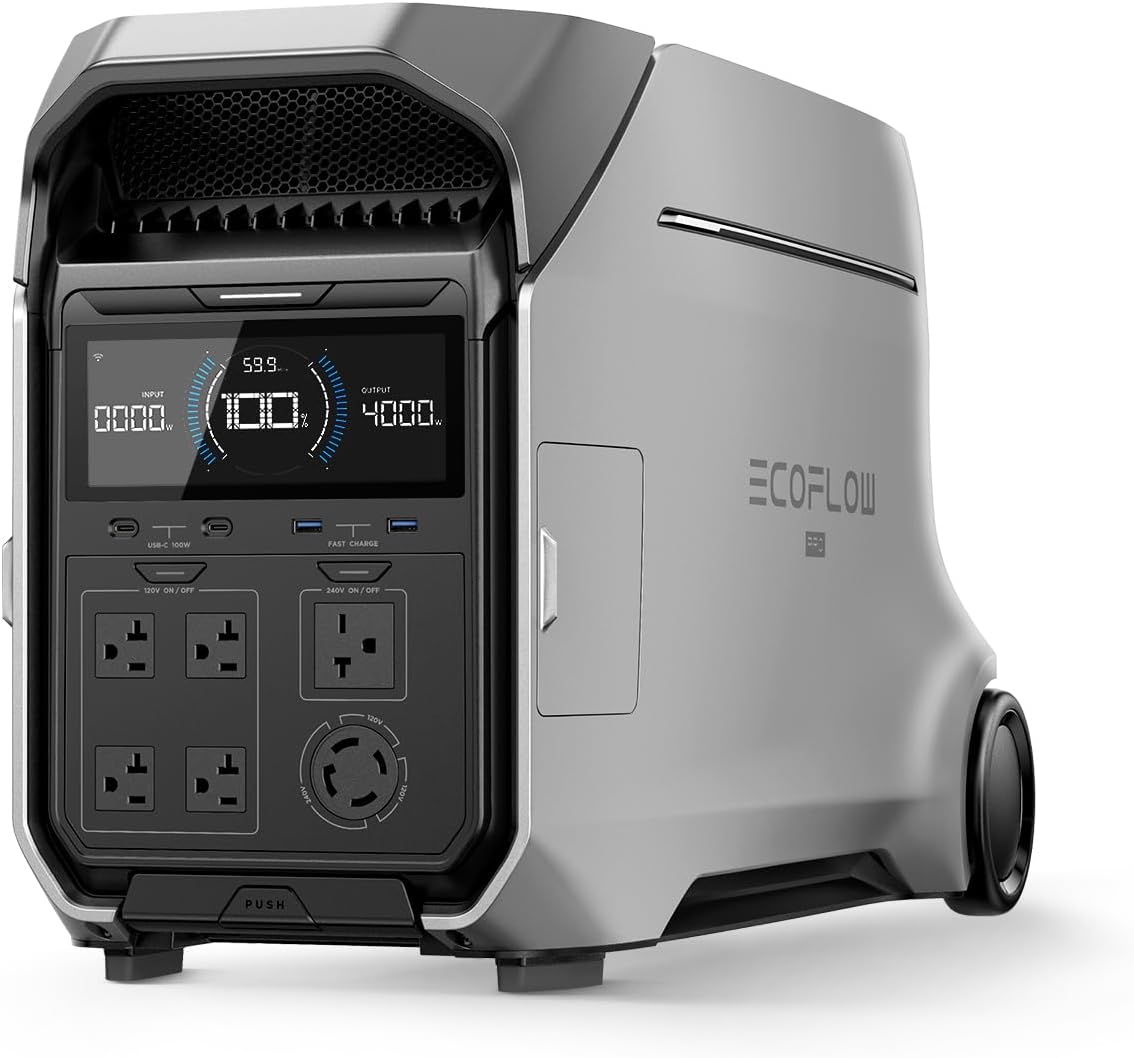
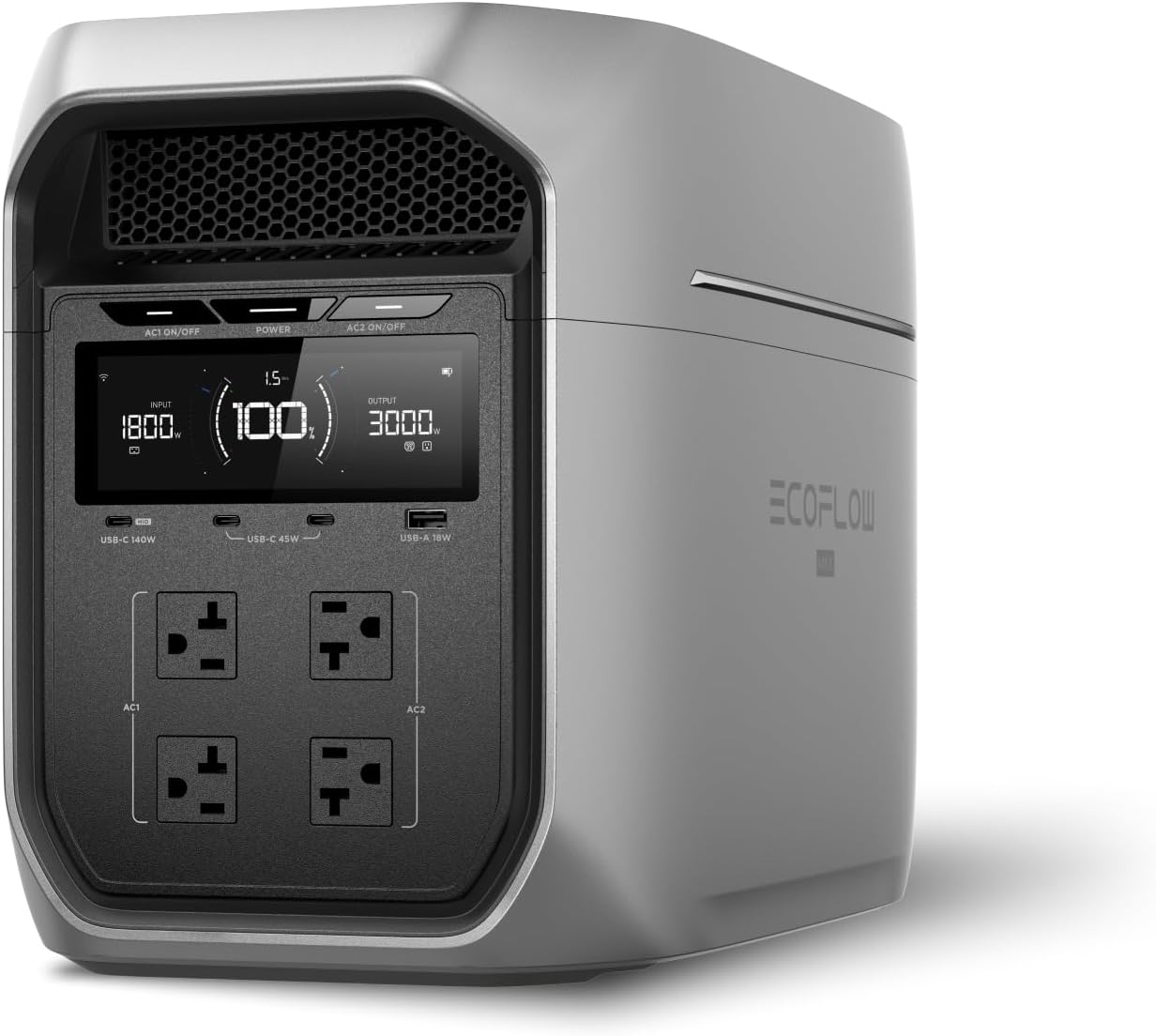
- Primary power station — 1,000-2,000Wh. The EcoFlow DELTA 3 Plus (1,024Wh) or Bluetti Elite 200 V2 (2,073Wh) are top picks.
- Solar panels — especially valuable during summer outages since you have long daylight and clear skies. A 200W panel generates 1,000-1,400Wh during a sunny June day.
- Backup power bank — 20,000mAh for mobile device charging.
Food safety gear
- Coolers with high-quality ice (pre-frozen water bottles are best)
- Large freezer bags to consolidate perishables
- A spare cooler just for medications
Can You Run an AC Unit on a Power Station?
Short answer: yes, but only briefly.
Small window AC units (5,000-8,000 BTU): 500-800W running
- 1,000Wh station: 75-105 minutes
- 2,000Wh station: 2.5-3.5 hours
- 4,000Wh station: 5-7 hours
Portable ACs (10,000-14,000 BTU): 900-1,500W running
- 1,000Wh station: 40-60 minutes
- 2,000Wh station: 1.3-2 hours
- 4,000Wh station: 2.6-4 hours
Central AC: Typically 3,000-5,000W. Requires a 4,000W+ continuous inverter and uses 25,000-40,000Wh per day. Not practical from battery alone.
For brief AC during the hottest hours of the day (say, 2-5 PM when your home is at its worst), a 2,000Wh+ system can provide meaningful relief. See our EcoFlow Wave 2 vs Zero Breeze Mark 2 comparison for specifically-designed portable ACs.
When to Leave
Sometimes the right decision is to evacuate to a cooler location. Signs it’s time to go:
- Indoor temperature exceeds 90°F for more than 4 hours
- Anyone in the household shows heat exhaustion symptoms (heavy sweating, weakness, dizziness, nausea, headache)
- Vulnerable family members (infants, elderly, chronically ill) are uncomfortable
- Utility estimates are longer than 12 more hours
Cooling options:
- Friends or family with working power
- Public cooling centers (libraries, community centers, malls)
- Hotels with AC (budget $100-150/night if not covered by insurance)
- Shopping malls and stores for daytime cooling
Summer outages are not the time to tough it out. Heat emergencies can develop quickly. Make the call to leave early, not late.
Prepping Now for Summer
April-May is the ideal window to prepare for summer outages. Specifically:
This month:
- Test your power station (run it down, recharge, verify capacity)
- Inspect solar panels for winter damage
- Update your emergency contact list
- Identify your cool room (which room will you gather in?)
- Print the location of the nearest cooling center
Before summer:
- Service your central AC (if you have one)
- Check window AC units work
- Replace HVAC filters
- Stock up on fans, cooling towels, electrolytes
- Review medications that require refrigeration
Our emergency preparedness checklist walks through the complete pre-summer checklist.
Related Reading
- Best Power Station for Home Backup — our top home backup picks
- How Long Does a Power Station Run a Fridge? — specific runtime calculations
- Best Portable AC for Camping — portable AC options
- Hurricane Season Power Prep Guide — storm-specific prep
- Power Outage Survival Guide — step-by-step during an outage
Recommended Power Stations
EcoFlow
EcoFlow DELTA 3 Plus
EcoFlow's newest mid-range flagship. The DELTA 3 Plus improves on the Delta 2 with faster charging, LiFePO4 chemistry, and UPS functionality — all at a lower price.
Frequently Asked Questions
Can a portable power station run a window AC unit?
Yes, but runtime is limited. A typical 5,000 BTU window AC unit draws 500-600W running. A 1,000Wh power station runs it for about 90 minutes. A 2,000Wh station runs it for 3-4 hours. For overnight AC during outages, you need a 4,000Wh+ expandable system. More practical alternatives: a 30W fan running 24 hours uses only 720Wh — the same 1,000Wh station runs it for over a day.
What is the safest indoor temperature during a heat wave?
Health authorities recommend keeping indoor temperatures below 85°F (29°C). Above 90°F sustained, heat exhaustion and heat stroke risks increase significantly, especially for children, elderly adults, and people with cardiovascular conditions. During a power outage with rising indoor temperatures, moving to a cooling center, a friend or family member's home, or a public location with AC becomes critical when your home exceeds 90°F for multiple hours.
How long does food stay safe in a powerless fridge during hot weather?
In a 70°F room, a refrigerator keeps food safe for about 4 hours. In a 90°F room (common during summer outages), that time drops to 2-3 hours before fridge temperature exceeds the 40°F safety threshold. A full freezer lasts 48 hours in normal conditions, but only 24-36 hours in summer heat. Keep doors closed, move perishables to a cooler with ice when available, and use a power station to run the fridge in short bursts every 2-3 hours to extend safe time.
Ready to Buy? Here's What We Recommend
Based on our testing and this guide, these are the best options for most people: