EcoFlow Wave 2 vs Zero Breeze Mark 2: Best Portable AC for Camping in 2026

TL;DR
A detailed comparison of the two leading portable AC units for camping: the EcoFlow Wave 2 (5,100 BTU, heating + cooling) vs Zero Breeze Mark 2 (2,300 BTU, ultra-portable). We compare cooling power, portability, noise, battery life, and value.
Specs Comparison
| Spec | EcoFlow Wave 2 | Zero Breeze Mark 2 |
|---|---|---|
| Rating | 4.5 | 4 |
| BTU | 5100BTU ✓ | 2300BTU |
| Weight | 30.9 lbs | 16.5 lbs ✓ |
| Battery | 1159Wh ✓ | 1100Wh |
| Price | $1099 ✓ | $1499 |
| Check Price on Amazon | Check Price on Amazon |
EcoFlow Wave 2 vs Zero Breeze Mark 2: Which Portable AC Wins?
Tent camping in summer heat is brutal without some form of cooling. These two portable air conditioners represent the best options on the market for off-grid cooling — but they take very different approaches. The EcoFlow Wave 2 is a powerful dual-function unit that cools and heats, while the Zero Breeze Mark 2 prioritizes ultralight portability above all else. Here’s how they compare and which one fits your camping style.
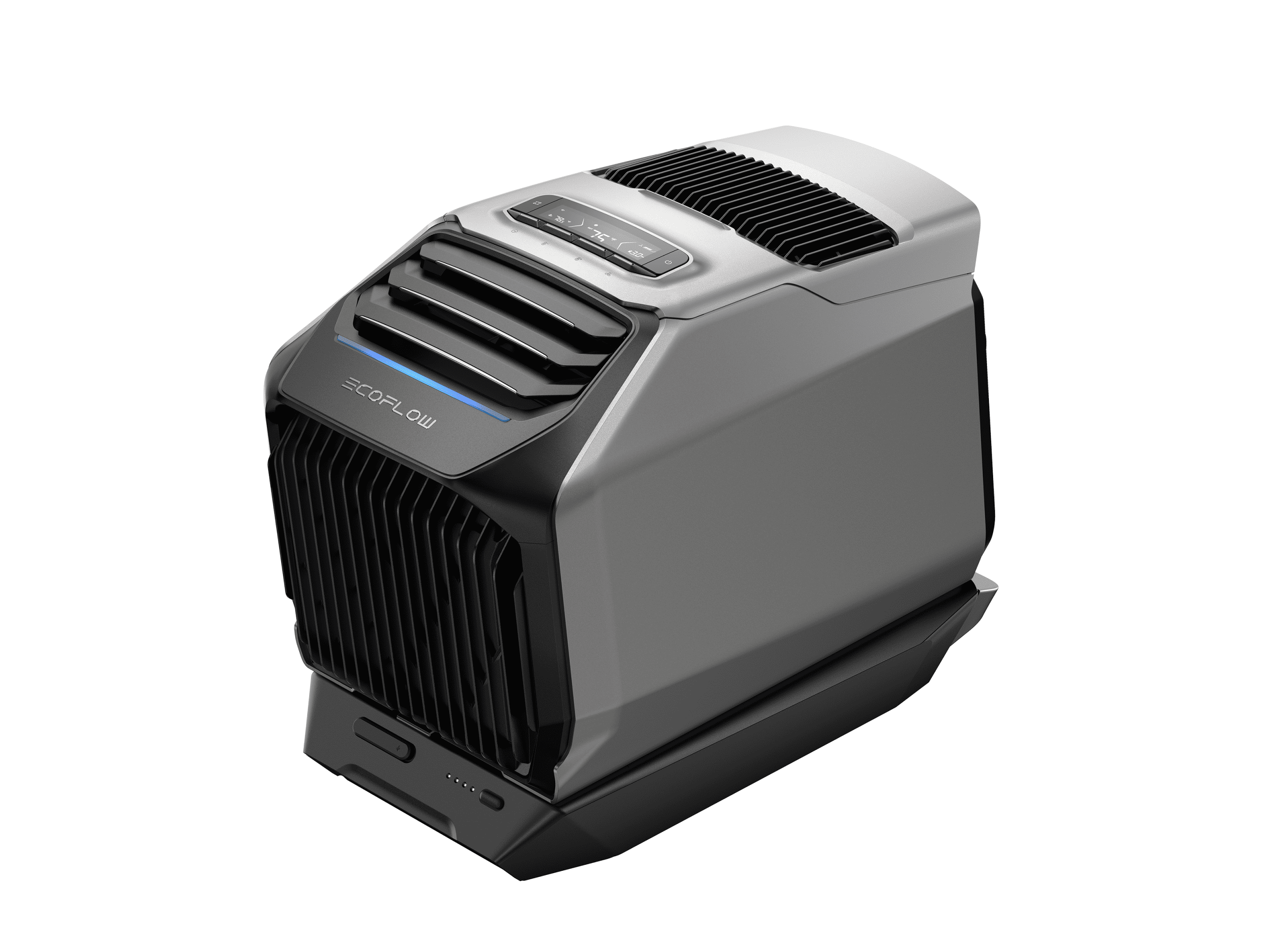
Head-to-Head Spec Comparison
| Spec | EcoFlow Wave 2 | Zero Breeze Mark 2 |
|---|---|---|
| Cooling Power | 5,100 BTU | 2,300 BTU |
| Heating | Yes (6,100 BTU) | No |
| Weight (unit only) | 30.9 lbs | 16.5 lbs |
| Noise Level | 44 dB (low setting) | 52 dB |
| Power Input Options | AC, 12V/24V DC, solar, battery | AC, battery |
| Battery | Optional add-on (~1,159Wh) | Proprietary (included in weight) |
| App Control | Yes (EcoFlow app) | No |
| Price | $1,099 (unit only) | $1,499 (with battery) |
| Best For | RVs, large tents, car camping | Solo tents, ultralight camping |
Cooling Performance
The EcoFlow Wave 2 delivers 5,100 BTU of cooling — more than double the Zero Breeze’s 2,300 BTU. In practical terms, this means:
- EcoFlow Wave 2: Effectively cools spaces up to 100-120 sq ft. Handles a 4-person tent, a small RV bedroom, or a converted van. Can lower a tent’s interior temperature by 15-20°F in hot conditions.
- Zero Breeze Mark 2: Effectively cools spaces up to 40-50 sq ft. Works for a 1-2 person tent or directed personal cooling in a larger space. Lowers temperature by 8-12°F.
If you’re camping in serious heat (90°F+), the Wave 2 makes a meaningful difference in a tent. The Zero Breeze provides relief but won’t transform a hot tent into a comfortable room.
The EcoFlow also adds heating capability at 6,100 BTU — a feature the Zero Breeze lacks entirely. For three-season camping or shoulder-season trips where nights get cold, the Wave 2 pulls double duty.
Edge: EcoFlow Wave 2, by a wide margin.
Portability
This is where the Zero Breeze earns its keep. At 16.5 lbs (with battery), it’s nearly half the weight of the EcoFlow Wave 2 at 30.9 lbs (without its battery). Add EcoFlow’s optional battery and the total system weight approaches 50+ lbs.
For backpack camping, festival camping, or any situation where you’re carrying gear a significant distance, the Zero Breeze is dramatically easier to transport. Its compact form factor with an integrated handle makes it a grab-and-go solution.
The EcoFlow Wave 2 is a car-camping and RV unit. You’ll want to drive it right to your campsite. It’s not something you’re carrying a quarter mile from a parking lot.
Edge: Zero Breeze Mark 2, decisively.
Noise
Neither unit is silent, but there’s a noticeable difference. The EcoFlow Wave 2 runs at 44 dB on its lowest setting — roughly the volume of a quiet library. The Zero Breeze operates at 52 dB, which is closer to a normal conversation level.
In a quiet campsite at night, 8 dB is a perceptible difference. The Wave 2 is less likely to disturb your sleep or bother neighboring campers. Both units are dramatically quieter than any gas-powered generator, but the EcoFlow is the better choice for light sleepers.
Edge: EcoFlow Wave 2.
Power Options and Battery Life
The EcoFlow Wave 2 is far more flexible in how it receives power:
- AC wall outlet — for pre-cooling before heading out or use in structures
- 12V/24V DC — plugs into your vehicle’s power outlet or an RV’s 12V system
- Solar panels — compatible with EcoFlow and other solar panels
- EcoFlow add-on battery (~1,159Wh) — for fully off-grid operation
This versatility means you can run it from your car’s 12V outlet while driving, switch to battery at the campsite, and top up with solar during the day. A complete off-grid cooling system.
The Zero Breeze Mark 2 is simpler: it runs on its proprietary battery or AC power. No 12V input, no solar compatibility. The battery provides roughly 3-5 hours of cooling depending on settings — sufficient for sleeping through a hot night but limited for all-day use.
Runtime estimates (on battery):
| Setting | EcoFlow Wave 2 | Zero Breeze Mark 2 |
|---|---|---|
| Low cooling | 6-8 hours | 4-5 hours |
| Medium cooling | 3-5 hours | 2-3 hours |
| Max cooling | 1.5-3 hours | 1-2 hours |
The EcoFlow’s larger battery and multiple power input options give it significantly more runtime flexibility. You can also run it off a portable power station like the EcoFlow DELTA 3 Plus for extended battery life.
Edge: EcoFlow Wave 2.
Smart Features
The EcoFlow Wave 2 connects to the EcoFlow app via Bluetooth and WiFi, giving you:
- Remote temperature control
- Scheduling (pre-cool your tent before bedtime)
- Real-time power consumption monitoring
- Temperature targets with automatic adjustment
- Firmware updates
The Zero Breeze Mark 2 has manual controls only — buttons on the unit. No app, no remote control, no scheduling. It’s simpler, which some campers prefer, but you lose the convenience of adjusting settings from inside your sleeping bag.
Edge: EcoFlow Wave 2.
Build Quality and Durability
Both units use compressor-based cooling (not evaporative), which means they work in humid climates — a critical factor for summer camping. Build quality on both is solid, with durable plastic housings designed for outdoor use.
The Zero Breeze feels more rugged in-hand, partly because it’s smaller and denser. The EcoFlow is well-built but more complex with additional vents, connections, and features that create more potential failure points.
Neither unit is waterproof. Keep both under shelter during rain.
Edge: Roughly even.
Price
The Zero Breeze Mark 2 costs $1,499 with its battery included. The EcoFlow Wave 2 costs $1,099 for the unit alone, but the add-on battery runs an additional ~$500, bringing the total off-grid package to approximately $1,599.
At comparable total costs, the EcoFlow delivers more than twice the cooling power, adds heating, offers more power input options, and includes app control. The Zero Breeze’s premium buys you portability — and for some buyers, that’s worth it.
Edge: EcoFlow Wave 2 on value. Zero Breeze if portability justifies the premium.
Verdict
These are fundamentally different products for different camping styles.
Choose the EcoFlow Wave 2 if you car camp, RV, or van camp and drive right to your site. The 5,100 BTU cooling handles real tents and small RVs, the heating mode extends its use to three seasons, and the multiple power input options make it the most versatile portable AC available. It’s the better product for most campers.
Choose the Zero Breeze Mark 2 if portability is your top priority. At 16.5 lbs, it’s the only true compressor-based AC you can reasonably carry to a campsite. If you camp where vehicles can’t go, attend festivals where you’re walking with your gear, or just want the lightest possible cooling solution for a solo tent, the Zero Breeze is the only real option.
For more on portable cooling, read our guide to the best portable ACs for camping. And if you’re building a complete campsite power setup, check our campsite power guide.
Frequently Asked Questions
Can the EcoFlow Wave 2 or Zero Breeze Mark 2 actually cool a tent?
The EcoFlow Wave 2 (5,100 BTU) can effectively cool spaces up to 100-120 sq ft, lowering tent temperature by 15-20F. The Zero Breeze Mark 2 (2,300 BTU) handles 40-50 sq ft and lowers temperature by 8-12F, making it suitable for solo tents only.
Which portable AC is better for backpack camping or festivals?
The Zero Breeze Mark 2 at 16.5 lbs with its battery included is the only realistic option for carry-in camping. The EcoFlow Wave 2 weighs 30.9 lbs without its battery, making it a car-camping and RV unit that needs to be driven to your site.
Does the EcoFlow Wave 2 also work as a heater?
Yes, the EcoFlow Wave 2 provides both cooling (5,100 BTU) and heating (6,100 BTU), making it useful for three-season camping. The Zero Breeze Mark 2 offers cooling only with no heating capability.
Read the Full Reviews
EcoFlow
EcoFlow Wave 2
A battery-compatible portable AC with both cooling and heating. Runs on AC power, 12V DC, or EcoFlow's add-on battery for fully off-grid climate control.
BTU
5100BTU
Weight
30.9 lbs
Battery
1159Wh
Zero Breeze
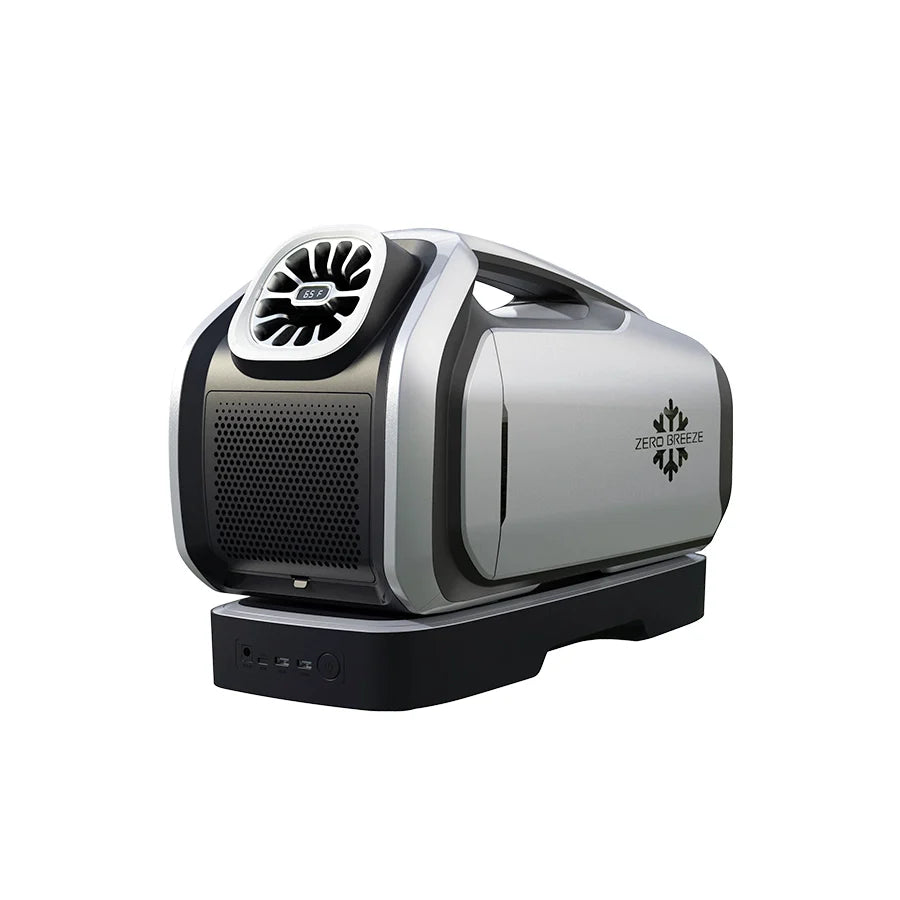
Zero Breeze Mark 2
The most portable true compressor-based AC on the market. At 16.5 lbs with battery-powered operation, it's built for tent camping and personal cooling.
BTU
2300BTU
Weight
16.5 lbs
Battery
1100Wh
More Comparisons
Anker SOLIX C1000 Gen 2 vs EcoFlow DELTA 3 Plus: The Ultimate 1kWh Showdown (2026)
Read comparison →
Anker SOLIX C800 Plus vs Bluetti AC70: Best Mid-Range Power Station Under $650?
Read comparison →
Battle Born 100Ah vs LiTime 100Ah: Which RV Battery Is Better?
Read comparison →
Best 1000Wh Power Station 2026: 4-Way Comparison
Read comparison →
Best 2,000Wh Power Station for Home Backup: Jackery vs EcoFlow vs Bluetti
Read comparison →
Best Portable Power Stations for Camping in 2026
Read comparison →
Best Power Station for RV and Van Life: EcoFlow vs Jackery vs Bluetti
Read comparison →
Bluetti AC180 vs EcoFlow Delta 2: Best Mid-Range Power Station?
Read comparison →
Bluetti AC200P vs Elite 200 V2: Is the Upgrade Worth It?
Read comparison →
Bluetti AC70 vs Anker SOLIX C1000: Best Budget Power Station for Camping
Read comparison →
ChargePoint Home Flex vs Wallbox Pulsar Plus: Which EV Charger Is Better?
Read comparison →
EcoFlow 220W Bifacial vs Jackery SolarSaga 200W: Which Solar Panel Is Better?
Read comparison →
EcoFlow Delta 2 vs Delta 2 Max: Which EcoFlow Should You Buy?
Read comparison →
EcoFlow DELTA 3 Plus vs Anker SOLIX C1000: Which 1kWh Station Wins?
Read comparison →
EcoFlow DELTA 3 Plus vs Anker SOLIX C1000: Which 1,000Wh Power Station Is Better?
Read comparison →
EcoFlow DELTA 3 vs DELTA 3 Plus: Is the Plus Worth $130 More?
Read comparison →
EcoFlow DELTA Pro 3 vs Jackery Explorer 2000 Plus: Best Large Power Station?
Read comparison →
EcoFlow RIVER 3 Plus vs Jackery Explorer 600 Plus: Compact Power Compared
Read comparison →
EcoFlow RIVER 3 vs Jackery Explorer 100 Plus: Best Compact Power Station?
Read comparison →
EcoFlow vs Jackery 2026: Which Brand Is Better?
Read comparison →
Emporia Energy Level 2 vs Lectron V-BOX 48A: Best Budget EV Charger 2026
Read comparison →
Goal Zero Yeti 1000X vs Jackery Explorer 1000 v2: Premium vs Value
Read comparison →
Honda EU2200i vs EcoFlow DELTA Pro 3: Generator vs Power Station
Read comparison →
Jackery Explorer 1000 v2 vs Anker SOLIX C1000: Best Mid-Range Power Station
Read comparison →
Jackery Explorer 2000 v2 vs 2000 Plus: Which Jackery 2kWh Station Should You Buy?
Read comparison →
Jackery SolarSaga 200W vs Bluetti PV200: Which Solar Panel Is Better?
Read comparison →
Jackery vs Bluetti 2026: Which Brand Makes the Better Power Station?
Read comparison →
Renogy 200Ah Smart vs Redodo 200Ah: Which RV Battery Is Better?
Read comparison →
Segway Cube 2000 vs Jackery Explorer 2000 v2: Value vs Refinement
Read comparison →
Tesla Wall Connector vs ChargePoint Home Flex: Which EV Charger Is Better?
Read comparison →
VTOMAN FlashSpeed 1500 vs Bluetti AC180: Mid-Range Showdown
Read comparison →
VTOMAN FlashSpeed 1500 vs EcoFlow DELTA 3 Plus: Value Challenger vs Proven Champion
Read comparison →
Yoshino B2000 SST vs Bluetti Elite 200 V2: Next-Gen 2kWh Battle
Read comparison →