Guide
How the US Power Grid Works: From Power Plant to Your Outlet

TL;DR
Ever wondered how electricity actually gets to your home? This guide explains the US power grid — from generation to transmission to distribution — and why understanding it matters for backup power planning.
Every time you flip a light switch, you’re tapping into one of the most complex machines ever built — the US electrical grid. Understanding how this system works (and where it’s vulnerable) gives you a major advantage when planning your backup power strategy.
This isn’t a textbook on electrical engineering. It’s a practical guide to understanding why your power goes out, why outages are getting worse, and what you can do about it.
From Power Plant to Your Outlet: The Journey of Electricity
Electricity travels through three distinct stages to reach your home:
Stage 1: Generation
Power plants convert energy sources into electricity:
- Natural gas (43% of US generation): Gas turbines and combined-cycle plants. Flexible and fast to ramp up, but dependent on fuel supply chains.
- Renewables (22%): Solar, wind, and hydroelectric. Rapidly growing but intermittent — output depends on weather conditions.
- Nuclear (18%): Provides constant baseload power. Extremely reliable but inflexible — nuclear plants run at full output continuously and can’t ramp up/down quickly.
- Coal (16%): Declining rapidly. Older plants are being retired for economic and environmental reasons.
- Other (1%): Oil, biomass, geothermal.
Generation happens at relatively few, large power plants distributed across the country. The average US state has 50-200 power plants of various sizes.
Stage 2: Transmission (High Voltage, Long Distance)
Electricity leaves power plants at very high voltages — 115,000 to 765,000 volts — and travels across long distances on tall steel transmission towers.
Why high voltage? Higher voltage means less energy lost as heat during transmission. At 765,000 volts, less than 2% of energy is lost over hundreds of miles. At household voltage (120V), the same power would lose most of its energy as heat before reaching the next town.
The US has approximately 160,000 miles of high-voltage transmission lines, forming the grid’s “highway system.” These lines connect generation sources to population centers and allow power sharing between regions.
Vulnerability: Transmission lines are the grid’s most exposed components. They cross mountains, forests, rivers, and plains — exposed to storms, wind, ice, wildfire, and even vegetation growth. A single downed transmission line can remove gigawatts of capacity from the grid.
Stage 3: Distribution (Lower Voltage, Local Delivery)
At substations near your neighborhood, transformers step the voltage down from transmission levels to distribution levels (4,000-35,000 volts). Smaller transformers on utility poles or ground-level pads further reduce voltage to the 120/240V used in homes.
Distribution lines are the wooden or concrete poles running along your street. They carry power the “last mile” from the substation to your meter.
Vulnerability: Distribution infrastructure causes the majority of outages you experience. Tree branches, vehicle collisions, animal contacts (squirrels on transformers are surprisingly common), equipment failure, and localized storms all disrupt distribution. These outages typically affect hundreds to thousands of customers rather than millions.
Why the Grid Fails: Understanding Outage Types
Weather Events (67% of Major Outages)
Severe weather is the leading cause of grid failure:
- Hurricanes: Destroy transmission towers, flood substations, break distribution poles. Recovery can take weeks. Coastal and Gulf states are most affected.
- Ice storms: Heavy ice accumulation on lines causes them to sag and snap. Ice storms can take down hundreds of miles of lines simultaneously.
- Thunderstorms/tornadoes: Lightning strikes equipment, high winds topple trees and poles, tornado debris destroys anything in its path.
- Heat waves: Don’t break physical infrastructure but push demand beyond capacity, causing rolling blackouts (intentional load shedding to prevent uncontrolled failure).
- Wildfires: Destroy distribution infrastructure and trigger preemptive shutoffs (PSPS events) where utilities de-energize lines to prevent fires.
Equipment Failure (15%)
Aging transformers, deteriorating cables, and failing switches cause outages that are typically more localized but can cascade if they occur at critical points.
Vegetation (10%)
Trees and vegetation growing into power lines cause short circuits and outages. Utilities spend billions annually on vegetation management (tree trimming), but the US has millions of miles of lines running through forested areas.
Other Causes (8%)
- Animals (squirrels, birds, snakes contacting equipment) — surprisingly common
- Vehicle accidents (cars hitting utility poles)
- Cyberattacks (increasing concern; targeted attacks on grid control systems)
- Demand overload (more electricity requested than the grid can supply)
- Human error (incorrect switching, maintenance accidents)
The Three US Grids
Most people don’t realize the US doesn’t have one grid — it has three:
Eastern Interconnection
Covers everything east of the Rockies, from the Atlantic coast to roughly the New Mexico/Colorado border. Serves about 70% of the US population. Managed by multiple regional operators coordinated by NERC (North American Electric Reliability Corporation).
Western Interconnection
Covers the western states from the Rockies to the Pacific. Includes the Pacific Northwest’s hydroelectric resources and the Southwest’s solar potential. Managed by WECC (Western Electricity Coordinating Council).
ERCOT (Texas)
The Electric Reliability Council of Texas manages a grid covering about 90% of Texas’s electrical load. This grid is intentionally isolated from the other two to avoid federal FERC regulation.
The Texas grid’s isolation became catastrophic during Winter Storm Uri in February 2021. When generation failed due to frozen equipment, Texas couldn’t import significant power from neighboring states because the connections between ERCOT and adjacent grids have very limited capacity. The result: rolling blackouts for millions, estimated 246 excess deaths, and billions in economic damage.
What This Means for Your Backup Power Strategy
Understanding the grid tells you several things:
1. Outages Are Most Likely at the Distribution Level
Your local distribution infrastructure (the poles and wires on your street) is the weakest link. These outages are typically 1-12 hours and affect your neighborhood. A power station with 1,000Wh capacity handles these easily.
2. Major Weather Events Can Cause Multi-Day Outages
When transmission infrastructure fails, restoration can take days or weeks. If you live in a hurricane, ice storm, or wildfire zone, plan for 3-7 day outages with expandable power stations and solar panels.
3. The Grid Can’t Store Energy — But You Can
The grid is a real-time delivery system. When it fails, the electricity stops. Your power station is personal energy storage — electricity banked for when you need it most. Adding solar panels gives you personal generation capacity too. Together, you have a micro-grid in a box.
4. Grid Reliability Varies Enormously by Location
Some areas have 2-3 hours of outage per year. Others have 15-20+. Check your utility’s reliability statistics and your state’s outage history in our power outage statistics guide to calibrate your backup power investment.
5. Electrification Increases Your Grid Dependence
If you’re switching from gas to electric (heat pump, induction stove, EV), your home becomes more dependent on the grid. A power outage that previously meant “no lights and TV” now means “no heating, no cooking, and no transportation.” This increases the value of backup power. See our home backup power station guide.
The Bottom Line
The US power grid is an engineering marvel that delivers reliable power to 330 million people — most of the time. But it’s aging, stressed by growing demand and intensifying weather, and undergoing a massive (and slow) transition to new energy sources. Understanding its vulnerabilities helps you make informed decisions about your backup power needs.
For most households, a portable power station with solar panels provides practical insurance against the grid’s real-world failure modes — at a fraction of the cost of a generator or whole-home battery system. Browse our power station comparison tool to find the right system for your needs.
Related Reading
- The Real Cost of Power Outages in America — data on outage frequency, cost, and trends
- Power Outage Statistics by State 2026 — state-by-state reliability data
- Power Outage Survival Guide — what to do when the power goes out
- Best Power Station for Home Backup — our top emergency picks
- How Lithium Batteries Work — the science behind your backup power
Recommended Power Stations
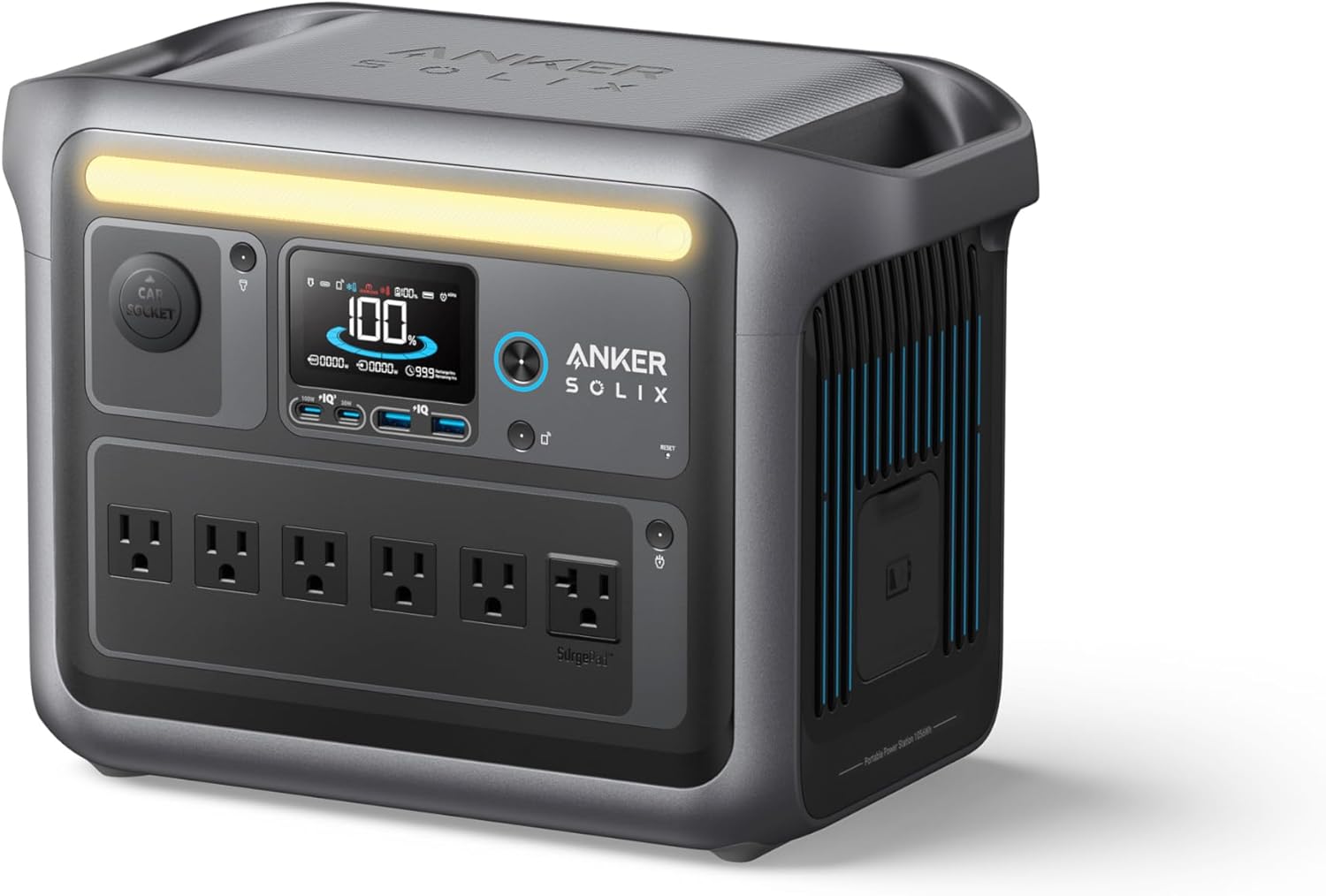
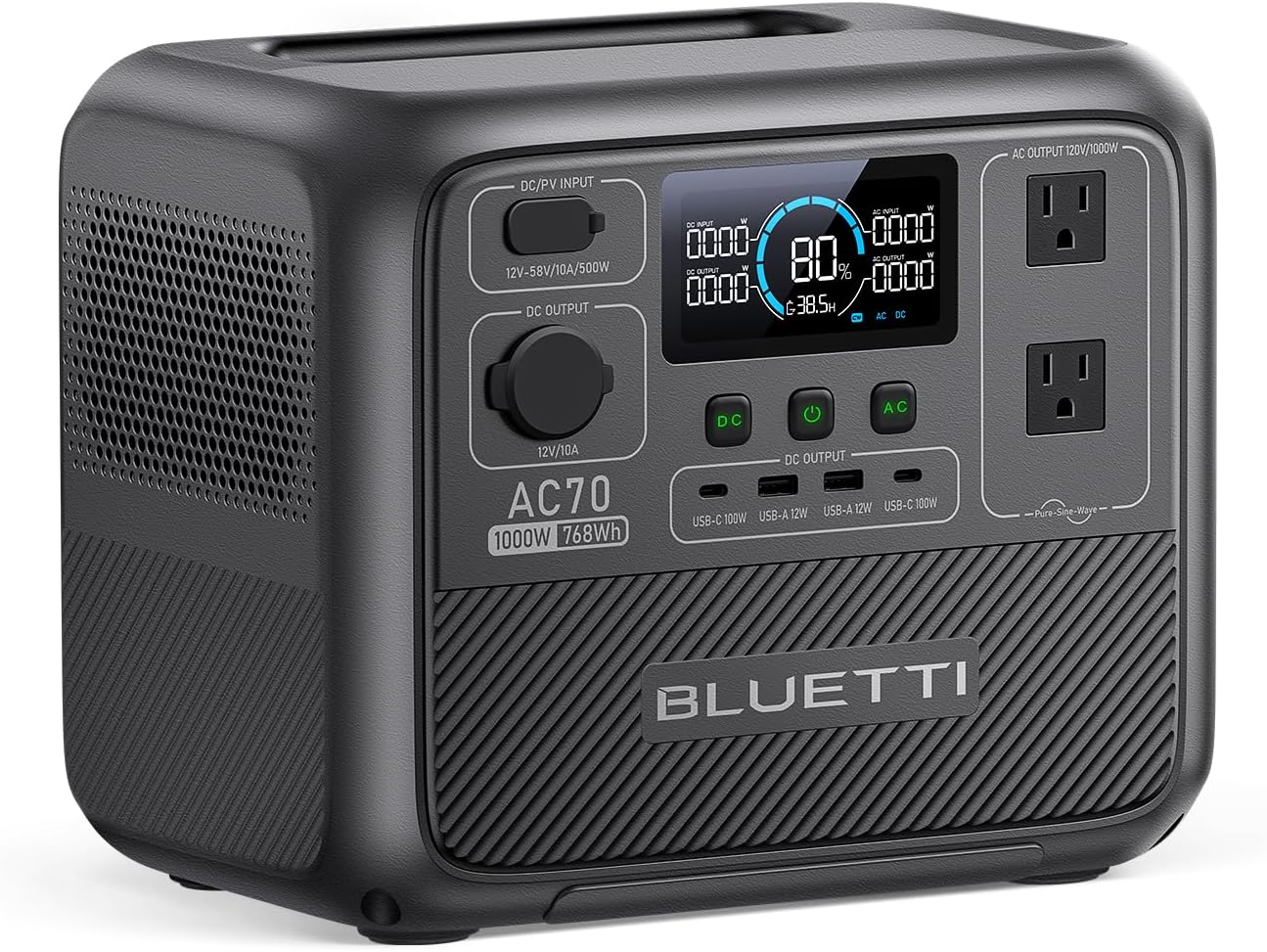
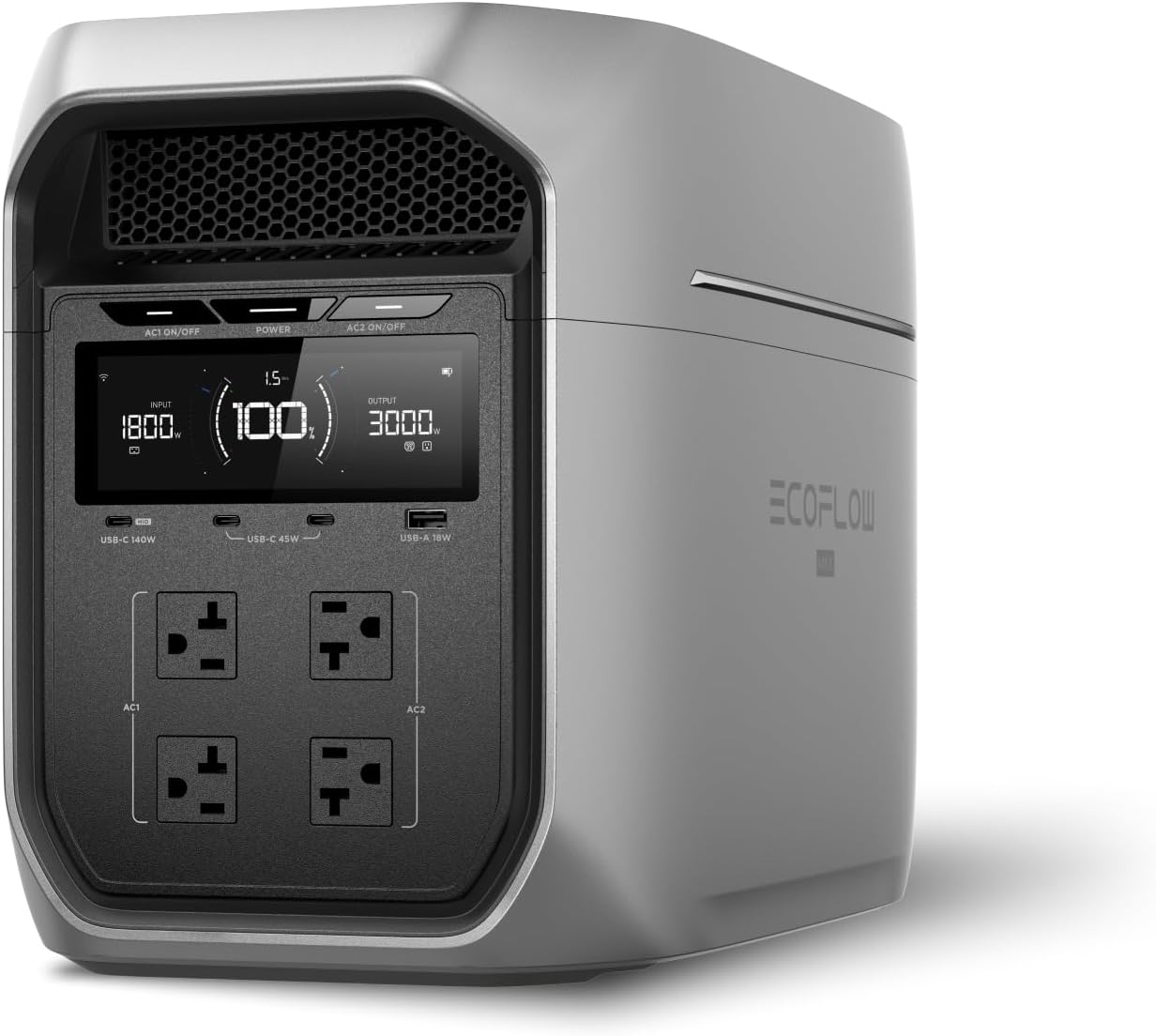
EcoFlow
EcoFlow DELTA 3 Plus
EcoFlow's newest mid-range flagship. The DELTA 3 Plus improves on the Delta 2 with faster charging, LiFePO4 chemistry, and UPS functionality — all at a lower price.
Frequently Asked Questions
How old is the US power grid?
The US power grid was largely built between the 1950s and 1970s. Many key components — transformers, transmission lines, and substations — are now 40-70 years old, well past their designed 25-40 year lifespans. This aging infrastructure is a major contributor to increasing outage frequency. The grid is being upgraded, but the pace of replacement is slower than the pace of deterioration.
Why can't the grid store electricity?
The grid is fundamentally a just-in-time delivery system — generation must match demand at every moment. If demand exceeds supply, the grid frequency drops, triggering automatic load shedding (rolling blackouts) to prevent cascading failure. Grid-scale batteries are being deployed to add storage capacity, but as of 2026, storage represents less than 5% of total generation capacity. This is why home batteries and power stations are valuable — they store energy when you have it and release it when you need it.
What are the three US power grids?
The continental US has three separate, mostly independent grids: the Eastern Interconnection (covers states east of the Rockies), the Western Interconnection (covers states west of the Rockies), and ERCOT (covers most of Texas). These three grids operate independently with limited connections between them. Texas's separate grid (ERCOT) was designed to avoid federal regulation, but this isolation also means Texas can't easily import power from neighboring states during crises — as the 2021 Winter Storm Uri demonstrated.
What happens during a cascading grid failure?
When one part of the grid fails (a transmission line goes down, a power plant trips offline), the remaining infrastructure must absorb the load. If the remaining capacity isn't enough, the overloaded components fail too, causing a domino effect. This is how regional outages spread into massive blackouts — like the 2003 Northeast blackout that affected 55 million people across 8 states and Canada, triggered by a software bug and some overgrown trees in Ohio.
Ready to Buy? Here's What We Recommend
Based on our testing and this guide, these are the best options for most people: