Guide
National Park Camping Power Tips: What's Allowed, What Works, What I Use

TL;DR
National park campgrounds have specific rules around generators, solar, and quiet hours. Here's what's actually allowed in 2026, the gear that works within those rules, and tips from full-time RV life across 27 national parks.
I’ve camped in 27 national parks during my three years on the road. Each one has slightly different rules, slightly different terrain challenges, and slightly different power realities. The basics are similar across the system, but knowing the specifics saves you trouble at the gate or grief at the campsite.
Here’s the practical guide to power in national park campgrounds — what’s actually allowed, what works, and what I personally use.
The Generator Rules
National Park Service campgrounds typically have generator restrictions, but they vary by park and even by campground within a park. The general framework:
Allowed hours
Most parks allow generators only during specific windows:
- Morning: 8am-10am
- Evening: 4pm-8pm
Outside these windows, generators are prohibited. This is roughly 4 hours of allowed run time per day — barely enough to charge a battery bank.
Quiet hours
Quiet hours universally start by 10pm and end at 6am. No generators, loud music, or any noise that could disturb other campers. This is enforced — rangers do come around to check.
Decibel limits
Many parks set a maximum decibel level (typically 60 dB at 50 feet) even during allowed hours. Older “construction-grade” generators (75-85 dB) are illegal even when generators are nominally permitted. Modern inverter generators (Honda EU2200i, Champion 2500i) at ~52-58 dB usually comply.
Generator-prohibited campgrounds
Some campgrounds in popular parks ban generators entirely:
- Yosemite: Several campgrounds in the valley
- Yellowstone: Specific loops
- Grand Teton: Jenny Lake area
- Olympic: Several primitive campgrounds
Check each campground’s rules before booking. The reservation site (recreation.gov) usually lists generator restrictions in the site description.
Why Power Stations Win in National Parks
The combination of restricted generator hours, quiet hours, and decibel limits has made portable power stations the de facto standard for serious campers in national parks. Power stations:
- Make zero noise — usable any time, anywhere
- Don’t violate any park rules — there’s no “battery curfew”
- Don’t disturb other campers — preserve the experience for everyone
- Don’t produce emissions — usable inside tents, vehicles, and confined spaces
A generator that you can only run 4 hours per day struggles to keep a fridge cold or a CPAP running through quiet hours. A power station handles those loads silently, indefinitely.
My Power Station Setup for National Park Trips
For week-long trips in national parks (or shorter if I’m hopping between parks), here’s what I bring:
Primary: EcoFlow DELTA 3 Plus (1,024Wh, 17.6 lbs)
Light enough to carry from the parking pad to a tent site. Enough capacity to power my fridge, lights, fan, and charge devices for 1-2 days without solar. With solar, indefinite.
Solar: 220W bifacial folding panel
Generates 1,000-1,500Wh on a sunny day in most park environments. Set up at sunrise, point at the sun, fold up at dusk. Has paid for itself many times over.
Backup: Anker 737 PowerCore 24K power bank (24,000mAh / 86Wh)
For day hikes away from the campsite, or as redundancy if my main station has any issue. Lives in my daypack.
Total weight: ~32 lbs, easily packed in a vehicle
For more on this kind of setup, see our family camping power setup guide.
Park-by-Park Power Notes
A few specific parks where I’ve learned park-specific lessons:
Yosemite
The challenge: Generator restrictions are strict. The valley campgrounds prohibit generators entirely. Solar can be tricky in heavily wooded sites.
What works: Power station + solar setup with panels deployed in any clearing during the day. Plan for extra capacity since solar charging can be limited by tree cover.
Yellowstone
The challenge: Cold nights even in summer. Cold reduces battery capacity by 10-20%. Bears require all gear (including potentially scented battery packs from food residue) to be stored properly.
What works: Insulated power station storage box. Keep the unit inside the vehicle overnight rather than at the campsite. Wipe down the unit if it’s been near food.
Grand Canyon
The challenge: Heat. Summer temperatures reach 100°F+. Power stations throttle output above 105-110°F internal temperature.
What works: Shade for the power station — never direct sun. Solar panels can be in full sun (they’re designed for it), but route the cable to a shaded power station.
Acadia
The challenge: Coastal humidity, occasional heavy rain. Solar panel output drops in fog, which is common.
What works: Larger power station capacity to bridge cloudy days. Cover the unit during rain, even if the spec says it’s IP65 rated. (See our IP rating guide for what those numbers really mean.)
Glacier
The challenge: Limited sunlight in deep valleys, short usable solar window.
What works: Higher solar capacity (300-400W) to maximize the limited sun hours. Or accept that you’ll be charging from grid every few days at the campground host’s outlet (allowed at most parks for a small fee).
Joshua Tree, Death Valley, Big Bend
The advantage: Massive solar potential. Sun for 10+ hours, low humidity, clear skies.
What works: Even small solar panels overdeliver. Easy to keep multiple power stations topped off indefinitely.
Practical Tips for Park Camping
1. Book sites with solar exposure
When choosing a site on recreation.gov, look at the site photos. Heavily forested sites (under tall trees on all sides) are beautiful but limit solar charging to brief patches of light. South-facing or open sites give you full solar capability.
2. Don’t leave panels unattended
In bear country (most western parks), don’t leave anything outside that smells unusual or could be played with. Solar panels themselves don’t attract bears, but they can be damaged by curious wildlife. Bring them inside the vehicle when leaving the site.
3. Practice “leave no trace” with power equipment
Bring all your power gear — including any cables, tape, or stakes — back home. Don’t leave broken charging cables, dead batteries, or discarded extension cords at sites. Pack out what you packed in.
4. Quiet matters more than rules
Even if your generator is technically legal during allowed hours, if it’s the loudest thing in a half-mile radius, you’ll be the camper everyone resents. The ethic of national parks favors quiet — match that culture with your equipment.
5. Plan for cell service blackouts
Most national parks have minimal or no cell service. A power station that requires an app to control its features becomes a brick if you can’t get online. Make sure your unit has full local control (display + buttons) for everything you need to do — apps should be a nice-to-have, not a necessity.
For more on power station app features, see our Bluetooth and WiFi in power stations guide.
What I Don’t Bring
- Generator: I owned one for the first year of van life. Sold it after 6 months when I realized I never used it during allowed hours and it just took up space.
- More than 1 power station: Single unit + solar covers everything. A second unit is dead weight.
- High-draw appliances: No microwave, no induction cooktop, no electric kettle. Propane camp stove handles cooking for a fraction of the energy budget.
- Extension cords longer than 25 ft: Park sites are typically compact. Long cords just tangle.
Specific Trip Examples
4-night trip to Joshua Tree (March 2026)
- Power: EcoFlow DELTA 3 Plus + 220W solar + power bank
- Daily generation: 1,200-1,500Wh from solar (lots of clear desert sun)
- Daily use: 600-800Wh (fridge + lights + phones + occasional laptop)
- Net: Power station stayed at 80%+ throughout the trip, never approached low
7-night trip to Olympic (June 2026)
- Same power setup
- Daily generation: 600-1,000Wh (cloudier, forested sites)
- Daily use: 700-900Wh (added electric blanket on cold nights)
- Net: Started at 100%, ended at 30%. Cut close on day 6-7. Wouldn’t repeat without 400W of solar in this environment.
10-night cross-park loop (Yellowstone → Grand Teton → Glacier, July 2026)
- Same power setup
- Recharged from car alternator while driving between parks
- Solar generation variable (mountain shade, frequent storms)
- Net: Worked, but used the vehicle charging more than expected. For a longer trip, 400W of solar would have been the right call.
Related Reading
- Family Camping Power Setup — broader camping context
- Best Portable Power Stations for Camping — top picks
- Spring Camping Power Checklist 2026 — seasonal prep
- Best Solar Panel + Power Station Combos — matched bundles
- RV Boondocking Power Guide — for RV national park visitors
- Solar Panel Maintenance Guide — keeping panels working
Recommended Power Stations
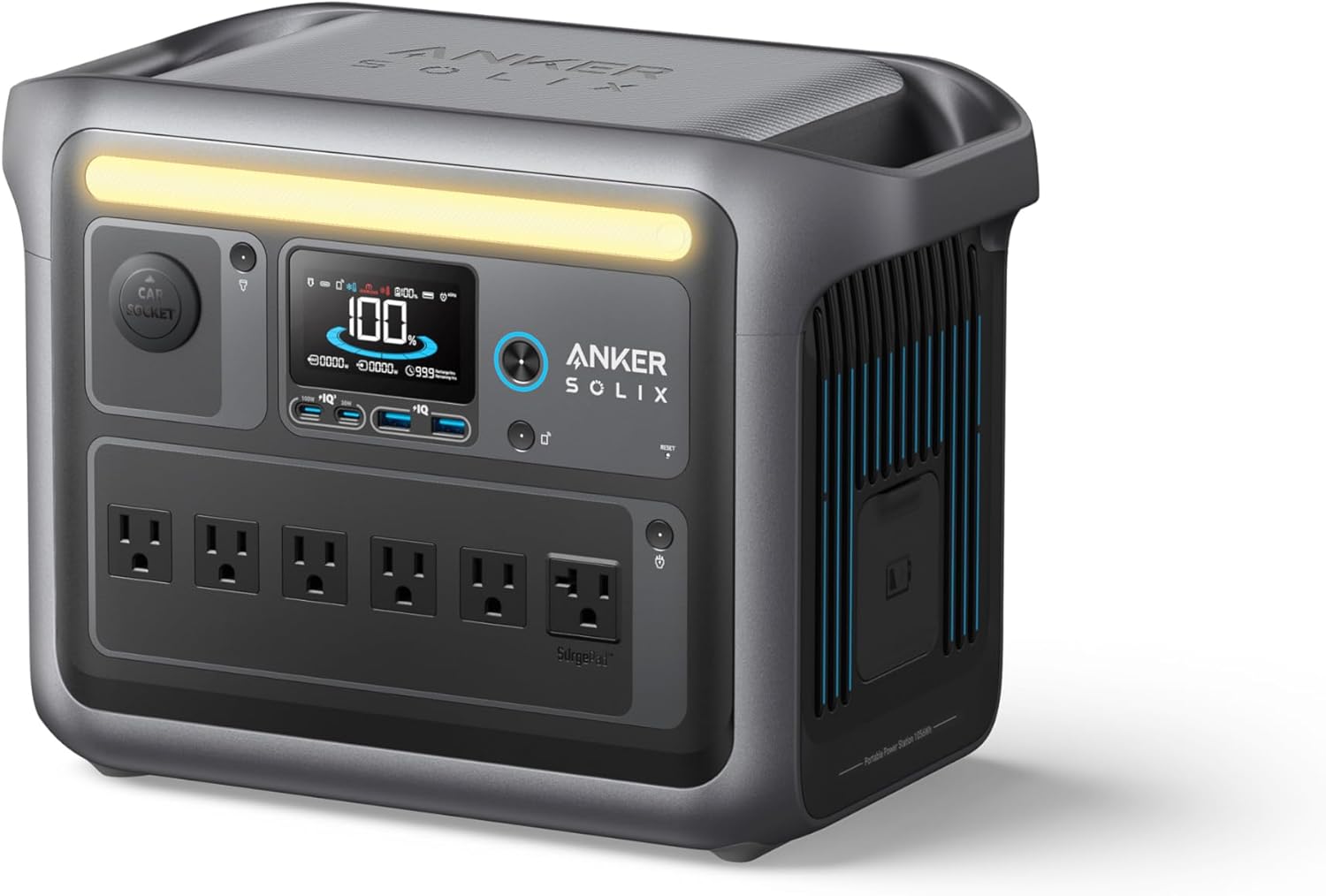
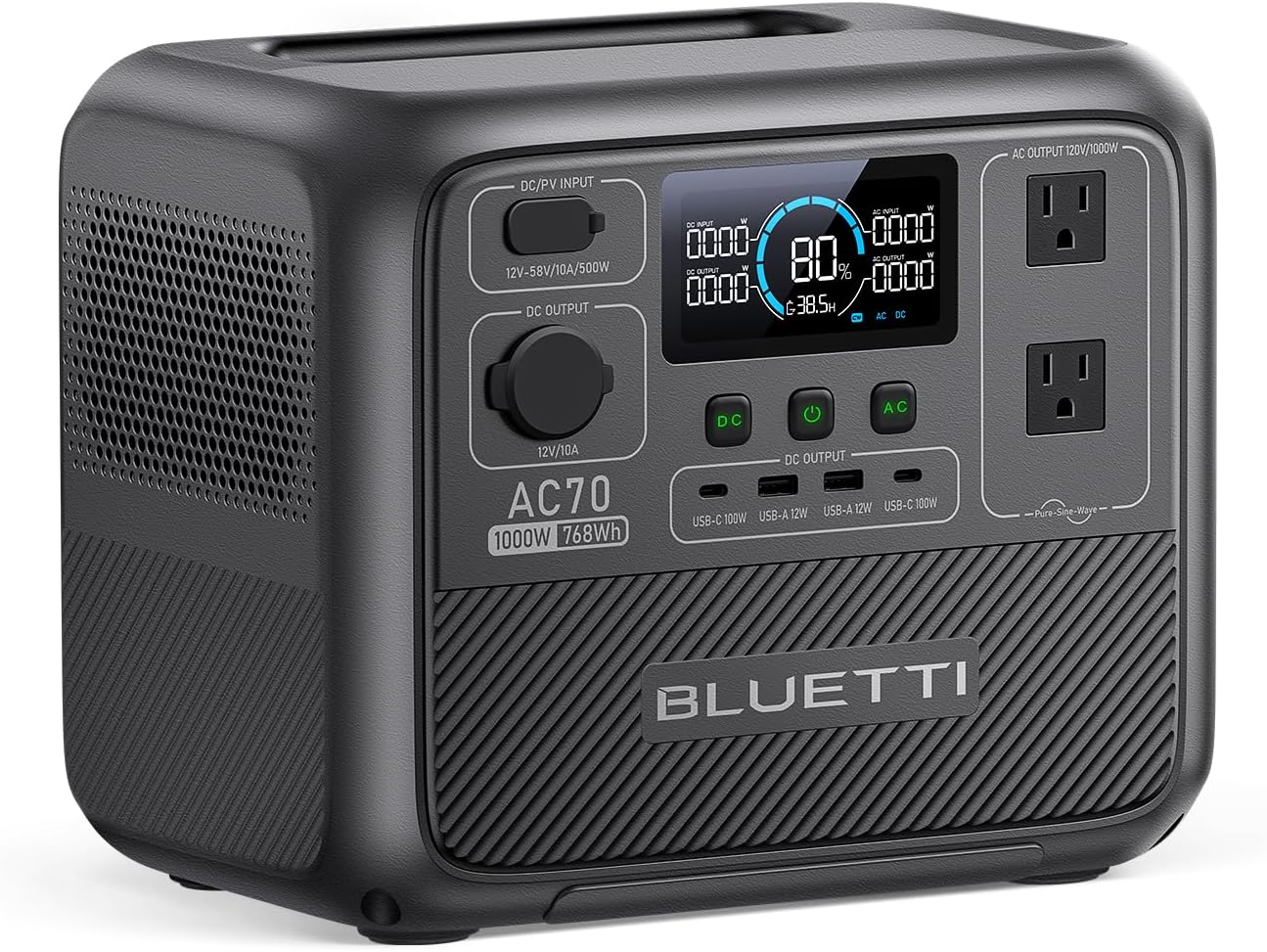
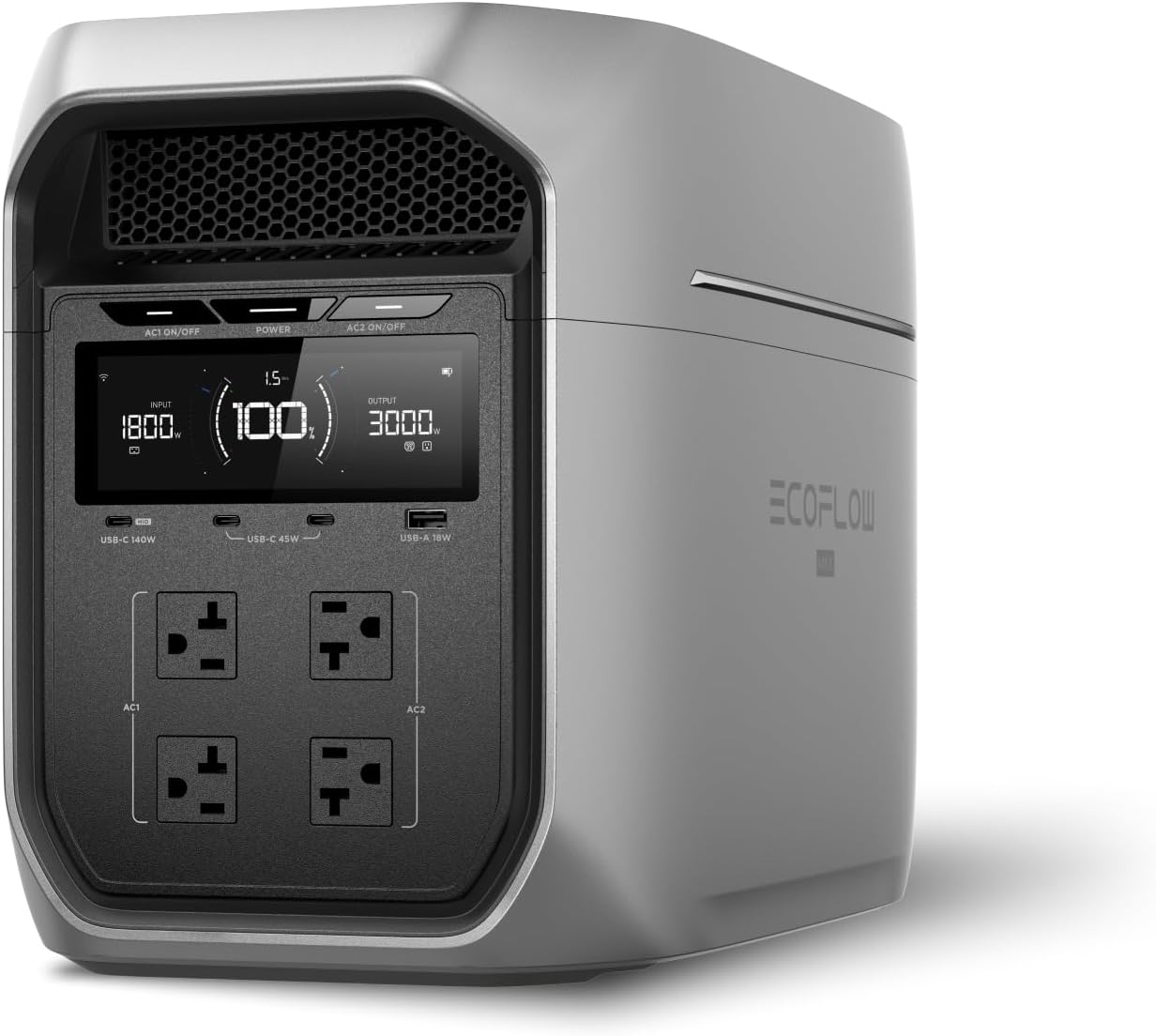
EcoFlow
EcoFlow DELTA 3 Plus
EcoFlow's newest mid-range flagship. The DELTA 3 Plus improves on the Delta 2 with faster charging, LiFePO4 chemistry, and UPS functionality — all at a lower price.
Frequently Asked Questions
Are generators allowed in national park campgrounds?
Most national park campgrounds allow generators only during specific hours (typically 8am-10am and 4pm-8pm) and ban them during quiet hours (10pm-6am usually). Some popular parks (Yosemite Pines, Yellowstone Loops) ban generators entirely in certain campgrounds. Portable power stations are silent and have no restrictions — they're a major reason power stations have become standard equipment for national park campers.
Do national parks have shore power hookups?
Some do, most don't. Backcountry and primitive sites are dry camping (no hookups) by design. Many established campgrounds in popular parks have full-hookup loops in addition to dry sites, but these book up fastest. If you reserve a dry site, you need to bring all your own power. RV parks just outside park boundaries typically have full hookups available.
Can I use a solar panel in a national park campground?
Yes, in nearly all parks. Solar panels are silent, don't disturb other campers, and are explicitly allowed everywhere I've camped. The only restriction is leaving them unattended — wildlife, particularly in bear country, can damage panels left out overnight. Bring panels in or cover them when not actively charging.
What's the best power station for national park camping?
The EcoFlow DELTA 3 Plus (1,024Wh, 17.6 lbs) is my pick for most national park trips — light enough to carry from car to campsite, enough capacity for a 2-3 night stay with normal use, and quiet operation for any time of day. For longer stays or families, step up to the Bluetti Elite 200 V2 (2,073Wh) or pair the DELTA 3 Plus with a 200W solar panel for indefinite range.
Ready to Buy? Here's What We Recommend
Based on our testing and this guide, these are the best options for most people: