Guide
Spring Storm Weekend Prep: A 30-Minute Power Checklist for Today

TL;DR
Severe weather is forecast for many regions this weekend. If you have 30 minutes, here's the power-related prep that actually matters — what to charge, what to position, and what to know if your home goes dark tonight.
Severe spring weather is in the forecast for much of the central and southern US this weekend — the kind of storms that produce widespread outages. If you’re reading this on Sunday afternoon and storms are coming tonight, you have time to prepare meaningfully. Here’s the 30-minute checklist that actually moves the needle.
I’ve lived through a Cat 5 hurricane and dozens of major thunderstorm outages. After Hurricane Irma left me without power for 11 days, I learned what’s worth doing before an outage and what’s a waste of time. This is the short list.
The 30-Minute Power Prep
Minutes 0-5: Charge everything
Plug in:
- Your power station (every kWh in the battery is energy you’ll have during the outage)
- All your phones and tablets
- Laptops and any portable computer batteries
- Power banks (yes, even ones you think are full — top them off)
- Headlamps, flashlights, and any USB-rechargeable devices
- Battery-powered fans
If you don’t have a power station yet — order tonight if outages are forecast for tomorrow, or skip ahead to the analog prep. See our power station for home backup picks for top units, or our first-time buyer guide.
Minutes 5-10: Water
If outages might affect water supply (well water, or city water during extended outages):
- Fill the bathtub
- Fill all available containers — pots, pitchers, water bottles
- Plan for 1 gallon per person per day for 3 days
Even on city water, pressure can drop during extended outages. Fill while you have full pressure.
Minutes 10-15: Food and fridge
- Eat or move highly perishable items (sliced meats, leftovers) to the front of the freezer where they’ll freeze fastest
- Fill empty freezer space with water bottles or zip-top bags of water — they’ll freeze and act as thermal mass during an outage
- Pre-cool the fridge to its coldest setting NOW so it has more thermal mass when the outage starts
- Identify your “cooler bag” — what you’ll move to a cooler with ice if the outage extends past 4 hours
Minutes 15-20: Climate prep
If hot weather:
- Run your AC to pre-cool the house to 68°F
- Close blinds on sunny windows after pre-cooling to retain cool air
- Identify the smallest interior room you can gather in if you need to “cool down” the house’s temperature load
If cold weather:
- Pre-heat the house to 75-78°F
- Close off unused rooms
- Have warm clothes, sleeping bags, and blankets accessible
- Plan a “warm room” with the highest thermal mass (interior bathroom or closet)
Minutes 20-25: Position equipment
- Move your power station to a central, accessible location (not buried in storage)
- Run extension cords to the fridge, modem, and one lamp BEFORE the outage — easier to plug in than scramble in the dark
- Get your manual transfer switch ready (if you have one) and connect the generator/power station inlet cord
- Position flashlights in the rooms you’re most likely to need them (kitchen, bathroom, bedroom)
Minutes 25-30: Communication and safety
- Charge a battery-powered or hand-crank weather radio (NOAA Weather Radio is free and gives storm updates without cell service)
- Confirm everyone in the household knows where the flashlights and power station are
- Identify your “communication window” — when you’ll send updates to family, when you’ll check the news
- Park your car away from large trees if possible
- Bring outdoor furniture inside (tornadoes turn unsecured items into projectiles)
That’s the 30-minute checklist. Beyond this, your prep gets into “longer-term project” territory — installing a transfer switch, ordering a generator, etc. — that you can’t accomplish before tonight’s storm.
What Actually Happens in the First Hour of an Outage
Knowing what to expect helps you respond calmly:
First 5 minutes
- Lights go out. Phones still work (briefly). Don’t open the fridge.
- Note the time of the outage start
- Check if it’s just your house (look at neighbors’ lights)
- If your neighborhood is dark, switch into outage management mode
5-30 minutes
- Activate your power station, plug in fridge + modem + a lamp
- Check the utility’s outage map for restoration estimate
- Text out-of-state contact to confirm status
30 minutes - 2 hours
- Energy budgeting kicks in — figure out what’s draining your power station fastest, decide what’s worth running
- Settle into “stable outage” mode. Don’t panic. Don’t open the fridge.
For the full hour-by-hour breakdown, see our power outage survival guide.
What’s Worth NOT Doing Before a Storm
Some “prep” wastes time:
Running out for last-minute supplies
The store is full, gas stations have lines, and you’re spending the last hour before the storm in traffic. Most of what you’d buy is replaceable; what you have at home right now is enough for a 24-hour outage.
Wrapping windows in plastic or X-taping windows
Doesn’t work. Tape doesn’t strengthen glass; it just creates larger shards if the window breaks. If you have storm shutters, deploy them. Otherwise, focus on interior prep.
Filling jerry cans of gasoline
Stale gas is worse than no gas. Unless you have a generator and a clear plan for using it, the cans will just sit in your garage degrading until you pour them into your car at the next fill-up.
Buying a generator the day before a storm
Rushed purchases lead to bad choices. If you don’t have one already, focus on what you do have. Add a portable power station and generator to your list for after this weekend.
After the Storm
When power returns:
- Wait 5-10 minutes before turning major appliances back on (avoids surge issues)
- Turn breakers back on one at a time if you shut them off
- Check food safety — anything in the fridge above 40°F for 4+ hours should be discarded
- Top off the power station and devices immediately
- Take notes on what worked and what didn’t — feeds your “next time” prep
If outage extends past 24 hours, see our extended outage guide for day-by-day prioritization.
What I Wish I Knew Before Hurricane Irma
Looking back at my 11-day outage:
1. Cell phone service is unreliable but not always dead. When my house lost power, my Verizon coverage degraded to 1 bar but mostly worked for SMS. Knowing this would have changed how I rationed my phone battery.
2. The food in the freezer was safer than I thought. I tossed about $300 of frozen meat thinking it was unsafe. With proper “stays closed for 48 hours” knowledge, half of it would have been fine. Don’t waste food prematurely.
3. The generator’s fuel ran out faster than expected. I bought 5 gallons before the storm. We burned through it in 18 hours running the generator part-time. After that, fuel was the limiting factor for everything. A power station + solar would have eliminated this dependency.
4. The neighbors with backup power became community hubs. People came over to charge phones, cool off, get water from working filters. I learned the value of being the prepared house, not the prepared person — having extra capacity that you can share is one of the highest-value uses of backup power.
5. The storm itself was less scary than the aftermath. During the storm, you’re indoors, focused, dealing with immediate threats. The next 10 days of summer heat, no AC, no refrigeration, no normal — that’s the prolonged challenge. Plan equipment for the aftermath, not just the storm.
The 5-Year Investment Plan
If this weekend’s storm is your wake-up call, here’s what to put on your calendar over the next 5 years:
Year 1 (this week, post-storm):
- Order a 1,000Wh power station ($500-700)
- Build an emergency kit with weather radio, headlamps, batteries, first aid, and water storage
Year 2:
- Add a 200W solar panel to your power station ($300-400)
- Test the system seasonally; familiar with usage patterns
Year 3:
- Add a manual transfer switch for whole-circuit backup ($1,400-1,800 installed)
- Or add an expansion battery if your station supports it
Year 4-5:
- Decide whether to upgrade to a larger expandable system or add whole-home capabilities
- Consider rooftop solar if not already installed
This timeline lets you build resilience incrementally rather than panic-spending. The goal is being prepared without overspending or buying things you don’t need.
Related Reading
- Power Outage Survival Guide — extended outage management
- Best Power Station for Home Backup — top picks
- Tornado Season Power Prep — fast-moving storm prep
- Hurricane Season Power Prep Guide — coastal storms
- Real Cost of Power Outages in America — context on the trend
- How to Build an Emergency Power Kit — comprehensive supply list
Recommended Power Stations
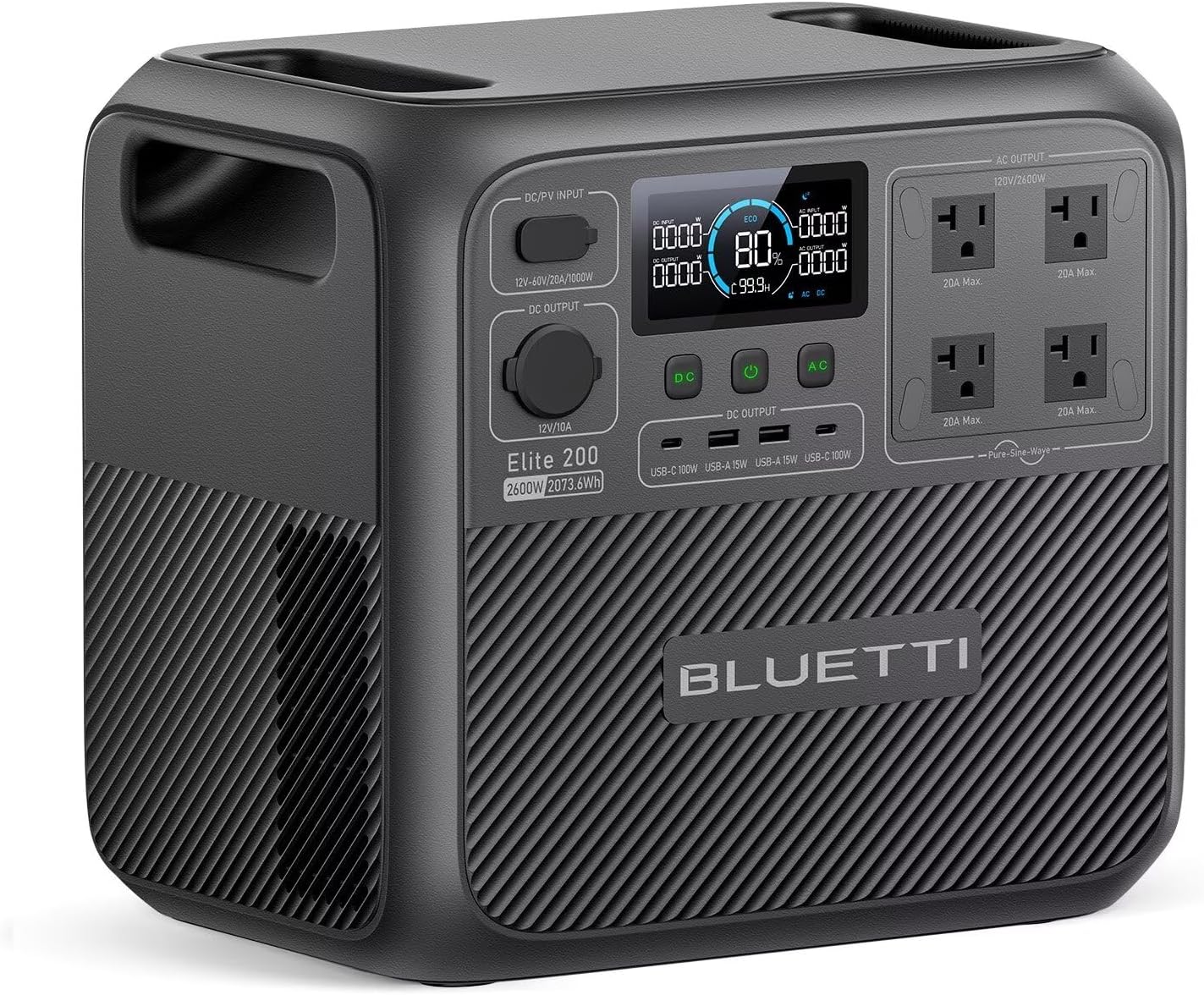
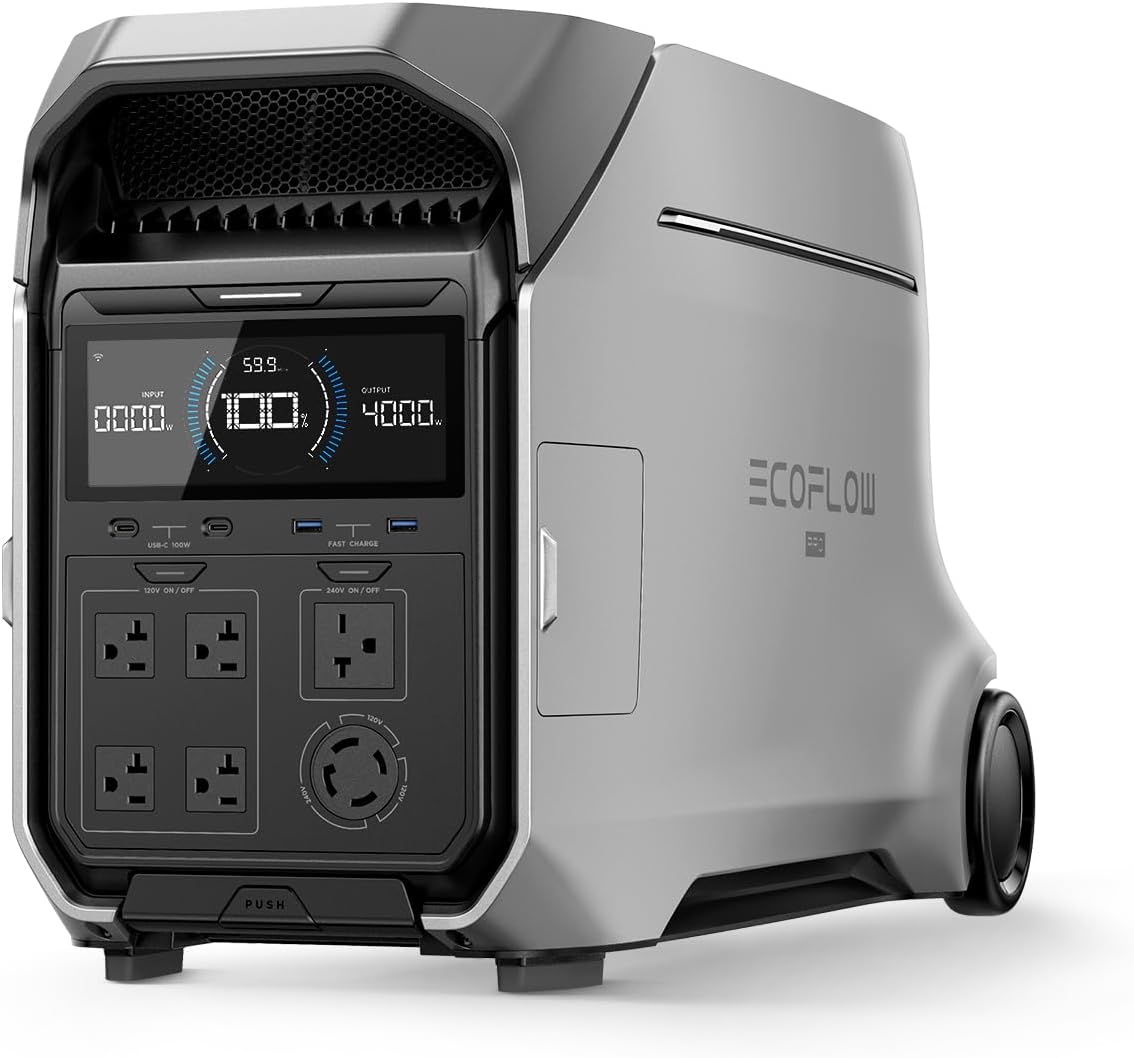
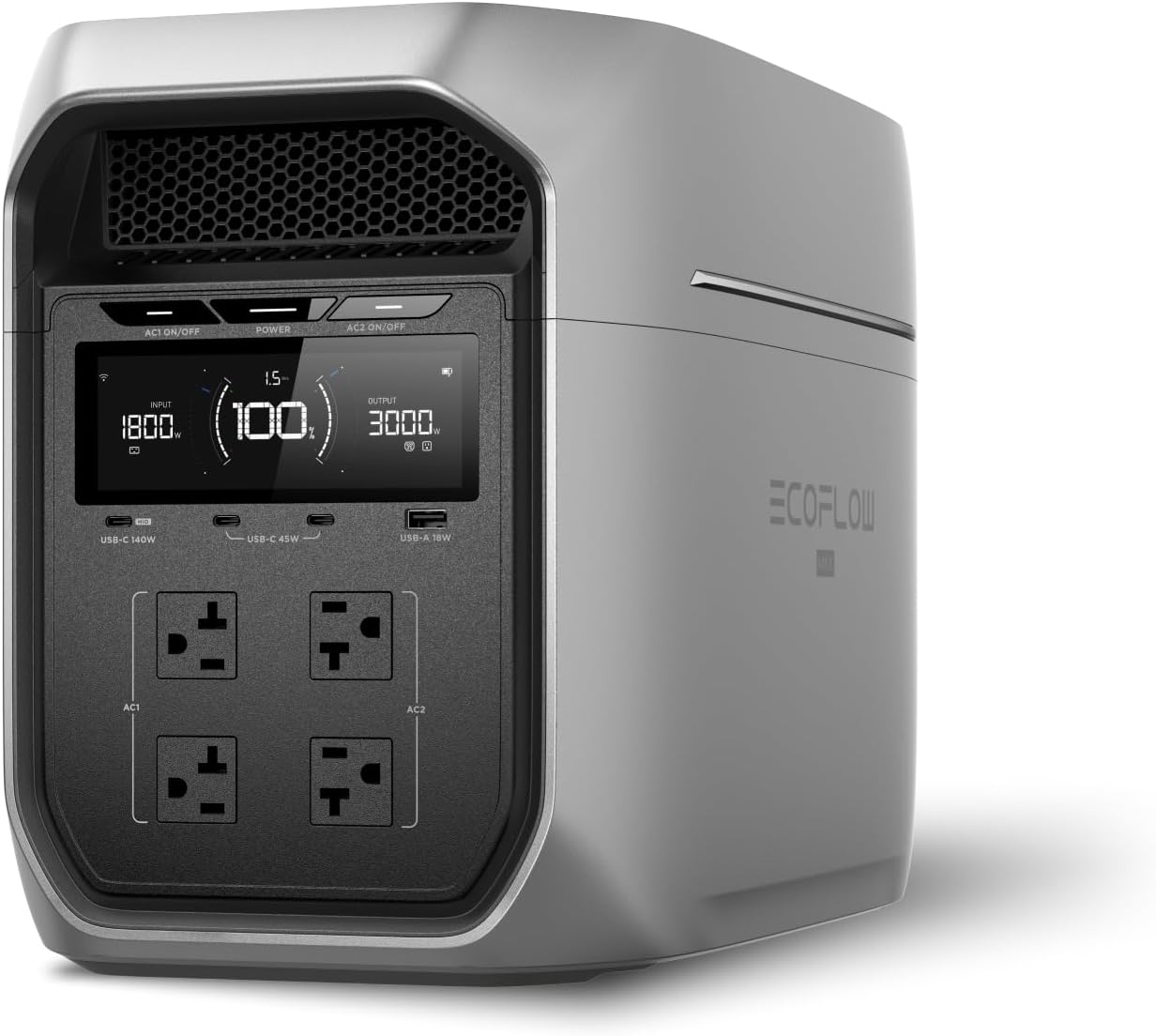
EcoFlow
EcoFlow DELTA 3 Plus
EcoFlow's newest mid-range flagship. The DELTA 3 Plus improves on the Delta 2 with faster charging, LiFePO4 chemistry, and UPS functionality — all at a lower price.
Frequently Asked Questions
What should I do right now to prepare for a power outage tonight?
In order: (1) charge your power station and all devices to 100%, (2) fill water containers and the bathtub, (3) move perishable food to the freezer's coldest spots, (4) pre-cool your home if it's hot weather, (5) park your car so it's not blocked by potential debris, (6) gather flashlights and check battery dates. The whole process takes 20-40 minutes and dramatically reduces the impact of any outage that occurs.
How long can a fridge stay cold during an outage?
A full refrigerator stays at safe food temperatures for 4 hours if the door stays closed. A full freezer lasts 48 hours, half-full lasts 24 hours. Every door opening loses 3-5 minutes. To extend safe time during a forecast outage: pack the fridge tight, freeze water bottles to fill empty space in the freezer, and move ice from your ice maker to a cooler if you have one.
Should I unplug my electronics before a storm?
For sensitive electronics not on a surge protector — yes. The biggest risk is the surge when power returns, not the outage itself. Unplug computers, TVs, expensive audio equipment, and anything connected to your network (modems, routers) just before bedtime if storms are forecast. Items on quality surge protectors can usually stay plugged in. Your refrigerator can stay plugged in (it's not very surge-sensitive).
What's the most common mistake people make during outages?
Opening the fridge repeatedly to 'check on things.' Each opening drops the internal temperature toward danger zone by another 3-5°F and resets your safe-food timer. The second-most-common mistake is running a generator in the garage or near windows, which causes carbon monoxide poisoning. Plan now to keep the fridge closed and run any generator at least 20 feet from your home with exhaust pointed away.
Ready to Buy? Here's What We Recommend
Based on our testing and this guide, these are the best options for most people: