Guide
Tax Day 2026: The Smartest Power Station Buys for Your Refund

TL;DR
If you're getting a tax refund this week, here's exactly how to put $300, $700, or $1,500 of it toward backup power that pays for itself within a year. Specific picks at every price point.
If you’re one of the roughly 65% of US filers expecting a refund this April, the IRS will deposit an average of about $3,100 in your account. Some of that’s already earmarked — paying down credit cards, building an emergency fund, taking the family somewhere. But if you have $300, $700, or $1,500 of flexibility, backup power is one of the few categories where the math actually works out: you spend money once, save money on every outage for a decade, and have a useful tool the rest of the time.
Here’s how I’d allocate refund money to backup power at three specific price points, based on what’s worth buying right now in April 2026.
$300 Refund Tier: The Starter Kit
At this price you can’t get a real home backup system, but you can solve the most common acute problem: charging phones and small electronics when the grid goes down for a few hours.
EcoFlow RIVER 3 — $199, 245Wh, 600W output
Enough to keep phones, a router, and a laptop running for a few hours. Light enough to carry between rooms, in the car, or on a camping trip. The 600W continuous output is the limiting factor — it won’t run a refrigerator or anything with a motor.
With your remaining ~$100:
- A small 60-100W folding solar panel adds emergency recharge capability
- Or a 20,000mAh USB-C PD power bank (74Wh, ~$60) for personal device backup
- Or a battery-powered LED lantern + emergency radio + first aid kit
Honest assessment: Useful, but limited. If your goal is real outage protection, save up to the next tier.
$700 Refund Tier: The Sweet Spot
This is where backup power genuinely pays for itself. A 1,000Wh-class power station handles a typical 12-24 hour neighborhood outage — fridge, lights, WiFi, and devices — without major sacrifice.
EcoFlow DELTA 3 Plus — $649, 1,024Wh, 1,800W output
My current top pick for the average buyer. 1,024Wh covers a full workday of home office or a typical short outage. 1,800W output handles any household appliance you’d reasonably plug in (microwave, kettle, hair dryer). 17.6 lbs is light enough to carry one-handed. Charges from 0-100% in ~40 minutes from a wall outlet.
Alternative: Anker SOLIX C1000 — $699, 1,056Wh. Slightly heavier (27.6 lbs) but with one more AC outlet. 5-year warranty.
With your remaining $50-100:
- A heavy-duty extension cord rated for the wattage you might pull
- A surge protector strip for plugging multiple devices into one AC outlet
- A simple battery-monitor app or USB power meter for testing
For a deeper comparison of these two, our EcoFlow DELTA 3 Plus vs Anker SOLIX C1000 head-to-head breaks down which fits which use case.
$1,500 Refund Tier: Real Backup
At this level, you can buy the system most households should actually have — enough capacity for multi-day outages, plus solar panels for unlimited recharge.
Recommended bundle: EcoFlow DELTA 3 Plus ($649) + 400W of solar panels (~$700) + cables ($50)
Why this combination beats spending it all on one bigger station: Solar transforms your power station from a finite battery into a renewable energy source. On a sunny day, 400W of panels generates 1,500-2,500Wh — more than the station’s full capacity. Once you have solar, even multi-day outages become survivable with normal usage.
Alternative: Bluetti Elite 200 V2 ($1,099) + a 200W panel ($300). Bigger battery, less solar. Better for people who don’t want to deploy panels regularly. Worse for people in extended-outage regions.
For matched bundles, see our best solar panel + power station combos guide.
The ROI Math
Backup power isn’t a depreciating purchase like a TV or a vacation. Here’s how I think about the value:
Direct outage savings (per event):
- Spoiled food avoided: $150-300
- Hotel night avoided: $100-200
- Lost wages avoided (work-from-home): $200-400
- Restaurant meals avoided: $40-80
- Average per-event value: $400-1,000
At the $700 tier, breaking even requires preventing 1-2 average outages.
Useful life: 8-12 years for a LiFePO4 power station. That’s a lot of outages to prevent over a decade. Plus all the camping, tailgating, and RV use in between, which is really where most owners get the most enjoyment from theirs.
For a full cost analysis, see our are portable power stations worth it guide.
What I’d Avoid This Tax Day
Off-brand power stations under $300. The internet is full of unfamiliar names selling 1,000Wh stations for $250-300. They’re nearly always Li-NMC chemistry (short cycle life), with unknown BMS quality, and warranty support that disappears within months. The $400-500 you save evaporates the first time something goes wrong. See our 9 power station mistakes article for the full warning list.
Buying capacity you don’t need. A 4,000Wh power station is overkill for an apartment dweller who’s never seen an outage longer than 6 hours. Buy for your realistic use case, not a hypothetical hurricane scenario.
Power stations without LiFePO4 chemistry. In 2026, paying for Li-NMC is paying for 2-3x shorter battery life. Every quality manufacturer offers LiFePO4 at this point.
What I’d Actually Spend $3,100 On
If your full refund is $3,100 and you don’t have an emergency fund: build the emergency fund first.
If your emergency fund is solid and you want maximum value from the refund:
- $1,500 toward backup power — DELTA 3 Plus + 400W solar (your “house batteries”)
- $300 toward an expansion battery if your station supports it (gives you 2,000Wh+ total)
- $500 toward smart-home upgrades — surge protectors, battery-backup smoke detectors, a quality first aid kit
- $800 to wherever else it goes — vacation, retirement, savings
That’s a real, complete home resilience setup that handles 90% of disaster scenarios most American households face — for the price of one cheap used car.
Related Reading
- Are Portable Power Stations Worth It? — full cost analysis
- Best Power Station for Home Backup — top picks for outage protection
- Tax Refund Power Station Buying Guide 2026 — last year’s edition for comparison
- 9 Expensive Mistakes Buying a Power Station — what to avoid
- How to Size a Power Station — calculate your actual needs
- Best Solar Panel + Power Station Combos — bundled kits
Recommended Power Stations
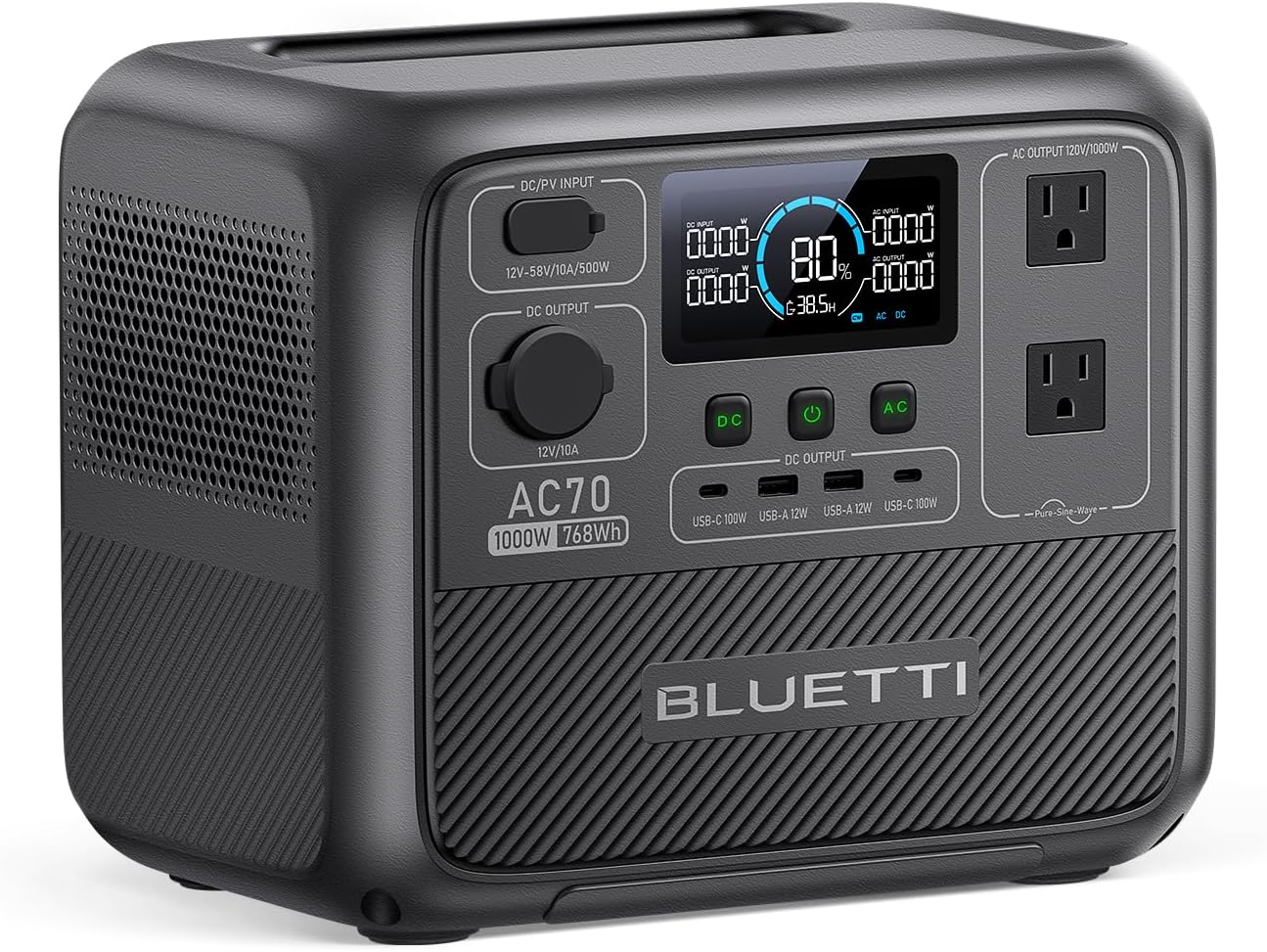
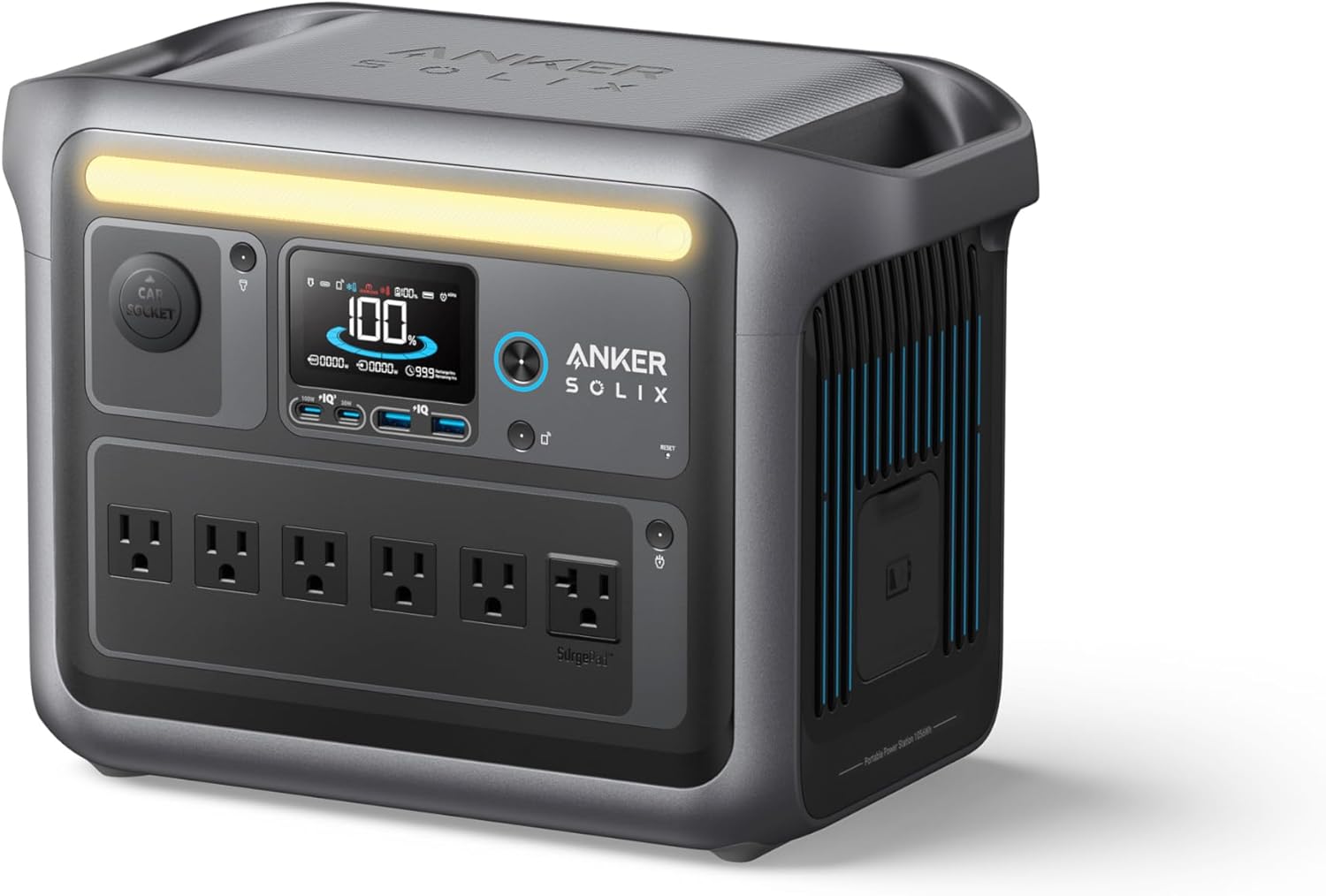
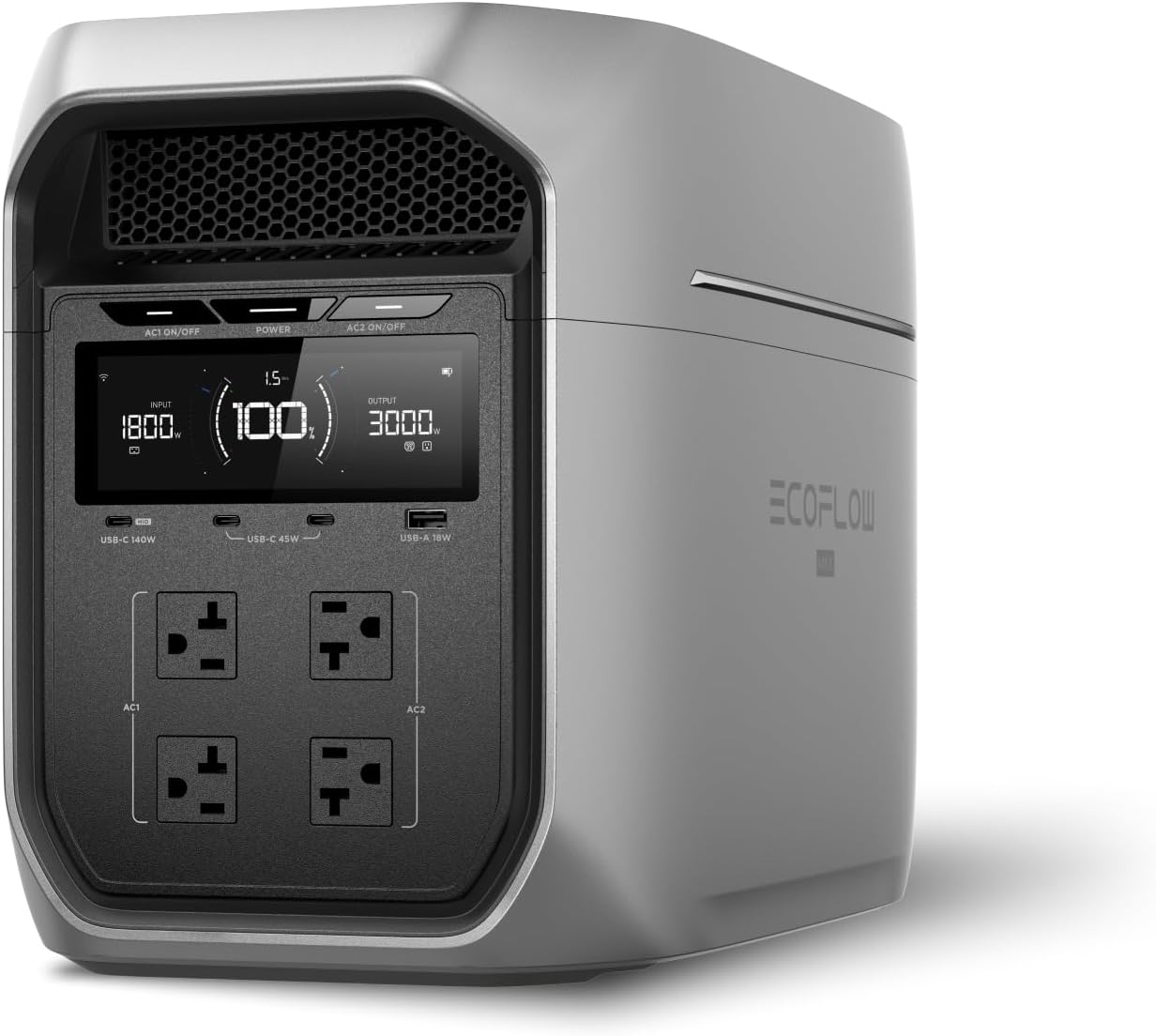
EcoFlow
EcoFlow DELTA 3 Plus
EcoFlow's newest mid-range flagship. The DELTA 3 Plus improves on the Delta 2 with faster charging, LiFePO4 chemistry, and UPS functionality — all at a lower price.
Frequently Asked Questions
What is the average US tax refund in 2026?
The average federal tax refund for the 2025 tax year (filed in early 2026) is approximately $3,100 according to IRS data. About 65% of filers receive a refund. For most households this is the largest single check they'll receive all year, making it a natural moment to fund a meaningful purchase like backup power that pays for itself over time.
Is a power station a good use of my tax refund?
If you live in an outage-prone area, yes — measurably so. Average household losses from a single 24-hour outage run $150-500 in spoiled food, hotel stays, and lost productivity. A $700 power station that prevents one or two of those outages a year pays for itself within 1-2 years. For households that experience zero outages and don't camp, RV, or work remotely, the answer is no.
Should I wait for Memorial Day or Prime Day sales?
The biggest power station sale of the year is typically Black Friday/Cyber Monday, with Prime Day in July as the second-biggest. Memorial Day discounts exist but are usually 10-15% off rather than the 25-35% off you'll see in November. If you have an immediate need, current Tax Day promotional pricing is fine. If you can wait, July's Prime Day or November's Black Friday will likely save you more.
Ready to Buy? Here's What We Recommend
Based on our testing and this guide, these are the best options for most people: