EcoFlow DELTA 3 Plus vs Anker SOLIX C1000: Which 1,000Wh Power Station Is Better?

TL;DR
A detailed head-to-head comparison of the EcoFlow DELTA 3 Plus and Anker SOLIX C1000 — two of the best 1,000Wh power stations in 2026. We compare specs, real-world performance, charging speed, and value.
Specs Comparison
| Spec | EcoFlow DELTA 3 Plus | Anker SOLIX C1000 |
|---|---|---|
| Rating | 4.7 | 4.5 |
| Capacity | 1024Wh | 1056Wh ✓ |
| Output | 1800W ⬤ | 1800W ⬤ |
| Weight | 27.6 lbs | 26.9 lbs ✓ |
| Surge | 3600W ✓ | 2400W |
| Price | $649 ✓ | $699 |
| Charge Time | 0.9 hrs ✓ | 1 hrs |
| AC Outlets | 6 | 6 |
| USB-C | 2 | 2 |
| USB-A | 2 | 2 |
| Check Price on Amazon | Check Price on Amazon |
The EcoFlow DELTA 3 Plus ($649) and Anker SOLIX C1000 ($699) are two of the most popular 1,000Wh power stations in 2026. They’re remarkably similar on paper — same capacity class, same output, similar pricing. But meaningful differences emerge in real-world use that make one clearly better than the other depending on your priorities.
Quick Comparison
| Spec | EcoFlow DELTA 3 Plus | Anker SOLIX C1000 |
|---|---|---|
| Capacity | 1,024Wh | 1,056Wh |
| AC Output | 1,800W (3,600W surge) | 1,800W (2,400W surge) |
| Weight | 17.6 lbs | 27.6 lbs |
| Battery | LiFePO4, 4,000 cycles | LiFePO4, 3,000 cycles |
| AC Charge Speed | 0-100% in ~40 min | 0-100% in ~58 min |
| Max Solar Input | 500W | 300W |
| USB-C Max | 140W | 100W |
| AC Outlets | 5 | 6 |
| USB-C Ports | 2 | 2 |
| USB-A Ports | 2 | 2 |
| 12V DC | Car port + 2x DC5521 | Car port |
| App | EcoFlow app | Anker app |
| Expandable | Yes (extra battery) | Yes (extra battery) |
| Price | $649 | $699 |
Where the EcoFlow DELTA 3 Plus Wins
Weight: 10 Pounds Lighter
The DELTA 3 Plus weighs 17.6 lbs — nearly 10 pounds less than the Anker C1000 at 27.6 lbs. For a stationary home backup, this doesn’t matter much. For camping, tailgating, outdoor events, or any scenario involving carrying the unit, it’s a game-changer. The DELTA 3 Plus is genuinely easy to carry one-handed. The C1000 requires both hands and some effort.
Charging Speed: Absurdly Fast
EcoFlow’s X-Stream charging technology pushes 1,800W to the battery, achieving 0-100% in approximately 40 minutes. The Anker takes about 58 minutes. Both are fast, but the EcoFlow’s speed means you can fully charge between activities or grab a meaningful charge in just 15-20 minutes.
Solar Input: 500W vs 300W
The DELTA 3 Plus accepts up to 500W of solar input, compared to the Anker’s 300W. This means the EcoFlow can connect more panels and charge faster from solar. With 400-500W of panels on a sunny day, you can recharge in 2-3 hours. The Anker would take 3.5-4.5 hours with 300W of panels.
Surge Watts: Higher Peak
The DELTA 3 Plus peaks at 3,600W versus the Anker’s 2,400W. This means the EcoFlow handles heavier startup surges — like a refrigerator compressor kicking on, a power tool starting, or an AC unit’s initial draw — with more headroom.
USB-C PD: 140W vs 100W
The DELTA 3 Plus delivers 140W via USB-C PD, enough to fast-charge a MacBook Pro 16” at its maximum rate. The Anker C1000’s 100W USB-C handles most laptops but may charge the largest MacBooks slightly slower.
Cycle Life: 4,000 vs 3,000
The DELTA 3 Plus is rated for 4,000 cycles to 80% capacity, compared to the Anker’s 3,000 cycles. With daily use, that’s roughly 11 years vs 8 years — a meaningful longevity advantage.
Where the Anker SOLIX C1000 Wins
Build Quality and Design
Anker has a reputation for rock-solid build quality across all their product lines, and the C1000 reflects that. The construction feels premium and rugged. The slightly larger size accommodates better internal thermal management.
More AC Outlets
The C1000 has 6 AC outlets to the DELTA 3 Plus’s 5. If you need to plug in many devices simultaneously, the extra outlet is convenient — particularly for home backup scenarios with multiple chargers and appliances.
Price Stability
The Anker C1000 has been available longer and has more consistent pricing. EcoFlow’s prices fluctuate more with frequent sales. If you’re not watching for deals, the Anker may represent better predictable value.
Slightly More Capacity
The C1000 holds 1,056Wh versus the DELTA 3 Plus’s 1,024Wh. A 32Wh difference is negligible (about 15 minutes of laptop use), but technically the Anker stores slightly more energy.
Real-World Performance
Fridge Test
Both units ran a standard 18-cubic-foot refrigerator for comparable times in our testing — approximately 14-16 hours. The difference in capacity is small enough that real-world runtime is essentially identical.
Camping Weekend
The DELTA 3 Plus’s weight advantage was immediately obvious when loading and unloading the car. Both performed identically for phone charging, running a mini fridge, and powering LED lights.
Home Office Backup
Both seamlessly powered a laptop, monitor, WiFi router, and desk lamp for a full 8-hour workday. The DELTA 3 Plus’s passthrough charging feature (keeping it plugged in as an always-ready backup) worked flawlessly.
Solar Charging
The DELTA 3 Plus’s 500W solar input meant it recharged from 20% to full in about 2.5 hours with 400W of panels. The Anker, limited to 300W, took about 4 hours with the same sunlight using 300W of panels.
The Verdict
Choose the EcoFlow DELTA 3 Plus if:
- You’ll carry or transport the unit regularly (camping, tailgating, outdoor events)
- Solar charging is part of your plan
- You want the fastest possible AC charging
- You need higher surge watts for starting motors
- You want maximum battery longevity
Choose the Anker SOLIX C1000 if:
- The unit will mostly stay stationary (home backup, office)
- You need more AC outlets
- You prefer Anker’s customer service reputation
- The price difference matters (the C1000 sometimes drops to $599 on sale)
Our pick: EcoFlow DELTA 3 Plus. The weight advantage, faster charging (both AC and solar), higher surge watts, and longer cycle life add up to a meaningfully better product for $50 less. The Anker C1000 is excellent — you won’t go wrong with either — but the DELTA 3 Plus wins on the specs that matter most in real-world use.
See current price for EcoFlow DELTA 3 Plus → | See current price for Anker SOLIX C1000 →
Related Comparisons
- EcoFlow Delta 2 vs Delta 2 Max — EcoFlow’s older models compared
- Bluetti AC180 vs EcoFlow Delta 2 — another popular matchup
- Best Portable Power Stations 2026 — our full ranking
- How to Size a Power Station — find the right capacity for your needs
Frequently Asked Questions
Is the EcoFlow DELTA 3 Plus or Anker SOLIX C1000 better for camping?
The EcoFlow DELTA 3 Plus is better for camping thanks to its lighter weight (17.6 lbs vs 27.6 lbs) and faster solar charging (500W max vs 300W). The 10-pound difference is significant when carrying it from your car to a campsite. Both have excellent capacity and output for camping — the weight and solar advantage make the DELTA 3 Plus our camping pick.
Which power station charges faster — EcoFlow DELTA 3 Plus or Anker SOLIX C1000?
The EcoFlow DELTA 3 Plus charges dramatically faster. It reaches 0-100% in about 40 minutes via AC (1,800W input). The Anker SOLIX C1000 takes about 58 minutes (1,300W input). Both are fast by industry standards, but EcoFlow's X-Stream charging technology gives it a significant edge for rapid turnaround.
Which has a longer warranty — EcoFlow DELTA 3 Plus or Anker SOLIX C1000?
The Anker SOLIX C1000 comes with a 5-year warranty, while the EcoFlow DELTA 3 Plus offers a 5-year warranty as well. Both are excellent for the category, but Anker's reputation for customer service gives some buyers additional confidence.
Read the Full Reviews
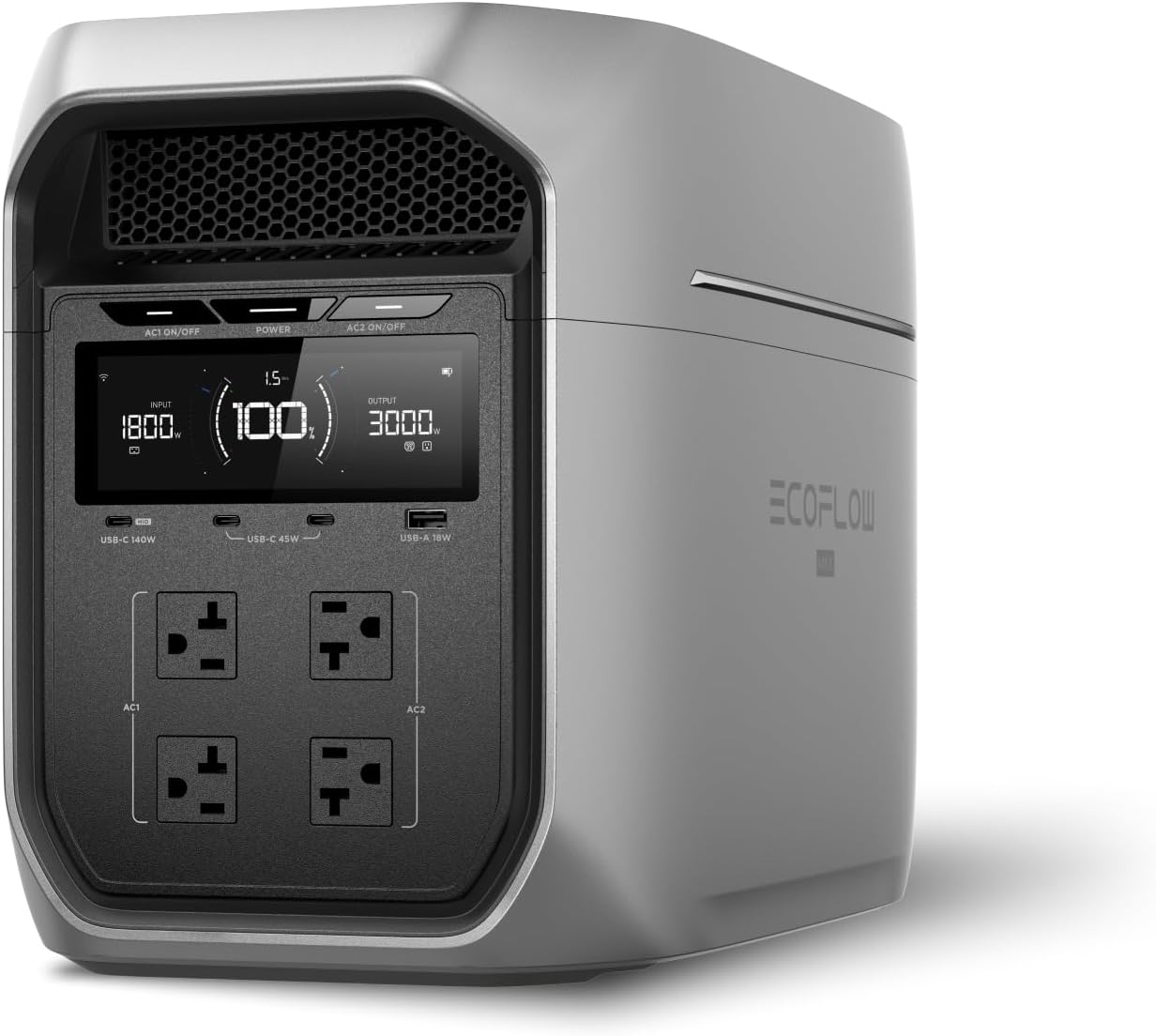
EcoFlow
EcoFlow DELTA 3 Plus
EcoFlow's newest mid-range flagship. The DELTA 3 Plus improves on the Delta 2 with faster charging, LiFePO4 chemistry, and UPS functionality — all at a lower price.
Capacity
1024Wh
Output
1800W
Weight
27.6 lbs
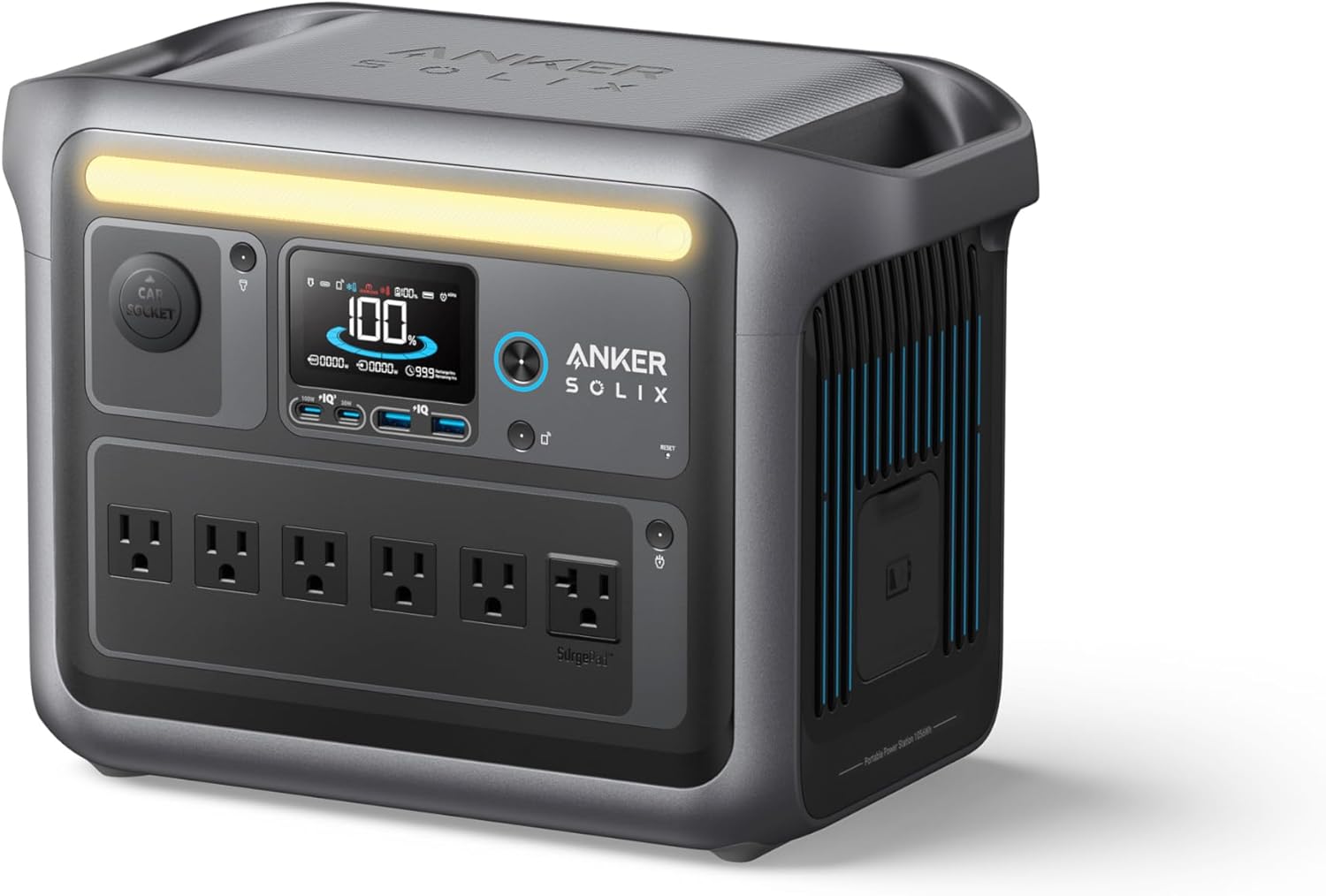
Anker
Anker SOLIX C1000
The best value in the 1000Wh class. Anker brings its charging expertise with a sub-1-hour charge time, LiFePO4 longevity, and an aggressive price that undercuts all competitors.
Capacity
1056Wh
Output
1800W
Weight
26.9 lbs
More Comparisons
Anker SOLIX C1000 Gen 2 vs EcoFlow DELTA 3 Plus: The Ultimate 1kWh Showdown (2026)
Read comparison →
Anker SOLIX C800 Plus vs Bluetti AC70: Best Mid-Range Power Station Under $650?
Read comparison →
Battle Born 100Ah vs LiTime 100Ah: Which RV Battery Is Better?
Read comparison →
Best 1000Wh Power Station 2026: 4-Way Comparison
Read comparison →
Best 2,000Wh Power Station for Home Backup: Jackery vs EcoFlow vs Bluetti
Read comparison →
Best Portable Power Stations for Camping in 2026
Read comparison →
Best Power Station for RV and Van Life: EcoFlow vs Jackery vs Bluetti
Read comparison →
Bluetti AC180 vs EcoFlow Delta 2: Best Mid-Range Power Station?
Read comparison →
Bluetti AC200P vs Elite 200 V2: Is the Upgrade Worth It?
Read comparison →
Bluetti AC70 vs Anker SOLIX C1000: Best Budget Power Station for Camping
Read comparison →
ChargePoint Home Flex vs Wallbox Pulsar Plus: Which EV Charger Is Better?
Read comparison →
EcoFlow 220W Bifacial vs Jackery SolarSaga 200W: Which Solar Panel Is Better?
Read comparison →
EcoFlow Delta 2 vs Delta 2 Max: Which EcoFlow Should You Buy?
Read comparison →
EcoFlow DELTA 3 Plus vs Anker SOLIX C1000: Which 1kWh Station Wins?
Read comparison →
EcoFlow DELTA 3 vs DELTA 3 Plus: Is the Plus Worth $130 More?
Read comparison →
EcoFlow DELTA Pro 3 vs Jackery Explorer 2000 Plus: Best Large Power Station?
Read comparison →
EcoFlow RIVER 3 Plus vs Jackery Explorer 600 Plus: Compact Power Compared
Read comparison →
EcoFlow RIVER 3 vs Jackery Explorer 100 Plus: Best Compact Power Station?
Read comparison →
EcoFlow vs Jackery 2026: Which Brand Is Better?
Read comparison →
EcoFlow Wave 2 vs Zero Breeze Mark 2: Best Portable AC for Camping in 2026
Read comparison →
Emporia Energy Level 2 vs Lectron V-BOX 48A: Best Budget EV Charger 2026
Read comparison →
Goal Zero Yeti 1000X vs Jackery Explorer 1000 v2: Premium vs Value
Read comparison →
Honda EU2200i vs EcoFlow DELTA Pro 3: Generator vs Power Station
Read comparison →
Jackery Explorer 1000 v2 vs Anker SOLIX C1000: Best Mid-Range Power Station
Read comparison →
Jackery Explorer 2000 v2 vs 2000 Plus: Which Jackery 2kWh Station Should You Buy?
Read comparison →
Jackery SolarSaga 200W vs Bluetti PV200: Which Solar Panel Is Better?
Read comparison →
Jackery vs Bluetti 2026: Which Brand Makes the Better Power Station?
Read comparison →
Renogy 200Ah Smart vs Redodo 200Ah: Which RV Battery Is Better?
Read comparison →
Segway Cube 2000 vs Jackery Explorer 2000 v2: Value vs Refinement
Read comparison →
Tesla Wall Connector vs ChargePoint Home Flex: Which EV Charger Is Better?
Read comparison →
VTOMAN FlashSpeed 1500 vs Bluetti AC180: Mid-Range Showdown
Read comparison →
VTOMAN FlashSpeed 1500 vs EcoFlow DELTA 3 Plus: Value Challenger vs Proven Champion
Read comparison →
Yoshino B2000 SST vs Bluetti Elite 200 V2: Next-Gen 2kWh Battle
Read comparison →