Buying Guide
Best Portable Power Stations Under $1,000 in 2026: Our Top 6 Picks

TL;DR
The 6 best portable power stations under $1,000 in 2026. We compare mid-range LiFePO4 options from Anker, EcoFlow, Bluetti, Jackery, and ALLWEI — with real specs, honest verdicts, and the best deals.
The sub-$1,000 price range is where portable power stations get genuinely useful. You are past the toy-tier 200-300Wh units and into serious territory: 700-1,100Wh of LiFePO4 capacity, 1,000-2,000W of output, and fast charging that fills the battery in under an hour. These are the stations that run a refrigerator during an outage, power a campsite for a full weekend, or keep a home office running off-grid.
The good news: 2026 is the best year to buy in this range. LiFePO4 batteries are standard, charging speeds have dropped below an hour, and aggressive competition has pushed prices down 30-40% from two years ago. The challenge is choosing among the increasingly capable options.
We tested every major power station under $1,000 and ranked the top 6 by overall value. For cheaper options, see our budget guide under $300 or under $500 guide.
Under-$1,000 Power Station Comparison Table
| Rank | Product | Price | Capacity | Output | Weight | Charge Time | Battery |
|---|---|---|---|---|---|---|---|
| 1 | Anker SOLIX C1000 Gen 2 | $799 ($470 sale) | 1,024Wh | 2,000W | 23.9 lbs | 49 min | LiFePO4 (4,000 cycles) |
| 2 | EcoFlow DELTA 3 Plus | $649 | 1,024Wh | 1,800W | 25 lbs | 56 min | LiFePO4 (4,000 cycles) |
| 3 | Jackery Explorer 2000 v2 | $799 | 2,042Wh | 2,200W | 39.5 lbs | 1.7 hrs | LiFePO4 (10-year) |
| 4 | Anker SOLIX C1000 (Gen 1) | $699 ($450 sale) | 1,056Wh | 1,800W | 26.9 lbs | 58 min | LiFePO4 (3,000 cycles) |
| 5 | ALLWEI 1200W | $499 ($339 sale) | 1,008Wh | 1,200W | 28 lbs | 1.3 hrs | LiFePO4 (3,500 cycles) |
| 6 | Bluetti AC70 | $499 | 768Wh | 1,000W (2,000W PL) | 22.5 lbs | 45 min (80%) | LiFePO4 (3,000 cycles) |
1. Anker SOLIX C1000 Gen 2 — Best Overall ($799)

The Anker SOLIX C1000 Gen 2 sets the bar for what a sub-$1,000 power station should deliver in 2026. It improves on the original C1000 in every dimension: 2,000W output (up from 1,800W), 49-minute full charge (down from 58), and two 140W USB-C PD 3.1 ports that charge MacBook Pros at full speed.
Why it’s #1:
- 49-minute full charge — fastest in class by a wide margin
- 2,000W continuous (3,000W surge) — runs space heaters, microwaves, power tools
- Two 140W USB-C PD 3.1 ports — only power station under $1,000 with this
- 23.9 lbs — lightest 1kWh station on the market
- Regularly $470 on Amazon — the real price makes this insane value
Best for: Campers, emergency preppers, remote workers, and anyone who wants the best all-around 1kWh station. At $470 on sale, it is also arguably the best value in portable power, period.
Limitations: No expandable battery option. Fan noise during HyperFlash charging.
Read our full C1000 Gen 2 review → | Compare vs EcoFlow DELTA 3 Plus →
2. EcoFlow DELTA 3 Plus — Best for Smart Home Users ($649)
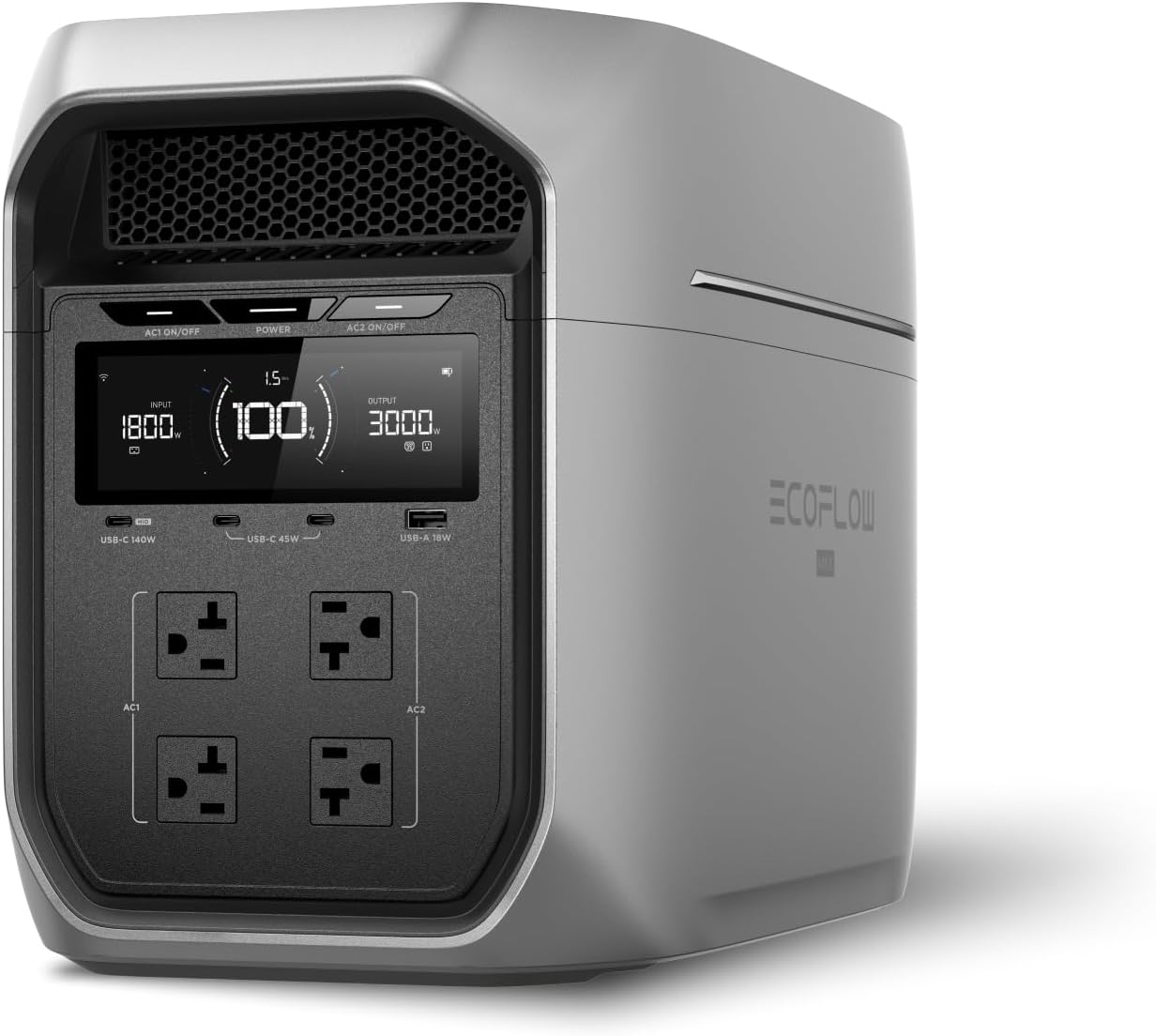
The EcoFlow DELTA 3 Plus was our top overall pick before the C1000 Gen 2 arrived, and it remains the best choice for buyers who prioritize smart home integration and expandability. EcoFlow’s app is the most polished in the industry, with scheduling, firmware updates, quiet mode, and smart home integrations that no competitor matches.
Why it earns #2:
- Expandable to 5kWh — grows from a portable station to a home battery system
- Best app ecosystem — scheduling, smart home, OTA firmware updates
- $649 MSRP — cheaper than the C1000 Gen 2 at retail
- 56-minute full charge — still very fast
- UPS mode with 20ms switchover — keeps sensitive devices running
Best for: Smart home enthusiasts, buyers who want expandable capacity, and anyone who values app quality and firmware updates. If you plan to add batteries over time, the DELTA 3 Plus’s ecosystem is unmatched.
Limitations: 1,800W output (200W less than C1000 Gen 2). USB-C capped at 100W. Slightly heavier at 25 lbs.
Read our full DELTA 3 Plus review → | Compare vs C1000 Gen 2 →
3. Jackery Explorer 2000 v2 — Best High-Capacity Under $1,000 ($799)

The Jackery Explorer 2000 v2 is the only 2kWh power station under $1,000, and it earns that value through a ground-up redesign with LiFePO4 chemistry, a 22 lb weight reduction over the Explorer 2000 Plus, and sub-30dB whisper-quiet operation.
Why it’s here:
- 2,042Wh — literally double the capacity of every other pick on this list
- Under 30dB — the quietest 2kWh power station available at any price
- 39.5 lbs — 22 lbs lighter than the 2000 Plus it replaces
- 2,200W output (4,000W surge) — handles refrigerators, AC units, power tools
- 10-year engineered lifespan — LiFePO4 reliability
Best for: Home backup buyers who need overnight fridge protection, CPAP users who need a silent bedside station, and anyone who wants maximum capacity without exceeding $1,000. If 1,000Wh feels tight for your use case, this doubles your runtime at the same price as the C1000 Gen 2.
Limitations: 39.5 lbs is still heavy for a portable. Only 3 AC outlets. No expandability. 1.7-hour charge time is much slower than the 1kWh options.
Read our full Explorer 2000 v2 review → | Compare vs 2000 Plus →
4. Anker SOLIX C1000 (Gen 1) — Best Clearance Deal ($699)
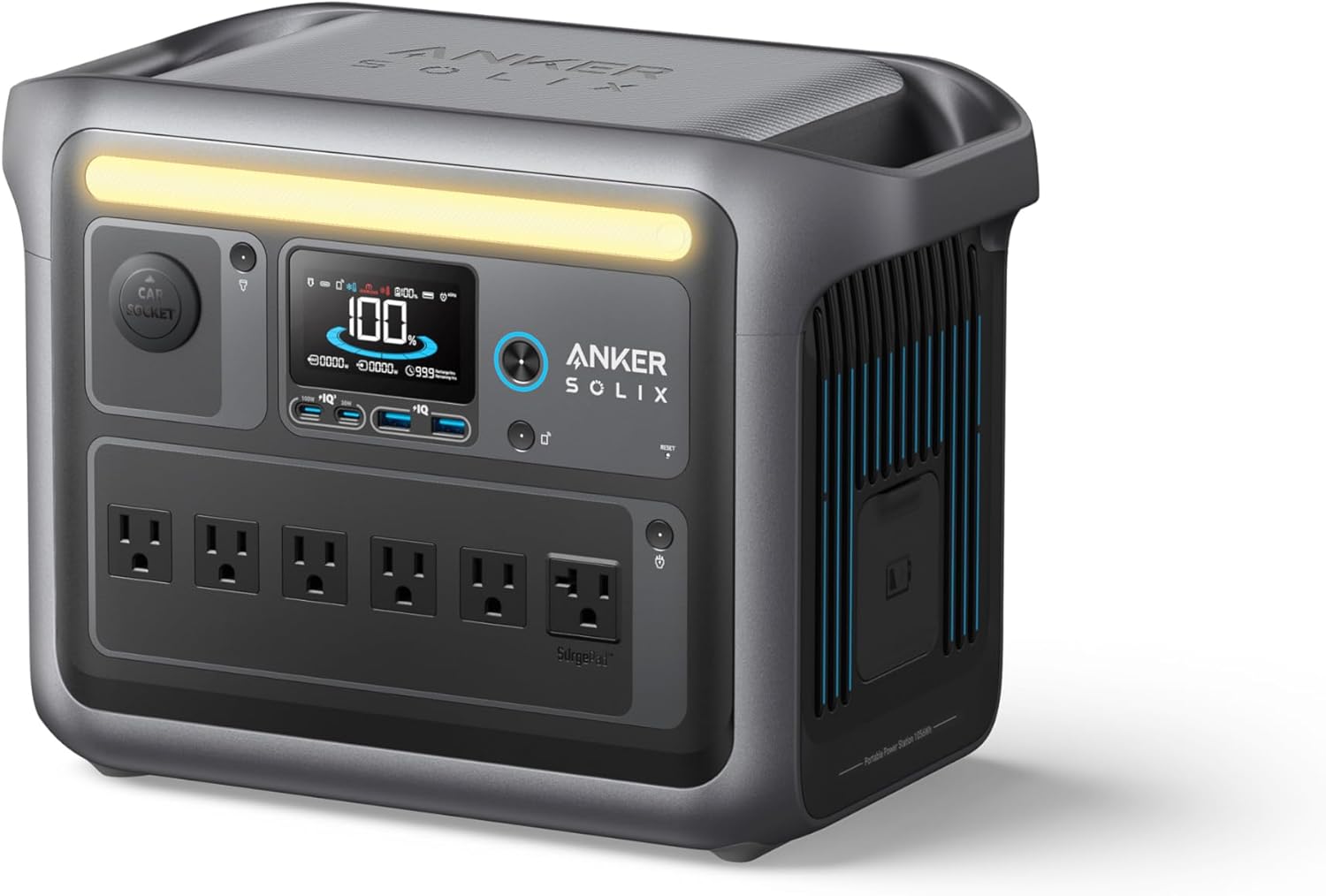
The original Anker SOLIX C1000 was our value king before the Gen 2 arrived. With the Gen 2 now on shelves, the original is available at steep clearance discounts — often under $450. At that price, it is an absurd value: 1,056Wh of LiFePO4 capacity, 1,800W output, and a 58-minute charge time for less than budget stations with half the capacity.
Why it’s still worth buying:
- Clearance prices often under $450 — incredible value per watt-hour
- 1,056Wh — actually 32Wh more than the Gen 2
- 58-minute charge — still one of the fastest in class
- Proven reliability — over a year of user data and positive reviews
- Anker 5-year warranty — same coverage as the Gen 2
Best for: Deal hunters who want maximum value and don’t need the Gen 2’s 2,000W output or 140W USB-C ports. If you find it under $450, buy it.
Limitations: No UPS mode. 100W max USB-C (vs 140W on Gen 2). 26.9 lbs (3 lbs heavier than Gen 2). Being phased out as Gen 2 takes over.
5. ALLWEI 1200W — Best Budget 1kWh ($499)

The ALLWEI 1200W is the power station Amazon shoppers keep choosing when brand prestige takes a back seat to specs-per-dollar. At $499 retail — regularly $339 with coupons — it offers 1,008Wh of LiFePO4 capacity, 1,200W output, and UPS mode. Those are specs that cost $700-800 from Anker, EcoFlow, and Jackery.
Why it’s on the list:
- 1,008Wh LiFePO4 for $499 (often $339) — the math speaks for itself
- 1,200W output (2,400W surge) — handles most household essentials
- UPS mode — automatic grid-to-battery switchover
- 4 AC outlets — more than some stations twice the price
- UL 2743 certified — passes the same safety standards as premium brands
Best for: Budget buyers, garage/workshop users, first-time power station buyers, and anyone who wants 1kWh of capacity without spending $700+.
Limitations: 2-year warranty (vs 5 years from Anker/Jackery). Basic app. Heavier at 28 lbs. Newer brand with less track record.
Read our full ALLWEI 1200W review →
6. Bluetti AC70 — Best Compact Under $500 ($499)
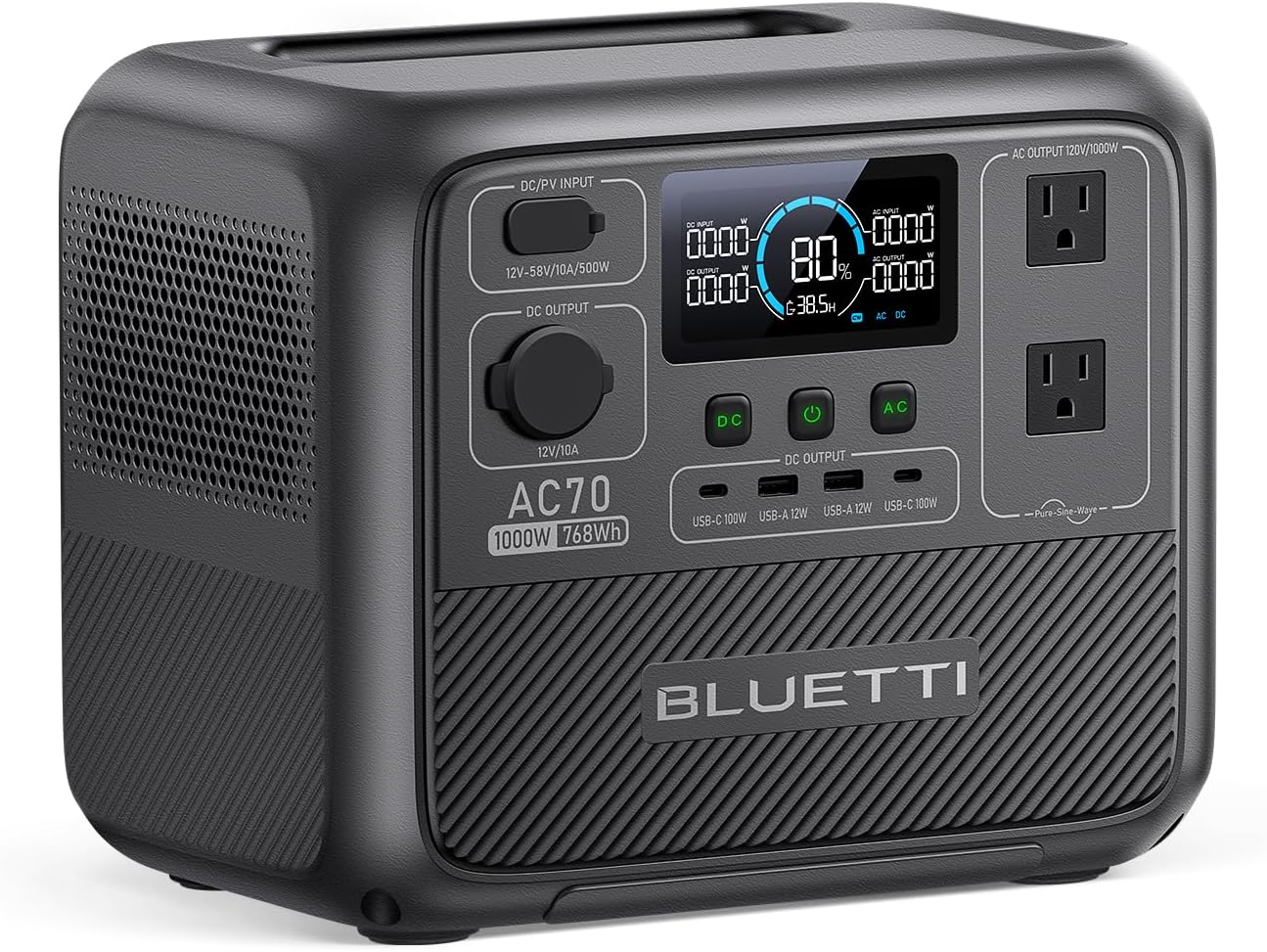
The Bluetti AC70 is the smallest and lightest station on this list, but its Power Lifting technology lets it punch far above its weight class. At 22.5 lbs with 768Wh and the ability to handle appliances up to 2,000W, it is the best option for buyers who prioritize portability and do not need a full 1,000Wh.
Why it earns a spot:
- Power Lifting to 2,000W — runs hair dryers, small heaters, blenders
- 22.5 lbs — lightest station on this list by a wide margin
- 45-minute charge to 80% — fastest time-to-useful-charge
- $499 — accessible entry point for quality portable power
- LiFePO4 with 3,000+ cycles — decade of reliable use
Best for: Weekend campers, tailgaters, and buyers who carry their power station more than 20 feet from the car. The weight advantage is meaningful when portability is paramount. See our best power stations for camping guide for more options.
Limitations: 768Wh is tight for full-day home backup. Only 2 AC outlets. Power Lifting reduces efficiency at high wattages.
Read our full Bluetti AC70 review →
How to Choose the Right Station Under $1,000
Match Capacity to Your Actual Needs
Not sure how much capacity you need? Use our Power Calculator to estimate runtime for your specific devices, or check our guide on what a 1000Wh power station can actually run.
- Charging phones, tablets, laptops only: 768Wh (Bluetti AC70) is plenty
- Weekend camping with lights, fan, and devices: 1,000Wh is the sweet spot
- Overnight fridge backup + devices: 1,000-2,000Wh depending on fridge efficiency
- Multi-day home backup: 2,000Wh+ (Jackery 2000 v2 or expandable options)
Check the Output Wattage, Not Just Capacity
Capacity (Wh) determines how long the station runs. Output (W) determines what it can power. A 1,000Wh station with 1,200W output cannot run a 1,500W space heater regardless of battery level. Make sure the continuous wattage rating exceeds your highest-draw appliance. Our sizing guide walks through this in detail.
Factor in Solar Compatibility
If you plan to pair with solar panels, check the maximum solar input. The C1000 Gen 2 accepts 600W — enough for three 200W panels. The ALLWEI 1200W is limited to 200W. Higher solar input means faster off-grid recharging. See our solar + power station combo guide for matched setups.
The Bottom Line
The sub-$1,000 power station market has never been stronger. LiFePO4 batteries, sub-1-hour charging, and 2,000W output are no longer premium features — they are standard.
Our top recommendation: The Anker SOLIX C1000 Gen 2 at $799 (often $470 on sale) delivers the best combination of charging speed, output power, USB-C quality, and portability. It is the power station we recommend to most people.
Best value: The ALLWEI 1200W at $339-499 offers the same capacity class at half the price. If budget is the priority, start here.
Need more capacity? The Jackery Explorer 2000 v2 doubles your capacity to 2,042Wh at $799 — the only 2kWh station under $1,000. Or consider the Segway Cube 2000 at just $539 for 2,048Wh with IP56 weatherproofing — see our Segway Cube 2000 vs Jackery 2000 v2 comparison.
Smallest budget? The Bluetti AC2A delivers LiFePO4 power for $149 — perfect as a starter or backup device.
Even tighter budget? See our best power stations under $600 guide — the EcoFlow DELTA 3 at $519 and FOSSiBOT F2400 at $569 deliver incredible value.
Use our side-by-side comparison tool to compare any of these stations head-to-head, or explore our full product database to find the perfect fit for your needs.
Recommended Power Stations
EcoFlow
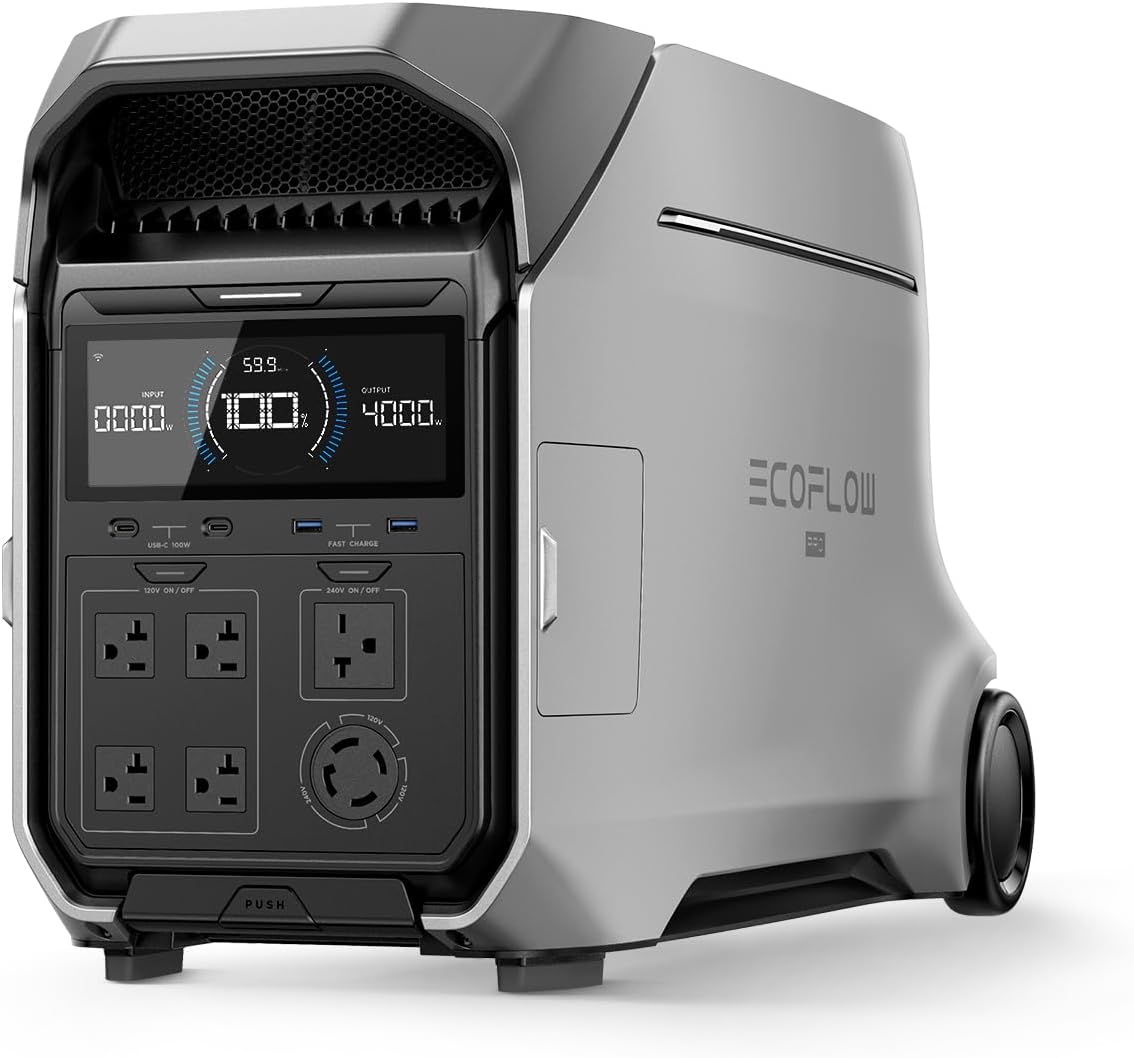
EcoFlow DELTA 3 Plus
EcoFlow's newest mid-range flagship. The DELTA 3 Plus improves on the Delta 2 with faster charging, LiFePO4 chemistry, and UPS functionality — all at a lower price.
Frequently Asked Questions
What is the best portable power station under $1,000 in 2026?
The Anker SOLIX C1000 Gen 2 ($799, often $470 on sale) is the best power station under $1,000. It delivers 1,024Wh of LiFePO4 capacity, 2,000W output, a 49-minute full charge, and two 140W USB-C PD 3.1 ports — the best combination of speed, power, and value in the mid-range class.
Is a $500-$800 power station enough for home backup?
Yes, for essential backup. A 1,000Wh station can run a refrigerator for 10-12 hours, keep your internet and phone charged for 24+ hours, or power a CPAP machine for 3-5 nights. For multi-day outages or powering heavy appliances, you'll need 2,000Wh+ capacity.
What can a 1,000Wh power station actually run?
A 1,000Wh station can charge a smartphone 60+ times, run a laptop for 14-15 hours, power a mini fridge for 15-20 hours, run a full-size fridge for 10-12 hours, keep LED lights on for 85+ hours, or power a CPAP machine for 25-35 hours. See our detailed guide on what a 1000Wh power station can run for more.
Should I buy a power station under $1,000 or save for a 2kWh model?
For most people, a 1,000Wh station under $1,000 is the right choice. It covers weekend camping, daily remote work, and overnight emergency backup. You only need 2kWh if you require multi-day home backup, need to run multiple heavy appliances simultaneously, or power an RV air conditioner.
Is the ALLWEI 1200W a good alternative to Anker and EcoFlow?
Yes, for budget buyers. The ALLWEI 1200W offers 1,008Wh of LiFePO4 capacity and 1,200W output for $499 (often $339 on sale). It matches premium brands on core specs and carries UL 2743 safety certification. The trade-offs are a shorter 2-year warranty, a less polished app, and a newer brand with less proven long-term reliability.
Ready to Buy? Here's What We Recommend
Based on our testing and this guide, these are the best options for most people: