Jackery Explorer 2000 v2 vs 2000 Plus: Which Jackery 2kWh Station Should You Buy?

TL;DR
Jackery Explorer 2000 v2 vs Explorer 2000 Plus — we compare Jackery's two 2kWh power stations head-to-head on battery chemistry, weight, noise, expandability, and value.
Specs Comparison
| Spec | Jackery Explorer 2000 v2 | Jackery Explorer 2000 Plus |
|---|---|---|
| Rating | 4.5 | 4.7 |
| Capacity | 2042Wh ⬤ | 2042Wh ⬤ |
| Output | 2200W | 3000W ✓ |
| Weight | 39.5 lbs ✓ | 61.5 lbs |
| Surge | 4000W | 6000W ✓ |
| Price | $799 ✓ | $1999 |
| Charge Time | 1.7 hrs ✓ | 2 hrs |
| AC Outlets | 3 | 5 |
| USB-C | 2 | 2 |
| USB-A | 2 | 2 |
| Check Price on Amazon | Check Price on Amazon |
Jackery Explorer 2000 v2 vs 2000 Plus: The Complete Comparison
Jackery now has two 2kWh power stations in its lineup, and the naming makes it confusing: the Explorer 2000 Plus is the older expandable model, while the Explorer 2000 v2 is the newer, lighter, quieter redesign. They share the same capacity but are fundamentally different products built for different buyers. This comparison breaks down every difference so you can pick the right one.
Head-to-Head Spec Comparison
| Spec | Jackery Explorer 2000 v2 | Jackery Explorer 2000 Plus |
|---|---|---|
| Capacity | 2,042Wh | 2,042Wh |
| AC Output | 2,200W (4,000W surge) | 3,000W (6,000W surge) |
| Battery Type | LiFePO4 | Li-NMC |
| Cycle Life | 10-year engineered lifespan | 4,000+ cycles to 80% |
| AC Charge Time | 1.7 hours | 2 hours |
| Solar Input | 400W max | 1,200W max |
| Expandable | No | Yes (up to 24kWh) |
| UPS Mode | Yes (20ms) | No |
| Noise Level | Under 30dB | ~45dB under load |
| Weight | 39.5 lbs | 61.5 lbs |
| AC Outlets | 3 | 5 |
| Price | $799 | $1,999 |
Battery Chemistry: The Defining Difference
This is the single most important distinction between these two stations. The 2000 v2 uses LiFePO4 (lithium iron phosphate) cells, while the 2000 Plus uses older Li-NMC (lithium nickel manganese cobalt) cells.
LiFePO4 is superior in every metric that matters for a power station:
- Safety: No thermal runaway risk, stable at higher temperatures
- Longevity: LiFePO4 lasts 3,000-6,000 cycles vs 500-1,000 for Li-NMC
- Self-discharge: Holds charge longer during storage
- Temperature tolerance: Operates reliably in a wider range of conditions
The 2000 Plus launched before LiFePO4 became the industry standard, and its Li-NMC chemistry is now a generation behind. For a deeper dive into the chemistry differences, see our LiFePO4 vs NMC guide.
Weight: 22 lbs Makes a Real Difference
At 39.5 lbs, the 2000 v2 is 22 lbs lighter than the 2000 Plus (61.5 lbs). This is the difference between a one-person carry and a two-person lift. You can reasonably move the v2 from a garage to a kitchen counter during an outage, load it into a car trunk without help, or reposition it in an RV without straining. The 2000 Plus is essentially stationary once placed — at 61.5 lbs, most people will avoid moving it unless absolutely necessary.
Noise: Whisper vs Fan
The 2000 v2 operates under 30dB — quieter than a whisper. You can run it on a nightstand next to a sleeping person and they won’t notice. This makes it ideal for CPAP users, bedroom use during outages, and home offices where noise is a distraction.
The 2000 Plus produces roughly 45dB under load — comparable to a quiet conversation. It is not loud, but it is noticeable in a quiet room and can be disruptive at night. If noise matters to you, the v2 is the clear winner.
Expandability: The Plus’s Trump Card
This is where the 2000 Plus justifies its existence. It supports up to 12 additional battery packs, scaling from 2,042Wh all the way to 24kWh. That is enough to power a home for days during an extended outage. The 2000 v2 has zero expandability — 2,042Wh is all you get, period.
If you are building a comprehensive home backup system, planning for multi-day off-grid living, or want a power station that grows with your needs over time, the 2000 Plus’s expansion ecosystem is genuinely compelling. No other portable power station offers this much headroom. For a broader look at expandable options, see our best expandable power stations guide.
Output Power
The 2000 Plus wins on raw power: 3,000W continuous with 6,000W surge, versus the v2’s 2,200W continuous with 4,000W surge. The Plus can run virtually any household appliance including high-draw items like space heaters, hair dryers, and countertop ovens simultaneously. The v2 handles most of these individually but has less headroom for simultaneous multi-device loads.
That said, 2,200W covers the vast majority of real-world use cases. A fridge, lights, router, and phone charger together draw well under 500W. You would need to deliberately combine high-draw appliances to exceed the v2’s output limit.
Solar Charging
The 2000 Plus accepts up to 1,200W of solar input — three times the v2’s 400W maximum. If you own a large solar array or plan to pair with multiple panels like the Jackery SolarSaga 200W, the Plus can soak up significantly more solar energy per hour. The v2 is limited to a single high-wattage panel, which extends solar charge times considerably.
For panel recommendations, see our best solar panels for power stations guide.
Price
The v2 costs $799 — less than half the 2000 Plus’s $1,999 price tag. For the same 2,042Wh of base capacity, the v2 delivers better battery chemistry, lower weight, near-silent operation, and UPS functionality at a $1,200 savings. The Plus’s premium is almost entirely for its expansion ecosystem and higher continuous output. If you do not need 24kWh of expandable capacity, the v2 is dramatically better value.
Verdict
The Jackery Explorer 2000 v2 is the better power station for the vast majority of buyers. It is lighter, quieter, uses superior battery chemistry, charges faster, costs $1,200 less, and includes UPS mode. Unless you specifically need expandable capacity beyond 2kWh, the v2 is the obvious choice.
Choose the Jackery Explorer 2000 v2 if you want the quietest 2kWh station available, value portability, plan to use it for CPAP or bedroom backup, or want the best battery chemistry and price in the 2kWh class.
Choose the Jackery Explorer 2000 Plus if you need scalable capacity up to 24kWh for whole-home backup, run a large solar array (600W+), or require 3,000W+ continuous output for heavy-draw appliances. It is a fundamentally different product for buyers building an energy system, not just buying a power station.
For a wider comparison of high-capacity options, see our best 2000Wh home backup comparison or browse all power stations.
Frequently Asked Questions
What is the difference between the Jackery Explorer 2000 v2 and 2000 Plus?
The 2000 v2 is a complete redesign using LiFePO4 chemistry, weighing 39.5 lbs (vs 61.5 lbs), operating under 30dB (vs audible fan noise), and adding UPS functionality. The 2000 Plus uses older Li-NMC chemistry but supports expandable batteries up to 24kWh — something the v2 cannot do.
Is the Jackery Explorer 2000 v2 better than the 2000 Plus?
For most buyers, yes. The v2 is 22 lbs lighter, dramatically quieter, uses safer/longer-lasting LiFePO4 chemistry, costs less, and includes UPS mode. The 2000 Plus is only better if you specifically need expandable capacity beyond 2,042Wh.
Can the Jackery Explorer 2000 v2 expand with extra batteries?
No. The Explorer 2000 v2 is a fixed 2,042Wh system with no expansion port. If you need scalable capacity, the Explorer 2000 Plus supports up to 12 additional battery packs for a maximum of 24kWh.
Which Jackery power station is best for CPAP machines?
The Explorer 2000 v2 is the better choice for CPAP users. Its sub-30dB operation won't disturb sleep, and the 2,042Wh capacity provides 3-5 nights of CPAP power depending on your machine's settings. The 2000 Plus has audible fan noise that can disrupt sleep.
Read the Full Reviews

Jackery
Jackery Explorer 2000 v2
Jackery's quietest and most efficient 2kWh power station. The v2 rebuild swaps to LiFePO4, cuts weight significantly, and adds UPS functionality — all at a lower price than the 2000 Plus.
Capacity
2042Wh
Output
2200W
Weight
39.5 lbs
Jackery
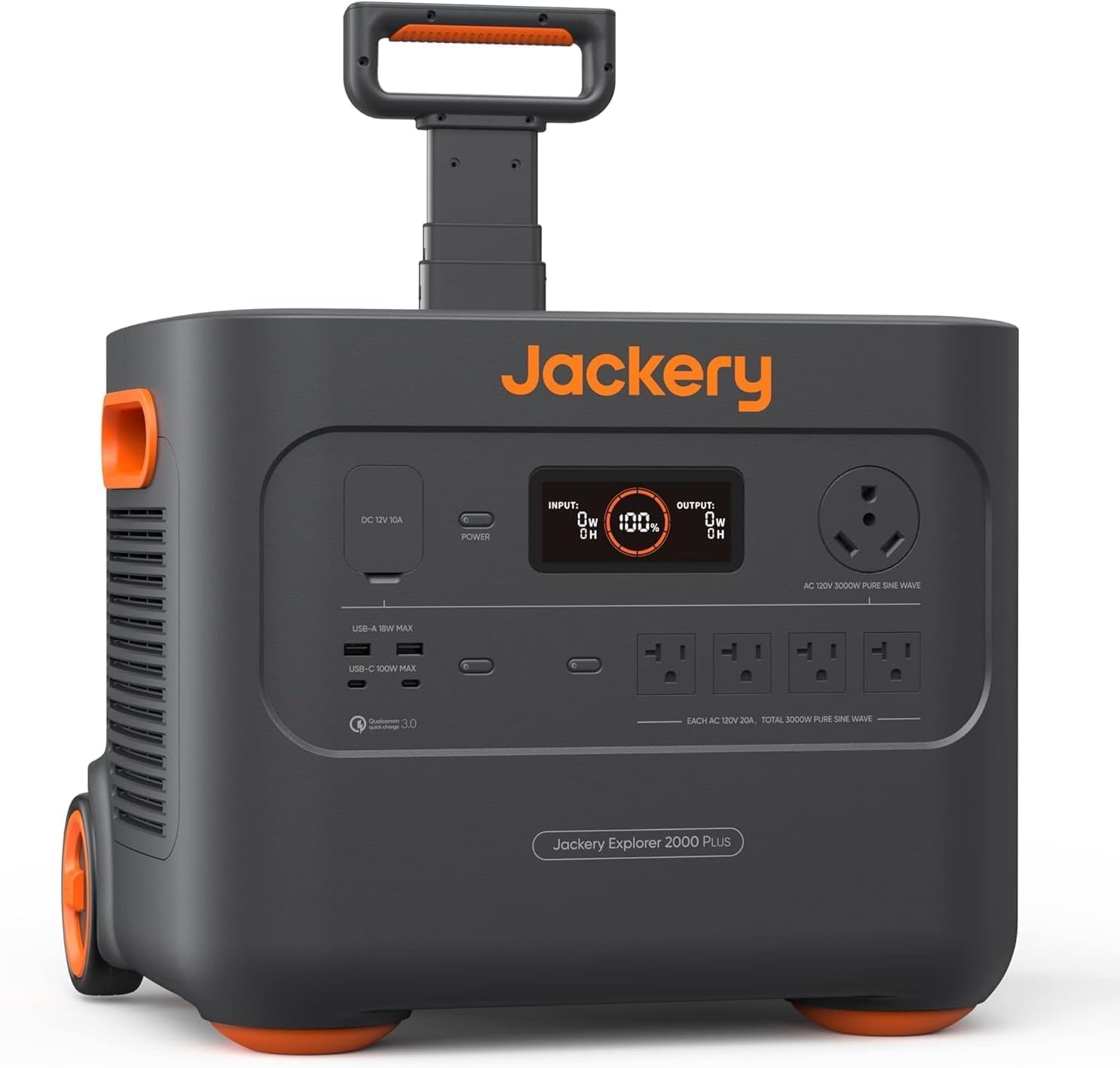
Jackery Explorer 2000 Plus
Jackery's flagship expandable power station. With 2kWh base capacity expandable to 24kWh, it's a serious home backup solution that can also handle RV and off-grid living.
Capacity
2042Wh
Output
3000W
Weight
61.5 lbs
More Comparisons
Anker SOLIX C1000 Gen 2 vs EcoFlow DELTA 3 Plus: The Ultimate 1kWh Showdown (2026)
Read comparison →
Anker SOLIX C800 Plus vs Bluetti AC70: Best Mid-Range Power Station Under $650?
Read comparison →
Battle Born 100Ah vs LiTime 100Ah: Which RV Battery Is Better?
Read comparison →
Best 1000Wh Power Station 2026: 4-Way Comparison
Read comparison →
Best 2,000Wh Power Station for Home Backup: Jackery vs EcoFlow vs Bluetti
Read comparison →
Best Portable Power Stations for Camping in 2026
Read comparison →
Best Power Station for RV and Van Life: EcoFlow vs Jackery vs Bluetti
Read comparison →
Bluetti AC180 vs EcoFlow Delta 2: Best Mid-Range Power Station?
Read comparison →
Bluetti AC200P vs Elite 200 V2: Is the Upgrade Worth It?
Read comparison →
Bluetti AC70 vs Anker SOLIX C1000: Best Budget Power Station for Camping
Read comparison →
ChargePoint Home Flex vs Wallbox Pulsar Plus: Which EV Charger Is Better?
Read comparison →
EcoFlow 220W Bifacial vs Jackery SolarSaga 200W: Which Solar Panel Is Better?
Read comparison →
EcoFlow Delta 2 vs Delta 2 Max: Which EcoFlow Should You Buy?
Read comparison →
EcoFlow DELTA 3 Plus vs Anker SOLIX C1000: Which 1kWh Station Wins?
Read comparison →
EcoFlow DELTA 3 Plus vs Anker SOLIX C1000: Which 1,000Wh Power Station Is Better?
Read comparison →
EcoFlow DELTA 3 vs DELTA 3 Plus: Is the Plus Worth $130 More?
Read comparison →
EcoFlow DELTA Pro 3 vs Jackery Explorer 2000 Plus: Best Large Power Station?
Read comparison →
EcoFlow RIVER 3 Plus vs Jackery Explorer 600 Plus: Compact Power Compared
Read comparison →
EcoFlow RIVER 3 vs Jackery Explorer 100 Plus: Best Compact Power Station?
Read comparison →
EcoFlow vs Jackery 2026: Which Brand Is Better?
Read comparison →
EcoFlow Wave 2 vs Zero Breeze Mark 2: Best Portable AC for Camping in 2026
Read comparison →
Emporia Energy Level 2 vs Lectron V-BOX 48A: Best Budget EV Charger 2026
Read comparison →
Goal Zero Yeti 1000X vs Jackery Explorer 1000 v2: Premium vs Value
Read comparison →
Honda EU2200i vs EcoFlow DELTA Pro 3: Generator vs Power Station
Read comparison →
Jackery Explorer 1000 v2 vs Anker SOLIX C1000: Best Mid-Range Power Station
Read comparison →
Jackery SolarSaga 200W vs Bluetti PV200: Which Solar Panel Is Better?
Read comparison →
Jackery vs Bluetti 2026: Which Brand Makes the Better Power Station?
Read comparison →
Renogy 200Ah Smart vs Redodo 200Ah: Which RV Battery Is Better?
Read comparison →
Segway Cube 2000 vs Jackery Explorer 2000 v2: Value vs Refinement
Read comparison →
Tesla Wall Connector vs ChargePoint Home Flex: Which EV Charger Is Better?
Read comparison →
VTOMAN FlashSpeed 1500 vs Bluetti AC180: Mid-Range Showdown
Read comparison →
VTOMAN FlashSpeed 1500 vs EcoFlow DELTA 3 Plus: Value Challenger vs Proven Champion
Read comparison →
Yoshino B2000 SST vs Bluetti Elite 200 V2: Next-Gen 2kWh Battle
Read comparison →