Anker SOLIX C1000 Gen 2 vs EcoFlow DELTA 3 Plus: The Ultimate 1kWh Showdown (2026)

TL;DR
Anker SOLIX C1000 Gen 2 vs EcoFlow DELTA 3 Plus — we compare the two best 1kWh power stations of 2026 on output, charging speed, portability, expandability, and value.
Specs Comparison
| Spec | Anker SOLIX C1000 Gen 2 | EcoFlow DELTA 3 Plus |
|---|---|---|
| Rating | 4.6 | 4.7 |
| Capacity | 1024Wh ⬤ | 1024Wh ⬤ |
| Output | 2000W ✓ | 1800W |
| Weight | 23.9 lbs ✓ | 27.6 lbs |
| Surge | 3000W | 3600W ✓ |
| Price | $799 | $649 ✓ |
| Charge Time | 0.82 hrs ✓ | 0.9 hrs |
| AC Outlets | 5 | 6 |
| USB-C | 3 | 2 |
| USB-A | 1 | 2 |
| Check Price on Amazon | Check Price on Amazon |
Anker SOLIX C1000 Gen 2 vs EcoFlow DELTA 3 Plus: The 2026 Rematch
The Anker SOLIX C1000 Gen 2 just changed the math in the 1kWh power station class. Our previous comparison of the original C1000 vs the DELTA 3 Plus gave EcoFlow the edge on features despite a higher price. The Gen 2 closes every gap and opens new ones. With 2,000W output, a 49-minute full charge, and two 140W USB-C PD 3.1 ports in a smaller, lighter package, the question is no longer whether Anker can compete — it is whether EcoFlow can keep up.
Head-to-Head Spec Comparison
| Spec | Anker SOLIX C1000 Gen 2 | EcoFlow DELTA 3 Plus |
|---|---|---|
| Capacity | 1,024Wh | 1,024Wh |
| AC Output | 2,000W (3,000W surge) | 1,800W (3,600W surge) |
| Battery Type | LiFePO4 | LiFePO4 |
| Cycle Life | 4,000+ cycles | 4,000+ cycles |
| AC Charge Time | 49 minutes | 56 minutes |
| Solar Input | 600W max | 500W max |
| Expandable | No | Yes (up to 5kWh) |
| UPS Mode | Yes (10ms) | Yes (20ms) |
| USB-C Max | 140W PD 3.1 (x2) | 100W PD (x2) |
| AC Outlets | 5 | 5 |
| Weight | 23.9 lbs | 25 lbs |
| Price (MSRP) | $799 (~$470 sale) | $649 |
Output Power
The Gen 2 delivers 2,000W continuous output — a 200W advantage over the DELTA 3 Plus’s 1,800W. That extra headroom means running a 1,500W space heater with capacity left for charging a phone, or handling a 1,800W hair dryer without approaching the limit. The DELTA 3 Plus fights back with a higher 3,600W surge rating versus 3,000W, which gives it a slight edge on motor-start loads like some older refrigerator compressors. In practice, both stations handle the same household appliances — the C1000 Gen 2 just does it with more breathing room during sustained loads.
Charging Speed
This is where the Gen 2 pulls decisively ahead. A 49-minute full charge versus 56 minutes may not sound dramatic, but it represents a 12% speed improvement that compounds in daily use. If you are topping off between activities — plugging in during lunch, charging before an evening event — those 7 minutes add up. Solar charging also favors the Gen 2: 600W maximum input versus 500W means faster off-grid replenishment with panels like the Jackery SolarSaga 200W or EcoFlow 400W.
USB-C and Port Quality
The C1000 Gen 2’s two 140W USB-C PD 3.1 ports are a clear generational leap. They charge a MacBook Pro 16-inch at full speed — something the DELTA 3 Plus’s 100W USB-C ports cannot do. For users with USB-C laptops, tablets, and monitors, this alone can be a deciding factor. A third 15W USB-C port handles accessories, and the single USB-A port covers legacy devices. The DELTA 3 Plus matches on AC outlet count (5 each) and includes a car outlet, but falls behind on USB-C capability.
Expandability
This is the DELTA 3 Plus’s strongest card. EcoFlow’s ecosystem lets you add batteries to reach 5kWh — nearly five times the base capacity. For home backup users who want a system that grows with their needs, this is a significant advantage. The C1000 Gen 2 is a closed system: 1,024Wh is all you get. If a full refrigerator backup through a 24-hour outage requires more than 1kWh, you would need a second unit or a larger station like the Jackery Explorer 2000 v2. If expandability is your top priority, the DELTA 3 Plus wins this category outright.
UPS and Home Backup
Both stations now offer UPS mode, which was a DELTA 3 Plus exclusive in the Gen 1 comparison. The C1000 Gen 2’s 10ms switchover is actually faster than the DELTA 3 Plus’s 20ms, though both are fast enough to keep computers and networking equipment running through grid transitions. For home office backup, either station works. For dedicated UPS protection, see our guide comparing power stations and traditional UPS systems.
Portability
At 23.9 lbs, the C1000 Gen 2 is over a pound lighter than the DELTA 3 Plus (25 lbs) and 3 lbs lighter than the original C1000 (26.9 lbs). Combined with the 14% smaller footprint, the Gen 2 is noticeably easier to pack in a car, carry to a campsite, or move between rooms during an outage. If weight matters — and for a device you carry — it should.
Price and Value
Here the comparison gets nuanced. The DELTA 3 Plus has a lower MSRP at $649 versus $799 for the C1000 Gen 2. But the Gen 2 frequently drops to $470 on Amazon sales, making it the cheaper option in practice. Even at full retail, the Gen 2’s higher output, faster charging, and better USB-C ports arguably justify the $150 premium. The DELTA 3 Plus’s value proposition rests on its expandability — if you plan to add batteries, the lower base cost plus expansion options may be more economical than buying a larger standalone unit.
Verdict
The Anker SOLIX C1000 Gen 2 is the better power station for most buyers. It charges faster, outputs more power, delivers superior USB-C performance, weighs less, and frequently costs less on sale. The original C1000 vs DELTA 3 Plus comparison was close — this one is not.
Choose the Anker SOLIX C1000 Gen 2 if you want the fastest charging, highest output, and best USB-C ports in the 1kWh class. It is the better standalone power station by every measurable spec except expandability and surge.
Choose the EcoFlow DELTA 3 Plus if you need expandable capacity up to 5kWh, want EcoFlow’s superior app ecosystem with smart home integrations, or prefer the higher 3,600W surge for demanding motor-start loads. It remains an excellent station — just no longer the default recommendation in this class.
For the full picture across all capacity ranges, see our best portable power stations of 2026 guide or compare any models head-to-head with our comparison tool.
Frequently Asked Questions
Is the Anker SOLIX C1000 Gen 2 better than the EcoFlow DELTA 3 Plus?
For most buyers, yes. The C1000 Gen 2 offers 2,000W output (vs 1,800W), charges faster at 49 minutes (vs 56 min), includes two 140W USB-C PD 3.1 ports, and weighs 3 lbs less — all at a lower street price. The DELTA 3 Plus wins on expandability (5kWh vs none) and app ecosystem quality.
Which 1kWh power station charges faster in 2026?
The Anker SOLIX C1000 Gen 2 charges fastest at 49 minutes from 0 to 100% via HyperFlash 2.0. The EcoFlow DELTA 3 Plus takes 56 minutes. Both are dramatically faster than the Jackery Explorer 1000 v2 at 1.7 hours.
Can the Anker SOLIX C1000 Gen 2 expand to more capacity?
No, the C1000 Gen 2 does not support expansion batteries. Its 1,024Wh is the maximum. If you need expandable capacity, the EcoFlow DELTA 3 Plus can grow to 5kWh with additional batteries, or the Jackery Explorer 2000 Plus can reach 24kWh.
Should I buy the Anker C1000 Gen 2 or the original C1000?
The Gen 2 is better in every measurable way: 2,000W vs 1,800W output, 49 vs 58 minute charge time, 140W vs 100W USB-C, and 11% lighter. The original C1000 is worth considering only if you find it at a steep discount (under $400).
Read the Full Reviews

Anker
Anker SOLIX C1000 Gen 2
The Gen 2 upgrade to Anker's best-selling power station. Faster charging, higher output, and a smaller, lighter design make it the new benchmark in the 1000Wh class.
Capacity
1024Wh
Output
2000W
Weight
23.9 lbs
EcoFlow
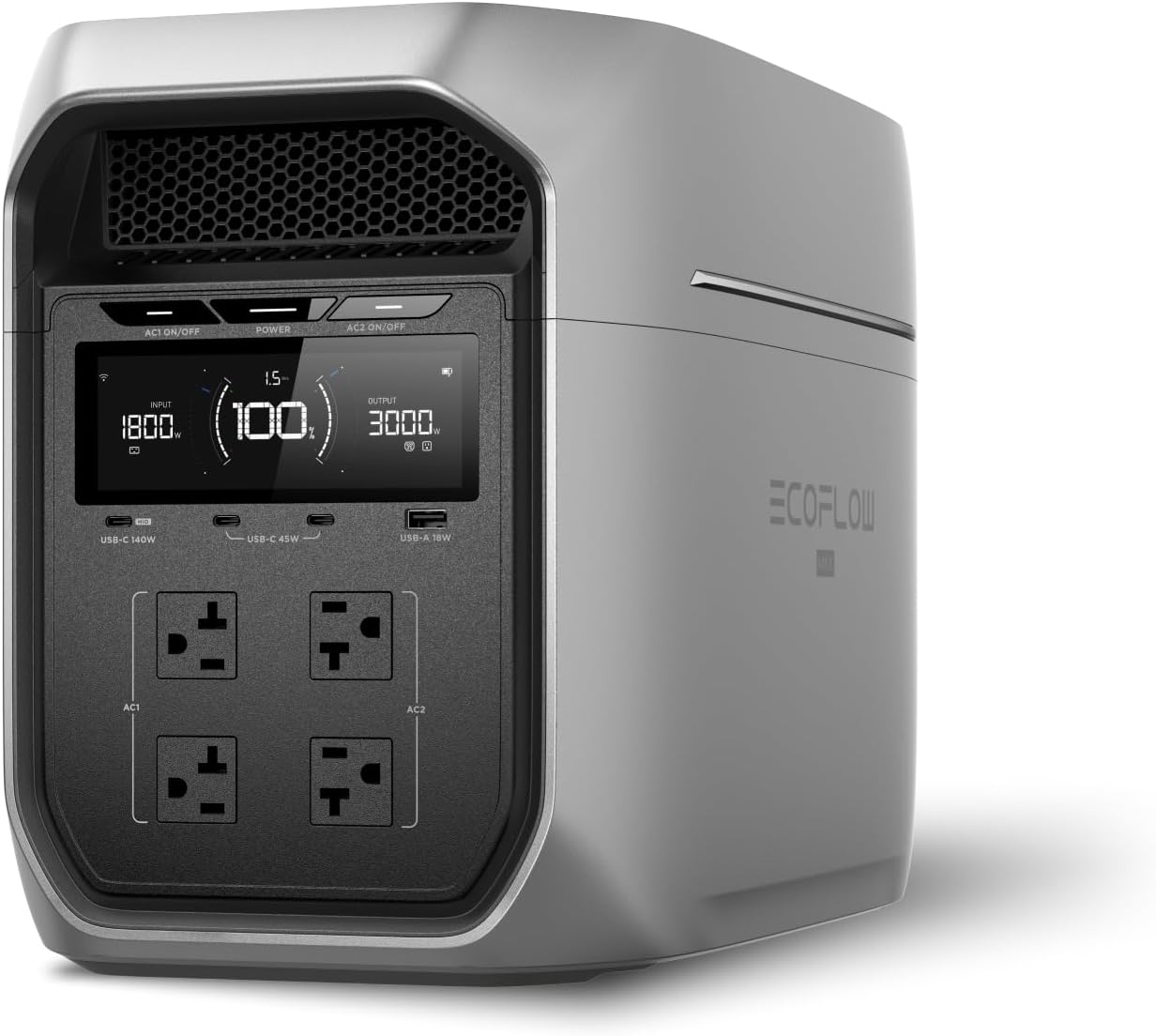
EcoFlow DELTA 3 Plus
EcoFlow's newest mid-range flagship. The DELTA 3 Plus improves on the Delta 2 with faster charging, LiFePO4 chemistry, and UPS functionality — all at a lower price.
Capacity
1024Wh
Output
1800W
Weight
27.6 lbs
More Comparisons
Anker SOLIX C800 Plus vs Bluetti AC70: Best Mid-Range Power Station Under $650?
Read comparison →
Battle Born 100Ah vs LiTime 100Ah: Which RV Battery Is Better?
Read comparison →
Best 1000Wh Power Station 2026: 4-Way Comparison
Read comparison →
Best 2,000Wh Power Station for Home Backup: Jackery vs EcoFlow vs Bluetti
Read comparison →
Best Portable Power Stations for Camping in 2026
Read comparison →
Best Power Station for RV and Van Life: EcoFlow vs Jackery vs Bluetti
Read comparison →
Bluetti AC180 vs EcoFlow Delta 2: Best Mid-Range Power Station?
Read comparison →
Bluetti AC200P vs Elite 200 V2: Is the Upgrade Worth It?
Read comparison →
Bluetti AC70 vs Anker SOLIX C1000: Best Budget Power Station for Camping
Read comparison →
ChargePoint Home Flex vs Wallbox Pulsar Plus: Which EV Charger Is Better?
Read comparison →
EcoFlow 220W Bifacial vs Jackery SolarSaga 200W: Which Solar Panel Is Better?
Read comparison →
EcoFlow Delta 2 vs Delta 2 Max: Which EcoFlow Should You Buy?
Read comparison →
EcoFlow DELTA 3 Plus vs Anker SOLIX C1000: Which 1kWh Station Wins?
Read comparison →
EcoFlow DELTA 3 Plus vs Anker SOLIX C1000: Which 1,000Wh Power Station Is Better?
Read comparison →
EcoFlow DELTA 3 vs DELTA 3 Plus: Is the Plus Worth $130 More?
Read comparison →
EcoFlow DELTA Pro 3 vs Jackery Explorer 2000 Plus: Best Large Power Station?
Read comparison →
EcoFlow RIVER 3 Plus vs Jackery Explorer 600 Plus: Compact Power Compared
Read comparison →
EcoFlow RIVER 3 vs Jackery Explorer 100 Plus: Best Compact Power Station?
Read comparison →
EcoFlow vs Jackery 2026: Which Brand Is Better?
Read comparison →
EcoFlow Wave 2 vs Zero Breeze Mark 2: Best Portable AC for Camping in 2026
Read comparison →
Emporia Energy Level 2 vs Lectron V-BOX 48A: Best Budget EV Charger 2026
Read comparison →
Goal Zero Yeti 1000X vs Jackery Explorer 1000 v2: Premium vs Value
Read comparison →
Honda EU2200i vs EcoFlow DELTA Pro 3: Generator vs Power Station
Read comparison →
Jackery Explorer 1000 v2 vs Anker SOLIX C1000: Best Mid-Range Power Station
Read comparison →
Jackery Explorer 2000 v2 vs 2000 Plus: Which Jackery 2kWh Station Should You Buy?
Read comparison →
Jackery SolarSaga 200W vs Bluetti PV200: Which Solar Panel Is Better?
Read comparison →
Jackery vs Bluetti 2026: Which Brand Makes the Better Power Station?
Read comparison →
Renogy 200Ah Smart vs Redodo 200Ah: Which RV Battery Is Better?
Read comparison →
Segway Cube 2000 vs Jackery Explorer 2000 v2: Value vs Refinement
Read comparison →
Tesla Wall Connector vs ChargePoint Home Flex: Which EV Charger Is Better?
Read comparison →
VTOMAN FlashSpeed 1500 vs Bluetti AC180: Mid-Range Showdown
Read comparison →
VTOMAN FlashSpeed 1500 vs EcoFlow DELTA 3 Plus: Value Challenger vs Proven Champion
Read comparison →
Yoshino B2000 SST vs Bluetti Elite 200 V2: Next-Gen 2kWh Battle
Read comparison →