Guide
The Complete Summer Power Buying Roadmap: Memorial Day to Labor Day 2026

TL;DR
A month-by-month summer power buying roadmap for 2026 — what to buy in May for camping, June for storms, July for travel, and August for events, with real product picks and pricing.
I write the seasonal coverage for this site, and every June I get the same email: “I want to buy power gear for summer — where do I even start?” The honest answer is that “summer power” isn’t one purchase. It’s four different problems spread across four months, and the gear that nails a Memorial Day campsite is not the gear that gets you through a June heat-wave outage or an August block party.
So this is the roadmap I wish someone had handed me three summers ago. It sequences the whole season — camping in May, storms in June, travel in July, events in August — into a staged buying plan. The goal is to spend smart: buy one anchor product at the right moment, then bolt on cheap accessories as each phase arrives, instead of panic-buying duplicates in July at full price.
How to use this roadmap
Before we get into months, three rules that run through everything below.
Buy the anchor first, accessorize later. Your biggest single expense should be one correctly-sized power station. Get that in May and the rest of summer becomes cheap add-ons — a power bank here, a solar panel there.
Size before you shop. A great price on the wrong capacity is not a deal. Run your numbers through our how to size a power station guide so you know whether you’re a 500Wh, 1,000Wh, or 2,000Wh household before you click anything.
Respect the calendar. Power gear has a brutal seasonal pricing curve. Memorial Day and Prime Day are the lows; the days after a hurricane is named are the highs. The whole point of sequencing your purchases is to land each one in a discount window instead of paying a panic premium.
With that out of the way, here’s the month-by-month plan.
May: Camping season and the Memorial Day buying window
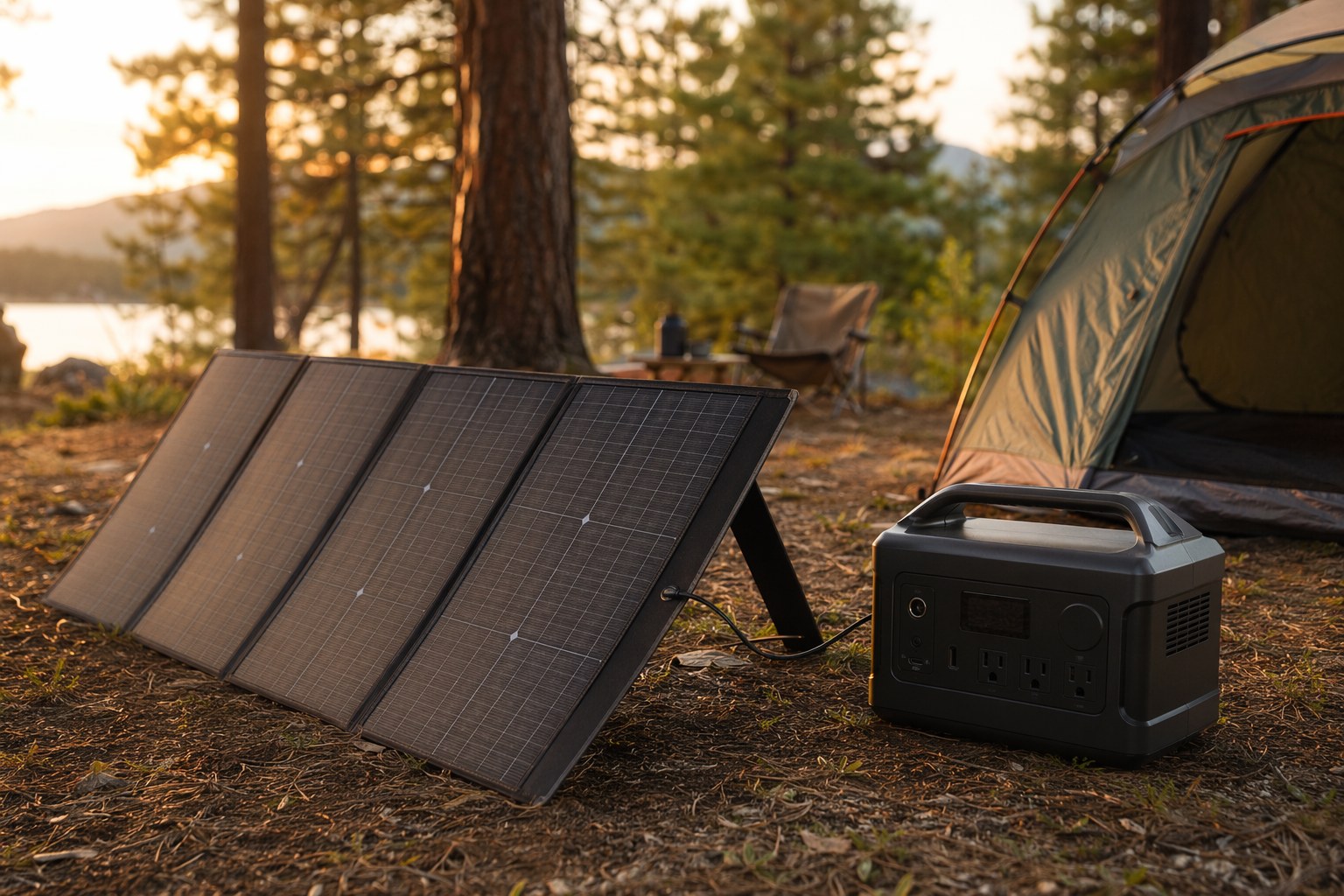
May is when you buy your anchor station, full stop. Memorial Day weekend kicks off both camping season and a genuine round of sales — typically 15-25% off current models, and 25-40% off last-generation units being cleared out. It’s also the last comfortable buying window before hurricane season tightens inventory on June 1, so May purchases pull double duty: camping gear now, storm insurance later.
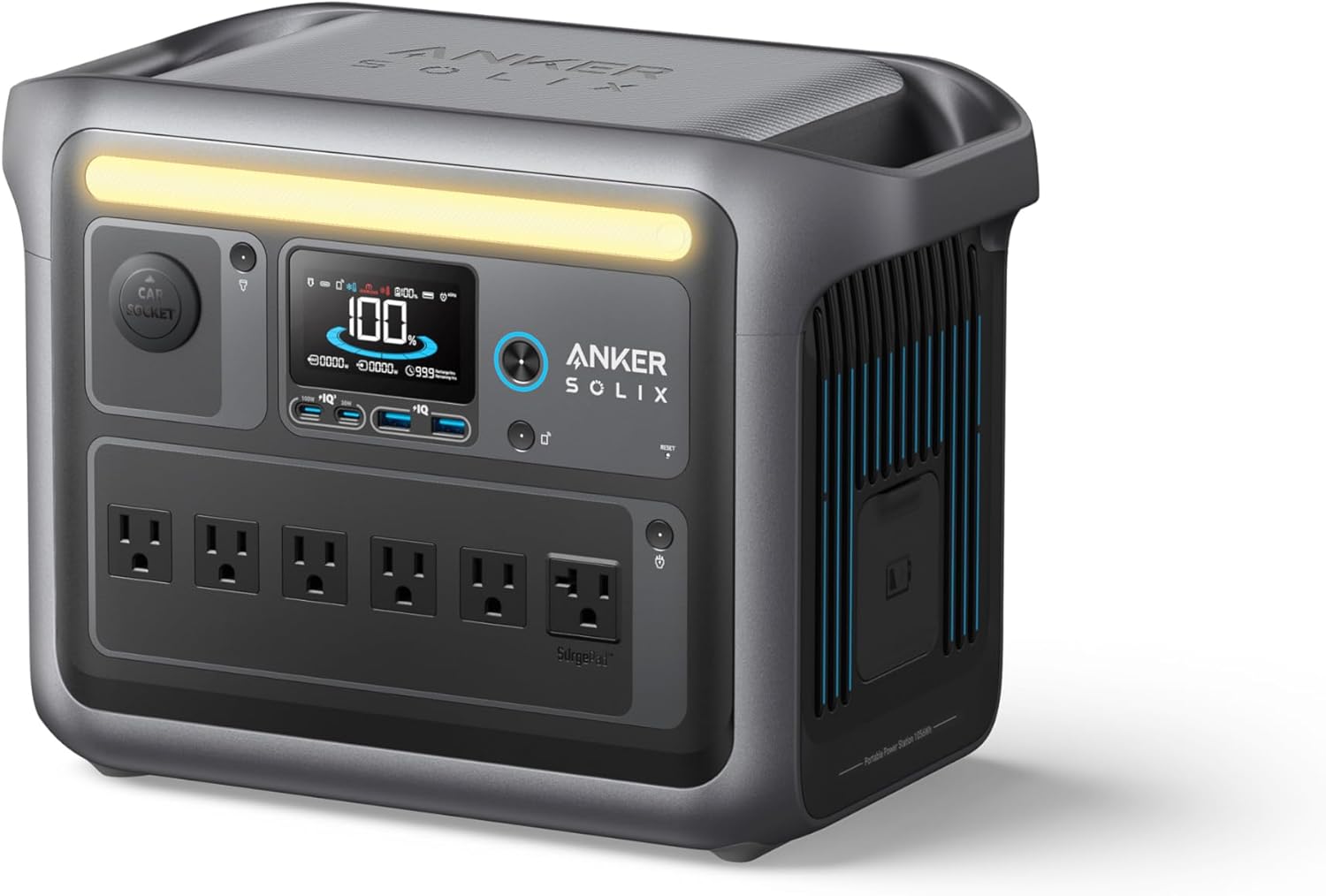
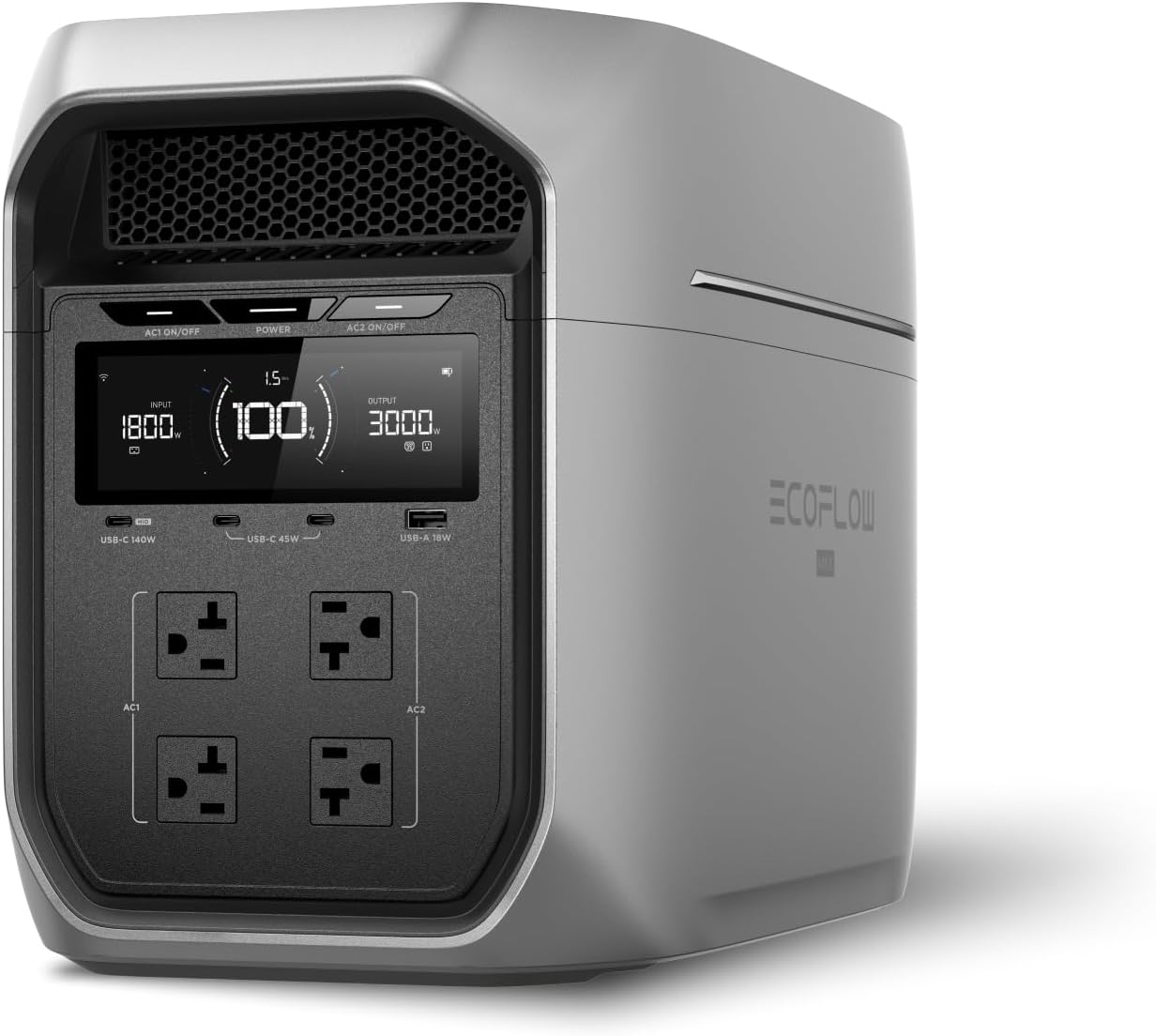
For a couple or a small family doing weekend trips, the sweet spot is a 1,000Wh LiFePO4 station. My default recommendation is the EcoFlow DELTA 3 Plus — 1,024Wh, 1,800W output, and it recharges from a wall outlet in under an hour, which matters when you’re topping off at a friend’s house before you leave town. If you want the best value at this capacity, the Anker SOLIX C1000 gives you six AC outlets, which is the difference between everyone charging at once and a queue at the picnic table.
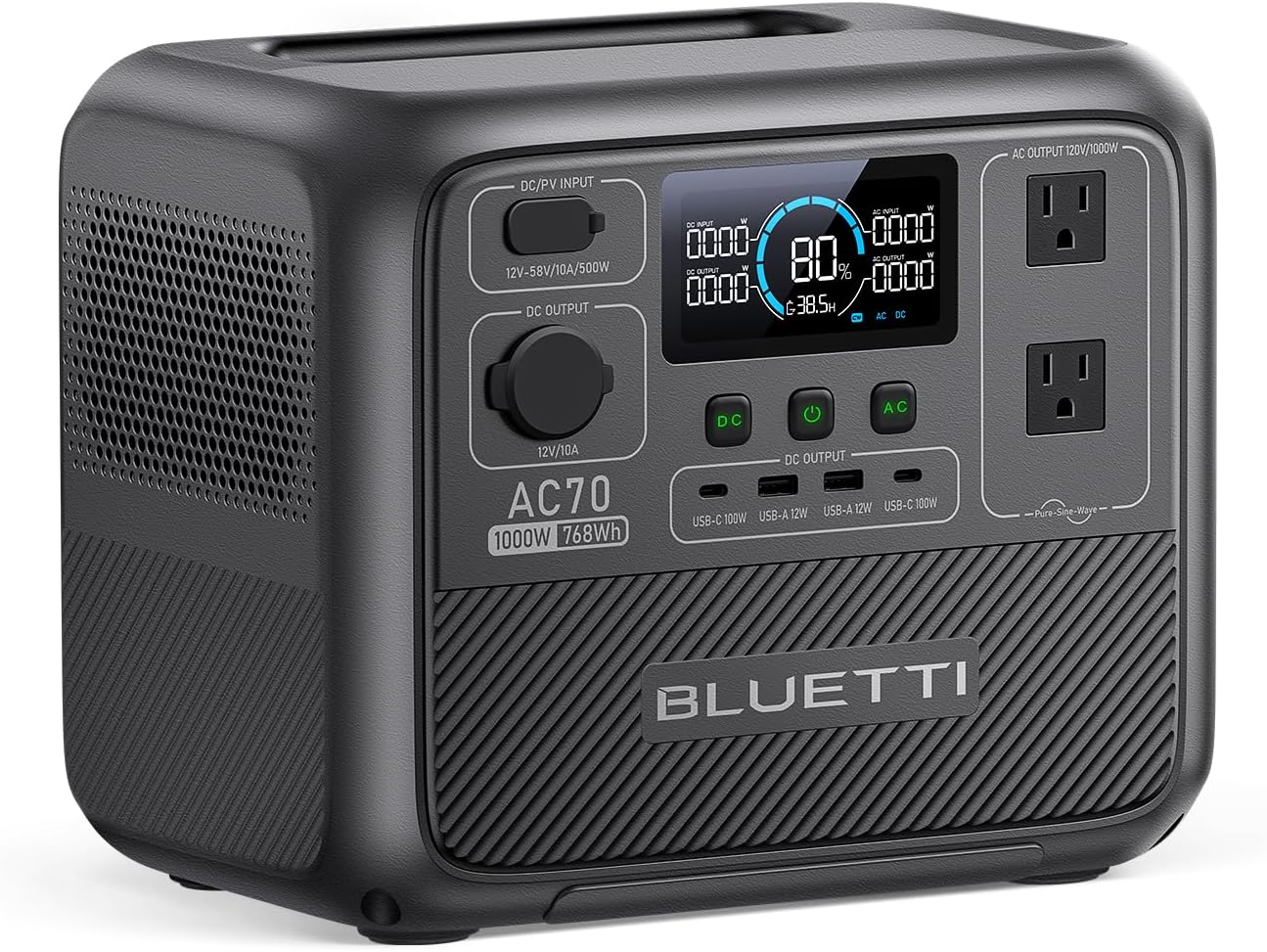
Tighter budget or shorter trips? The Bluetti AC70 at 768Wh handles a one or two-night trip if you’re disciplined about the fridge, and it regularly drops under $425 over Memorial Day weekend. That’s a lot of LiFePO4 cycles for the money.
Whatever you pick, add a 200W folding panel like the Jackery SolarSaga 200W. On a clear May day a 200W panel pulls 600-1,000Wh — enough to offset a modest camper’s full daily draw, which turns a weekend station into an effectively unlimited one. For the full packing list and runtime math, our best power station for summer camping 2026 breakdown and the May long-weekend camping power setup walkthrough cover exactly what to bring and how to deploy it.
One scheduling note: if you only care about the deal and not the camping, the Memorial Day power station deals post lays out which brands discount, by how much, and whether to pull the trigger now or gamble on July. My take for May: if you’re also storm-prone, buy now. Availability beats a $50 saving.
June: Storm season — your camping station becomes home backup
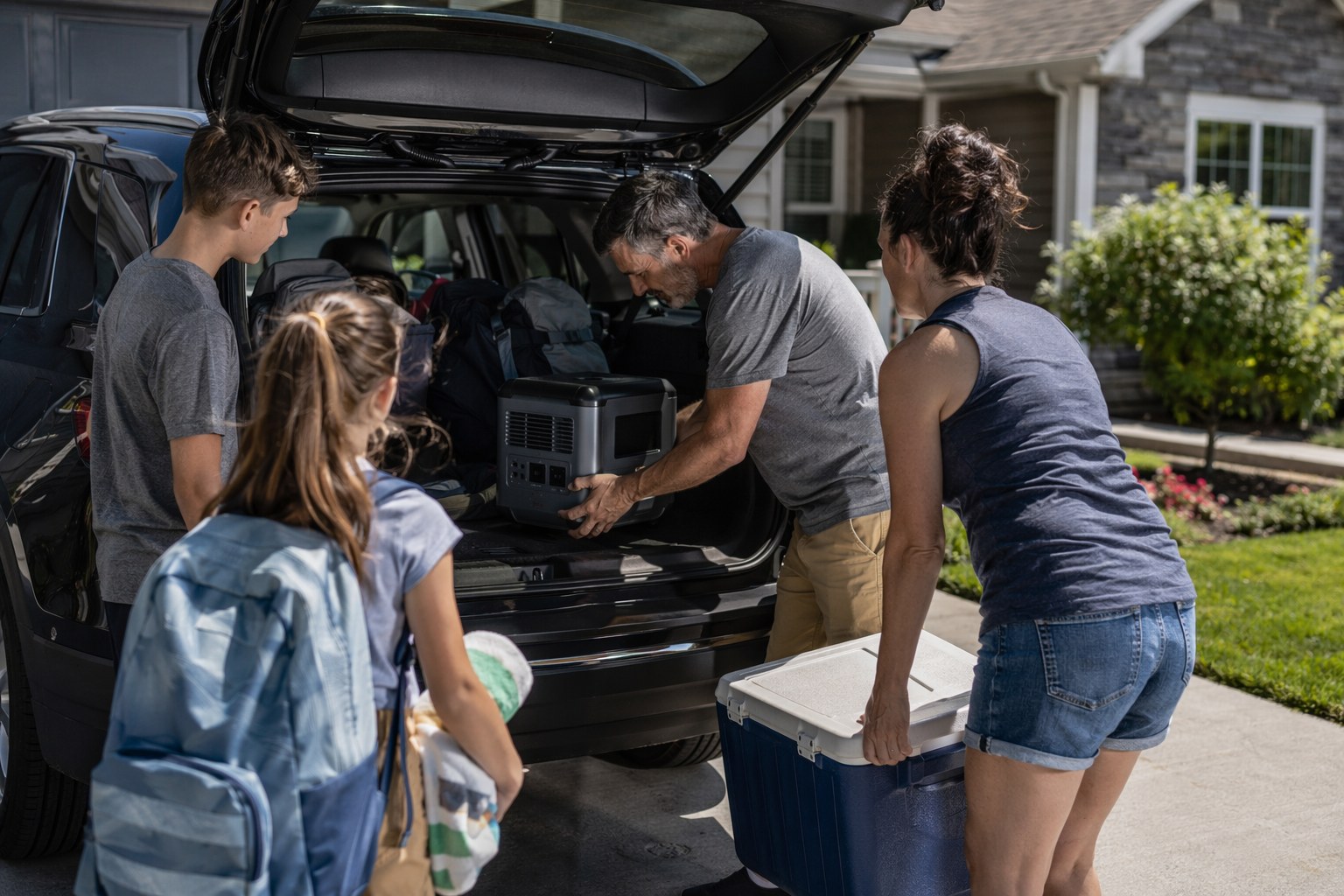
Here’s the elegant part of the roadmap: the station you bought in May for camping is the same station that carries you through June outages. Atlantic hurricane season officially opens June 1, and even inland, June is peak severe-thunderstorm and early heat-wave season. You don’t buy a second machine — you reposition the one you have and add a couple of cheap items.
That 1,000Wh station that ran your campsite fridge will run your kitchen fridge for 12-18 hours per charge, and pairs with the same solar panel for daily top-offs. The shift from “fun” to “preparedness” is mostly mindset and a short shopping list, which our hurricane season power prep guide breaks into three clear tiers from basic to full home backup.
The June-specific buys are small:
- Fans, not AC. A 30W box fan running 24 hours uses only 720Wh — your 1,000Wh station runs it all day. Trying to run a window AC off the same station gets you 75-105 minutes and a dead battery. Cool one room with fans; save the battery for the fridge and phones. The summer power outage heat-wave guide explains the “cool room” strategy and why heat outages are more dangerous than winter ones.
- A backup power bank for phones, so you’re not burning station capacity on a 1-2Wh phone charge.
- A fridge-cycling habit. Plugging the fridge in for 20 minutes every 2-3 hours uses roughly 100Wh per cycle versus 1,200Wh/day continuous, stretching a single charge across days.
If June is the month you realize your household actually needs more runway — medical devices, a larger family, or genuine multi-day self-sufficiency — that’s your cue to look at the next tier. The Bluetti Elite 200 V2 gives you 2,073Wh on a 6,000-plus-cycle battery, and for whole-summer extended outages an expandable platform like those in our best expandable power stations 2026 roundup lets you start with a 2kWh head unit and add battery as the budget allows. Buy the expandable base in June if you’re going to; the add-on batteries can wait for a Prime Day discount.
July: Travel month — and the one thing you should NOT oversize
July is the road-trip, flight, and festival-travel stretch, and it’s the month where people make the most expensive mistake of the summer: hauling a 25-pound power station onto a trip where a 1-pound power bank would do.
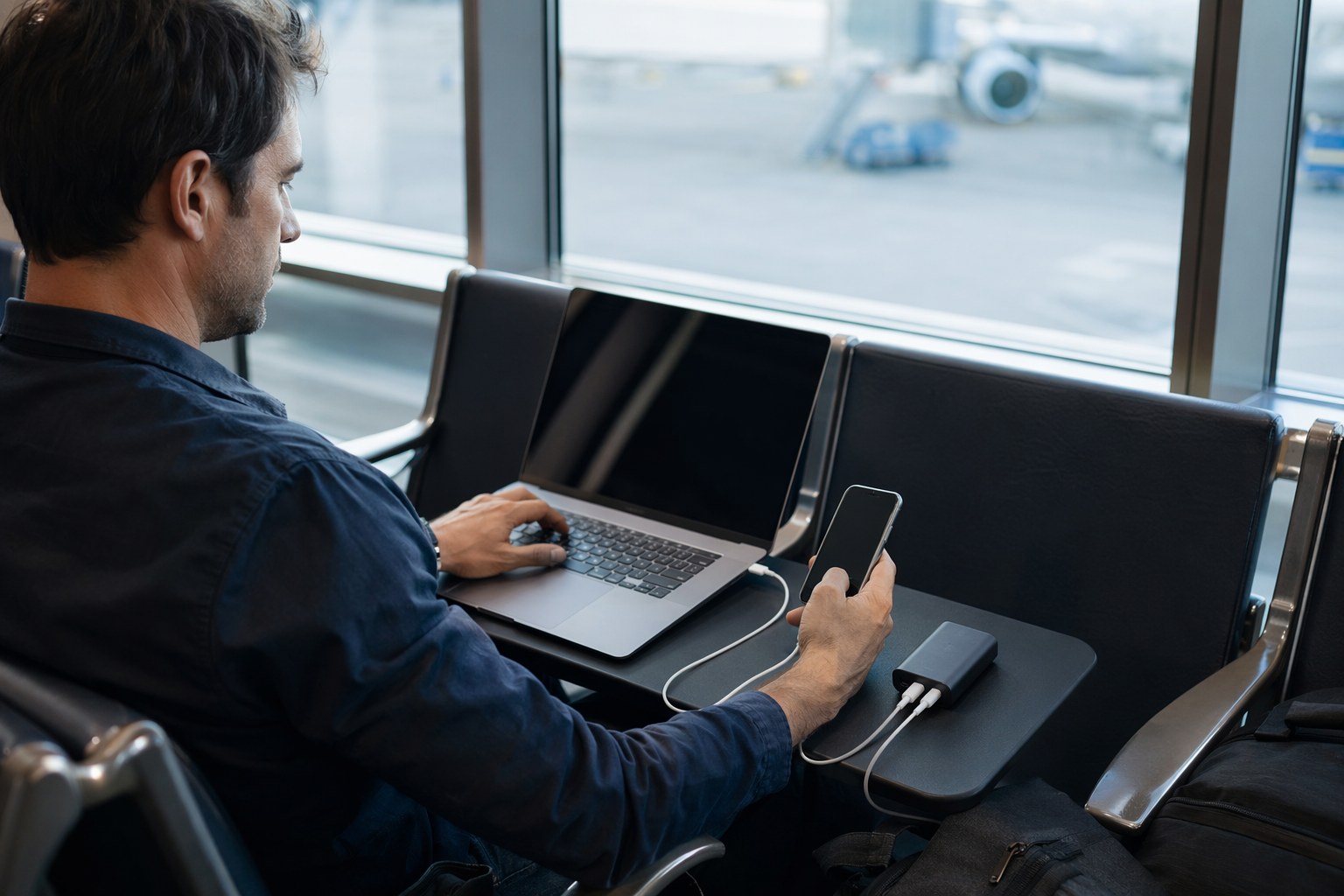
If you’re flying, your big station stays home. The FAA caps lithium batteries in carry-on at 100Wh (and they can’t go in checked bags at all). That means your travel power tops out around 27,000mAh. The Anker Prime 27,650mAh is right at that ceiling, pushes 250W to charge a laptop, and is the single most useful thing I pack. If you want lighter and cheaper, the UGREEN Nexode 25,000mAh covers a phone-and-tablet traveler for a couple of days. Our best power bank for travel guide has the full airline-legal picks.
If you’re road-tripping or doing van life, the math flips — weight stops mattering, and your May camping station is the hero again. A road-trip rig wants that 1,000Wh station for the cooler and devices, recharging off the car’s 12V port between stops and topping up with solar at camp. The van life summer power system road-trip guide details a full mobile setup, and if you’re towing an EV into the plan, our EV road-trip charging stops across America piece maps the corridors so you’re not improvising at 18% battery.
The July buying lesson, in one line: match the gear to the trip’s transport mode. Don’t pay shipping and lug weight for capacity you legally can’t fly with or practically won’t use.
August: Event season — quiet power for tailgates, parties, and weddings
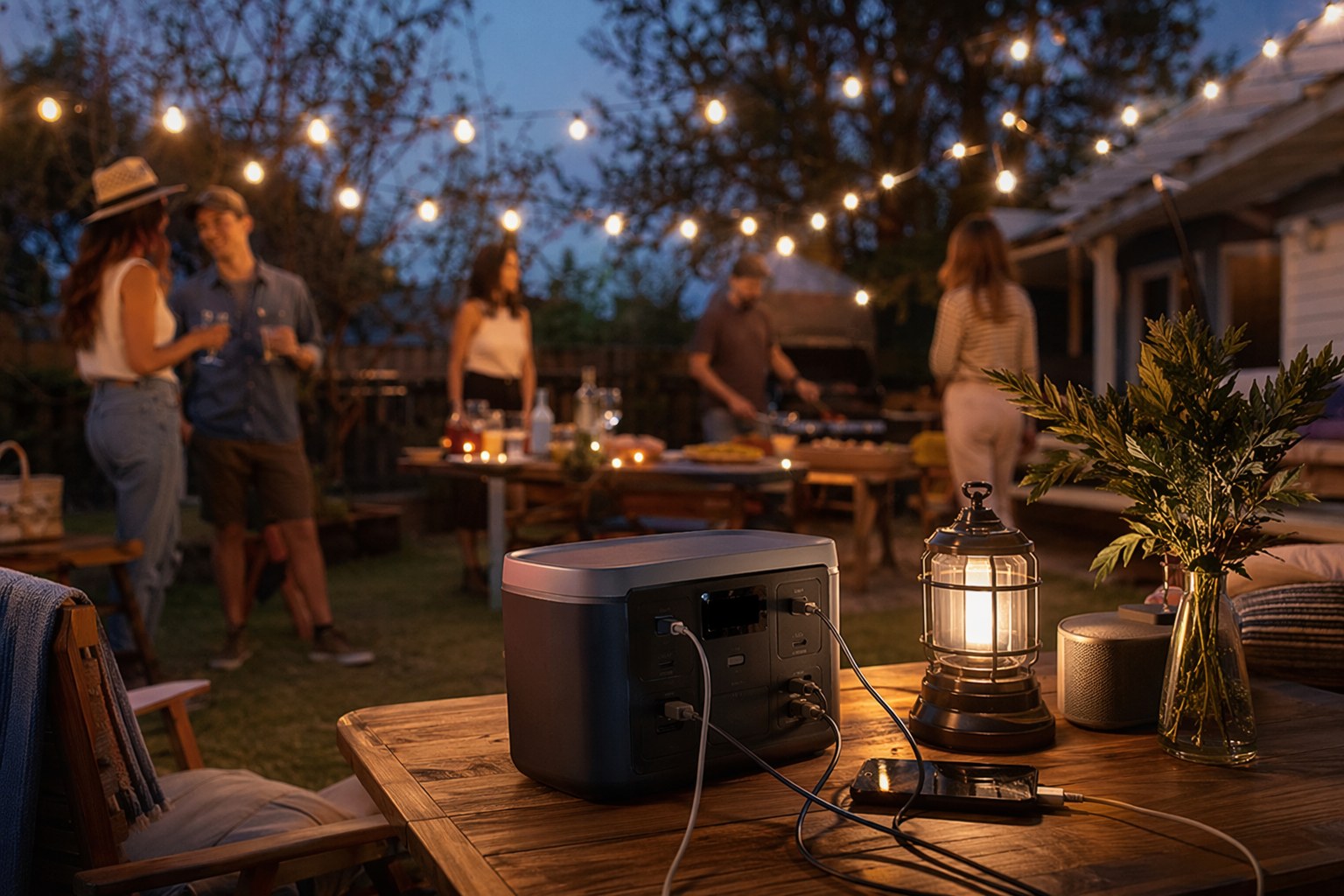
August through Labor Day is the social stretch: late-summer tailgates, backyard graduation and birthday parties, outdoor weddings, and end-of-season cookouts. The defining requirement here is different from every other month — you need power that’s silent and fume-free, because nothing kills an outdoor event faster than a gas generator droning next to the speakers.
This is where, once again, the May station shines. A 1,000-1,500Wh LiFePO4 unit silently runs a PA system, string lights, a blender, and phone-charging stations for hours. Our how to power an outdoor event playbook and the power station for outdoor events guide walk through load math for everything from a small backyard party to a 100-guest reception.
For specific event types, the gear tweaks slightly:
- Tailgating: Portability and AC outlet count matter most. The power station for tailgating season 2026 guide covers running a TV, blender, and griddle from the tailgate without a roaring generator.
- Weddings and larger parties: Runtime and a clean sine wave for audio gear are the priorities, and you may want a second battery or an expandable unit. The outdoor wedding power without a generator breakdown is built exactly for this.
If your event load genuinely exceeds what one station can carry — think a full band, multiple food-prep appliances, or all-day duration — that’s the rare case where you scale up rather than out. The EcoFlow DELTA Pro 3 delivers 4,096Wh, 240V output, and expands far beyond that, which is overkill for a backyard but right for a catered outdoor wedding. Most readers won’t need it; the ones who do already know who they are.
August is also the right month to grab end-of-season accessory deals — extra cables, a second solar panel, a spare power bank — as retailers clear summer inventory ahead of fall.
The whole-summer kit, in order
If you read nothing else, here’s the sequence I actually recommend, with the logic for each step:
- May (anchor): One 1,000Wh LiFePO4 station + a 200W solar panel. Bought on Memorial Day sale, this is your camping rig, your storm backup, and your event power all in one. This is 70% of your total spend and the only big decision.
- June (accessorize): Add fans, a backup power bank, and — only if your household needs true multi-day or medical-grade runway — a 2,000Wh-plus or expandable unit.
- July (right-size, don’t oversize): Add a sub-100Wh airline-legal power bank for flights; reuse the anchor station for road trips. Buy nothing big you’ll lug to an airport.
- August (scale only if needed): Reuse the anchor for tailgates and parties; step up to a large expandable platform only for genuinely heavy event loads. Grab clearance accessories.
The thread running through all of it: you make one good purchase in May and let it do four jobs. Everything after that is cheap, targeted, and bought in a discount window. If you want to compare specific anchor candidates head-to-head before you commit, our best portable power stations of 2026 roundup ranks the current field by use case and price.
The bottom line
Summer power isn’t a single product — it’s a season, and the people who do it well treat it like one. Buy your anchor station in late May while Memorial Day pricing is live and inventory is full. Reposition that same station as storm backup in June. Resist the urge to oversize for July travel, where a pocketable power bank wins. And lean on the anchor again for August’s events, scaling up only when the load truly demands it.
Do that, and you’ll spend less, carry less, and never find yourself refreshing an “out of stock” page the day a storm gets a name. Size first, buy the anchor at the right moment, and let the calendar work for you instead of against you. That’s the entire roadmap — see you out there for Labor Day.
Recommended Power Stations
EcoFlow
EcoFlow DELTA 3 Plus
EcoFlow's newest mid-range flagship. The DELTA 3 Plus improves on the Delta 2 with faster charging, LiFePO4 chemistry, and UPS functionality — all at a lower price.
Frequently Asked Questions
When is the best time to buy a power station for summer 2026?
It depends on what you need it for. For camping and storm prep, buy in late May during Memorial Day sales (15-25% off) — don't wait, because hurricane season starts June 1 and inventory tightens fast. For travel gear and lower-priority upgrades, Prime Day in mid-July typically beats Memorial Day by $30-75 on the same unit. The one rule: never wait until the week a named storm enters the Gulf, when prices spike 20-30% and listings go 'Currently Unavailable.'
Do I really need a different power station for each summer activity?
No. The whole point of this roadmap is to buy one well-sized station that covers your biggest use case, then add small, cheap accessories for the rest. A 1,000Wh LiFePO4 station handles weekend camping, multi-day outages, and most events. You only need a second, larger station if you want overnight AC or true whole-room backup, and only a tiny power bank for travel where airlines cap you at 100Wh.
How big a power station do I need to cover all of summer?
For most households, a single 1,000-1,500Wh LiFePO4 station plus a 200W solar panel covers camping, storm outages, and outdoor events. Step up to a 2,000Wh-plus expandable system only if you run medical equipment, want to power a window AC for several hours, or have a larger family. For air travel, add a sub-100Wh (27,000mAh) power bank that's TSA carry-on legal. Use a sizing guide to confirm your real watt-hour needs before buying.
Ready to Buy? Here's What We Recommend
Based on our testing and this guide, these are the best options for most people: