Bluetti AC180 vs EcoFlow Delta 2: Best Mid-Range Power Station?

TL;DR
Comparing the Bluetti AC180 and EcoFlow Delta 2, two popular mid-range portable power stations. We evaluate capacity, output, charging, expandability, and value to help you choose.
Specs Comparison
| Spec | Bluetti AC180 | EcoFlow Delta 2 |
|---|---|---|
| Rating | 4.4 | 4.6 |
| Capacity | 1152Wh ✓ | 1024Wh |
| Output | 1800W ✓ | 1500W |
| Weight | 35.3 lbs | 27 lbs ✓ |
| Surge | 2700W ✓ | 2250W |
| Price | $699 ✓ | $849 |
| Charge Time | 1 hrs ✓ | 1.3 hrs |
| AC Outlets | 4 | 6 |
| USB-C | 1 | 2 |
| USB-A | 4 | 2 |
| Check Price on Amazon | Check Price on Amazon |
Bluetti AC180 vs EcoFlow Delta 2: Best Mid-Range Power Station?
The mid-range portable power station market is fiercely contested, and two models that buyers consistently weigh against each other are the Bluetti AC180 and the EcoFlow Delta 2. Priced between $700 and $850, both stations target the same audience: homeowners who want reliable backup power, campers who need to run more than a phone charger, and remote workers who can’t afford to lose electricity. They share similar capacities and output ratings, but their differences in battery chemistry, expandability, and charging architecture create meaningfully different ownership experiences. Here’s how they stack up.
Head-to-Head Spec Comparison
| Spec | Bluetti AC180 | EcoFlow Delta 2 |
|---|---|---|
| Capacity | 1152Wh | 1024Wh |
| AC Output | 1800W (2700W surge) | 1800W (2700W surge) |
| Battery Type | LFP (LiFePO4) | LFP (LiFePO4) |
| Cycle Life | 3500+ cycles to 80% | 3000+ cycles to 80% |
| AC Charging Speed | 0-100% in ~1.3 hours | 0-100% in ~50 minutes |
| Solar Input | 500W max | 500W max |
| Expandable | No | Yes, up to 3kWh |
| UPS Mode | Yes (20ms) | Yes (20ms) |
| Weight | 36.7 lbs | 27 lbs |
| Price (MSRP) | ~$699 | ~$849 |
Capacity
The Bluetti AC180 comes out ahead with 1152Wh compared to the Delta 2’s 1024Wh, a 12% advantage that translates to meaningful extra runtime. For a device drawing 100W, that is roughly an extra hour of use. The AC180 also boasts a slightly longer cycle life at 3500+ cycles to 80% capacity versus 3000+ cycles for the Delta 2, meaning it should retain its usefulness for a longer period before the battery degrades.
However, the EcoFlow Delta 2 has a major advantage in expandability. By adding an extra battery, you can grow the system up to approximately 3kWh of total capacity. The Bluetti AC180 has no expansion option whatsoever. If you think you might need more capacity down the road, the Delta 2’s modular approach is worth the tradeoff of slightly less base capacity.
Output
Both stations deliver 1800W of continuous AC output with identical 2700W surge ratings. In practice, this means either one can handle a mini fridge, a CPAP machine, a blender, power tools, or a small space heater. You will not find a meaningful difference in what appliances they can run.
Both also offer UPS functionality with a 20ms switchover time, making either station a viable option for keeping a computer or home networking equipment running through brief outages. This is a feature that some cheaper competitors omit, so having it on both of these mid-range units is a welcome inclusion.
Charging Speed
This is where the EcoFlow Delta 2 establishes a clear lead. It charges from 0 to 100% in roughly 50 minutes via a wall outlet, which is exceptionally fast for a 1kWh-class station. The Bluetti AC180 takes approximately 1.3 hours for a full charge. While 80 minutes is by no means slow, it is nearly double the Delta 2’s time.
For solar charging, both stations accept up to 500W of input, so performance will be comparable when running off panels. The difference is strictly in wall charging speed. If you frequently need to top off your station quickly before heading out, the Delta 2 has a notable advantage.
Portability
The EcoFlow Delta 2 is significantly lighter at 27 lbs compared to the Bluetti AC180’s 36.7 lbs. That nearly 10-pound difference is substantial and immediately noticeable when carrying either unit. The Delta 2 is one of the lighter stations in its capacity class, while the AC180’s weight is more typical of stations with even larger batteries.
For camping, tailgating, or any scenario where you are loading the station into and out of a vehicle regularly, the Delta 2 is the easier station to live with. If your station will mostly stay in one place at home, the weight gap matters less, but it is still worth considering.
Price
The Bluetti AC180 typically sells for around $699, while the EcoFlow Delta 2 comes in at approximately $849. That $150 difference is meaningful in the mid-range segment. The AC180 offers more capacity and longer cycle life for less money, which makes it an exceptional value proposition.
The Delta 2 justifies its higher price with faster charging, lighter weight, and expandability. Whether those features are worth $150 more depends entirely on your priorities. If you value flexibility and charging speed, the premium makes sense. If you want the most battery for the least money, the AC180 wins.
Verdict
Both the Bluetti AC180 and EcoFlow Delta 2 are strong mid-range power stations that will serve most buyers well. The choice comes down to what you prioritize most.
Choose the Bluetti AC180 if you want the best value with more capacity and longer battery life at a lower price. It is ideal for buyers who know 1152Wh is enough for their needs and don’t require expandability. The savings can go toward solar panels or other accessories.
Choose the EcoFlow Delta 2 if you value fast charging, lighter weight, and the ability to expand to 3kWh in the future. It is the better pick for active users who transport their station frequently and want a system that can grow with their power needs.
Frequently Asked Questions
Is the Bluetti AC180 or EcoFlow Delta 2 a better value?
The Bluetti AC180 offers better value at roughly $699 compared to the Delta 2's $849, while providing more capacity (1152Wh vs 1024Wh) and longer cycle life. The Delta 2 justifies its higher price with faster charging, lighter weight, and expandability.
Can the EcoFlow Delta 2 be expanded with extra batteries?
Yes, the EcoFlow Delta 2 supports expansion batteries that can grow the system up to approximately 3kWh of total capacity. The Bluetti AC180 does not offer any expansion option.
How fast does the EcoFlow Delta 2 charge compared to the Bluetti AC180?
The EcoFlow Delta 2 charges from 0 to 100% in roughly 50 minutes via wall outlet, while the Bluetti AC180 takes approximately 1.3 hours. Both accept up to 500W of solar input for comparable solar charging speeds.
Read the Full Reviews
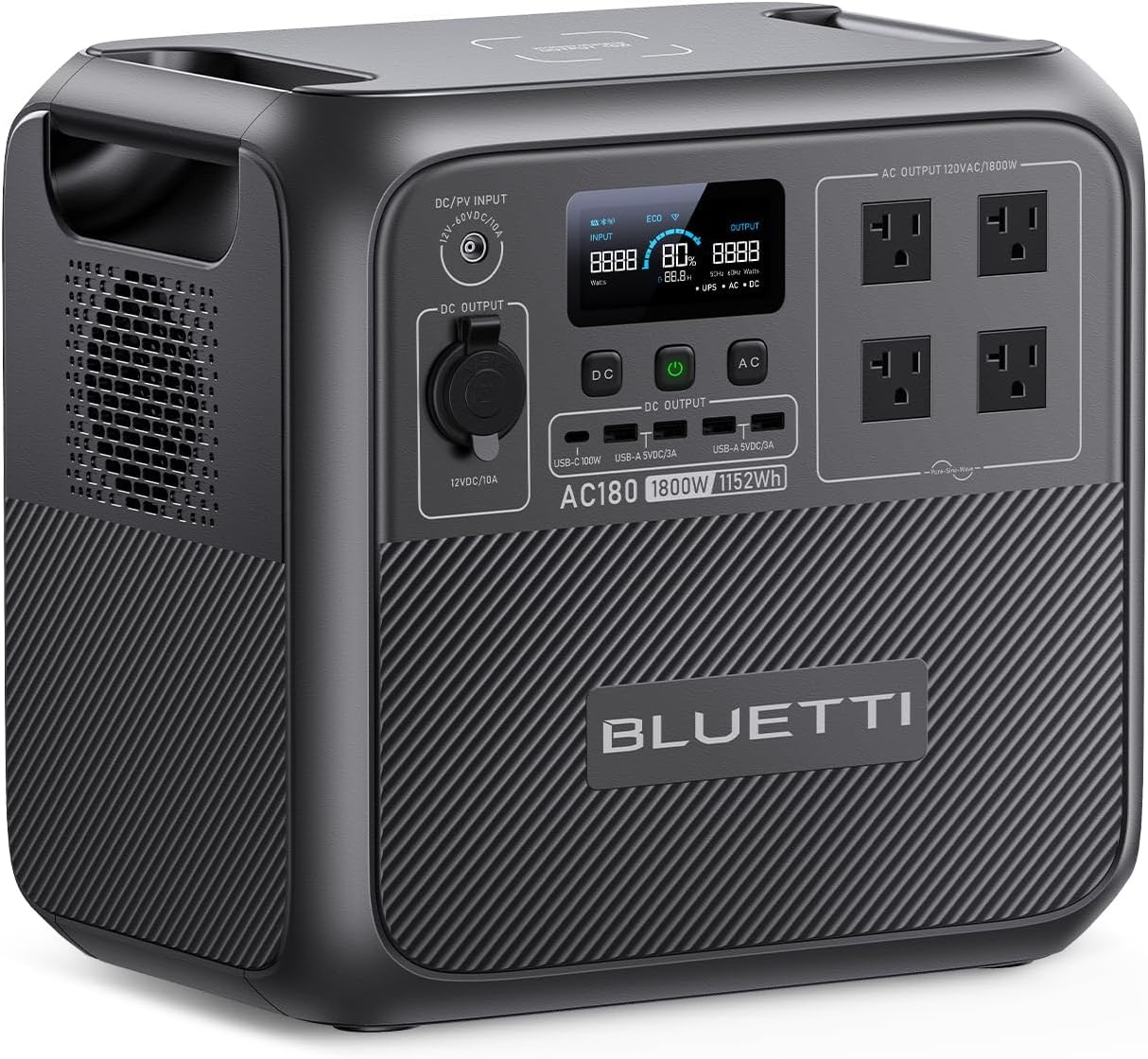
Bluetti
Bluetti AC180
Bluetti's mid-range workhorse with 1,152Wh of LiFePO4 power. The wireless charging pad and Power Lifting mode set it apart from similarly priced competitors.
Capacity
1152Wh
Output
1800W
Weight
35.3 lbs
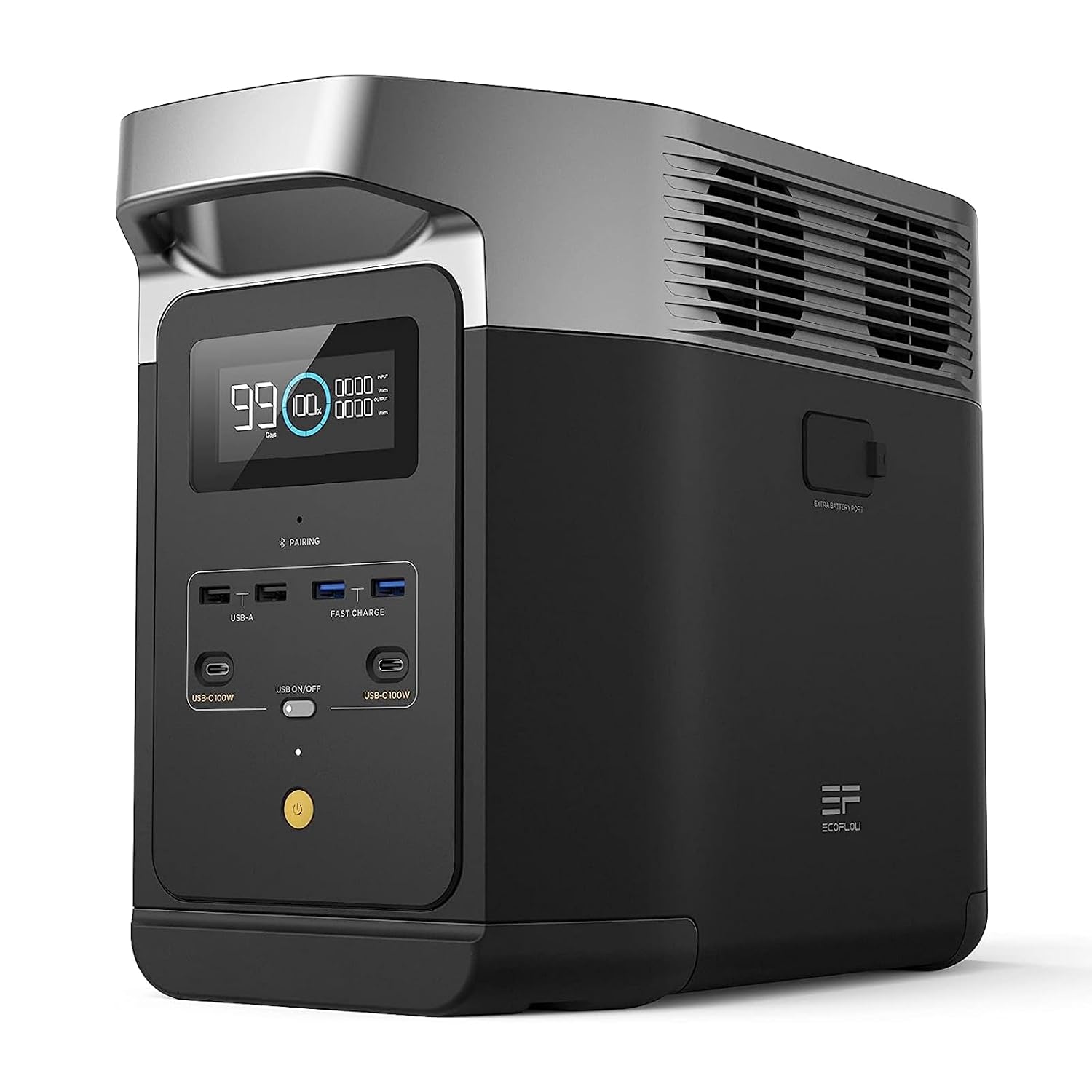
EcoFlow
EcoFlow Delta 2
EcoFlow's versatile mid-range station with industry-leading charging speed and expandable capacity. X-Boost technology lets it power appliances beyond its rated wattage.
Capacity
1024Wh
Output
1500W
Weight
27 lbs
More Comparisons
Anker SOLIX C1000 Gen 2 vs EcoFlow DELTA 3 Plus: The Ultimate 1kWh Showdown (2026)
Read comparison →
Anker SOLIX C800 Plus vs Bluetti AC70: Best Mid-Range Power Station Under $650?
Read comparison →
Battle Born 100Ah vs LiTime 100Ah: Which RV Battery Is Better?
Read comparison →
Best 1000Wh Power Station 2026: 4-Way Comparison
Read comparison →
Best 2,000Wh Power Station for Home Backup: Jackery vs EcoFlow vs Bluetti
Read comparison →
Best Portable Power Stations for Camping in 2026
Read comparison →
Best Power Station for RV and Van Life: EcoFlow vs Jackery vs Bluetti
Read comparison →
Bluetti AC200P vs Elite 200 V2: Is the Upgrade Worth It?
Read comparison →
Bluetti AC70 vs Anker SOLIX C1000: Best Budget Power Station for Camping
Read comparison →
ChargePoint Home Flex vs Wallbox Pulsar Plus: Which EV Charger Is Better?
Read comparison →
EcoFlow 220W Bifacial vs Jackery SolarSaga 200W: Which Solar Panel Is Better?
Read comparison →
EcoFlow Delta 2 vs Delta 2 Max: Which EcoFlow Should You Buy?
Read comparison →
EcoFlow DELTA 3 Plus vs Anker SOLIX C1000: Which 1kWh Station Wins?
Read comparison →
EcoFlow DELTA 3 Plus vs Anker SOLIX C1000: Which 1,000Wh Power Station Is Better?
Read comparison →
EcoFlow DELTA 3 vs DELTA 3 Plus: Is the Plus Worth $130 More?
Read comparison →
EcoFlow DELTA Pro 3 vs Jackery Explorer 2000 Plus: Best Large Power Station?
Read comparison →
EcoFlow RIVER 3 Plus vs Jackery Explorer 600 Plus: Compact Power Compared
Read comparison →
EcoFlow RIVER 3 vs Jackery Explorer 100 Plus: Best Compact Power Station?
Read comparison →
EcoFlow vs Jackery 2026: Which Brand Is Better?
Read comparison →
EcoFlow Wave 2 vs Zero Breeze Mark 2: Best Portable AC for Camping in 2026
Read comparison →
Emporia Energy Level 2 vs Lectron V-BOX 48A: Best Budget EV Charger 2026
Read comparison →
Goal Zero Yeti 1000X vs Jackery Explorer 1000 v2: Premium vs Value
Read comparison →
Honda EU2200i vs EcoFlow DELTA Pro 3: Generator vs Power Station
Read comparison →
Jackery Explorer 1000 v2 vs Anker SOLIX C1000: Best Mid-Range Power Station
Read comparison →
Jackery Explorer 2000 v2 vs 2000 Plus: Which Jackery 2kWh Station Should You Buy?
Read comparison →
Jackery SolarSaga 200W vs Bluetti PV200: Which Solar Panel Is Better?
Read comparison →
Jackery vs Bluetti 2026: Which Brand Makes the Better Power Station?
Read comparison →
Renogy 200Ah Smart vs Redodo 200Ah: Which RV Battery Is Better?
Read comparison →
Segway Cube 2000 vs Jackery Explorer 2000 v2: Value vs Refinement
Read comparison →
Tesla Wall Connector vs ChargePoint Home Flex: Which EV Charger Is Better?
Read comparison →
VTOMAN FlashSpeed 1500 vs Bluetti AC180: Mid-Range Showdown
Read comparison →
VTOMAN FlashSpeed 1500 vs EcoFlow DELTA 3 Plus: Value Challenger vs Proven Champion
Read comparison →
Yoshino B2000 SST vs Bluetti Elite 200 V2: Next-Gen 2kWh Battle
Read comparison →