EcoFlow vs Jackery 2026: Which Brand Is Better?

TL;DR
A comprehensive brand-level comparison of EcoFlow and Jackery portable power stations in 2026, covering the 1kWh and 2kWh tiers, charging tech, solar ecosystems, and overall value.
Specs Comparison
| Spec | EcoFlow DELTA 3 Plus | Jackery Explorer 1000 v2 | EcoFlow DELTA Pro 3 | Jackery Explorer 2000 Plus |
|---|---|---|---|---|
| Rating | 4.7 | 4.5 | 4.8 | 4.7 |
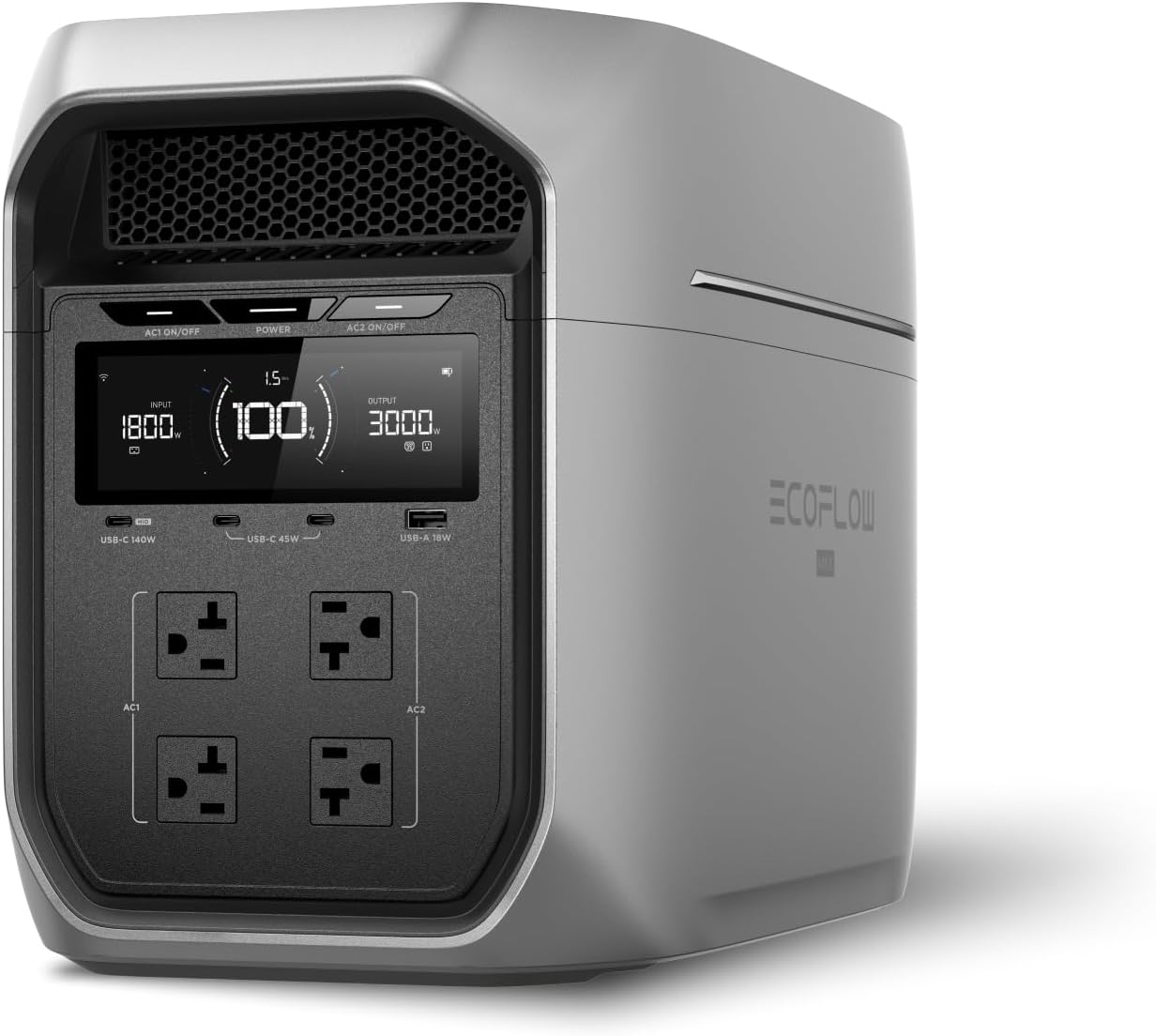
| Capacity | 1024Wh | 1070Wh | 4096Wh ✓ | 2042Wh |
| Output | 1800W | 1500W | 4000W ✓ | 3000W |
| Weight | 27.6 lbs | 22 lbs ✓ | 115 lbs | 61.5 lbs |
| Surge | 3600W | 2000W | 8000W ✓ | 6000W |
| Price | $649 ✓ | $799 | $1999 | $1999 |
| Charge Time | 0.9 hrs ✓ | 1.7 hrs | 1.5 hrs | 2 hrs |
| AC Outlets | 6 | 3 | 6 | 5 |
| USB-C | 2 | 2 | 2 | 2 |
| USB-A | 2 | 1 | 4 | 2 |
| Check Price on Amazon | Check Price on Amazon | Check Price on Amazon | Check Price on Amazon |
If you are shopping for a portable power station in 2026, there is a good chance your shortlist comes down to two names: EcoFlow and Jackery. These are the two dominant brands in the space, each with a loyal following and a deep product lineup. But they take fundamentally different approaches to portable power, and understanding those differences is the key to making the right purchase.
EcoFlow pushes the envelope on charging speed, raw output, and expandability. Jackery prioritizes simplicity, reliability, and one of the best integrated solar ecosystems on the market. For more on each brand’s full lineup, visit our EcoFlow and Jackery brand pages. Below, we compare them head-to-head at the two most popular capacity tiers: roughly 1kWh and 2kWh.
1kWh Tier: EcoFlow DELTA 3 Plus vs Jackery Explorer 1000 v2
| Spec | EcoFlow DELTA 3 Plus | Jackery Explorer 1000 v2 |
|---|---|---|
| Capacity | 1024Wh | 1070Wh |
| AC Output | 1800W (3600W surge) | 1500W (2000W surge) |
| Weight | 28.6 lbs | 24.2 lbs |
| Battery Type | LFP | LFP |
| AC Charging Speed | 0-80% in 43 min | 0-80% in 70 min |
| Solar Input | 500W max | 400W max |
| Expansion | Yes (extra batteries) | No |
| Price (MSRP) | $899 | $799 |
Charging Speed
This is where EcoFlow flexes its X-Stream charging technology. The DELTA 3 Plus can go from empty to 80 percent in about 43 minutes via wall outlet, which is genuinely class-leading. The Jackery Explorer 1000 v2 is no slouch at around 70 minutes to 80 percent, but it simply cannot match EcoFlow’s pace. If you frequently need to top off between uses or charge quickly before heading out, EcoFlow has a clear edge.
Output Power
The DELTA 3 Plus delivers 1800W of continuous AC output with a 3600W surge, compared to the Jackery’s 1500W continuous and 2000W surge. That extra headroom on the EcoFlow means it can handle higher-draw appliances like space heaters, larger power tools, and full-size microwaves without breaking a sweat. For a detailed breakdown of what each wattage tier can actually power, see our guide on what a 1000Wh power station can run.
Solar Ecosystem
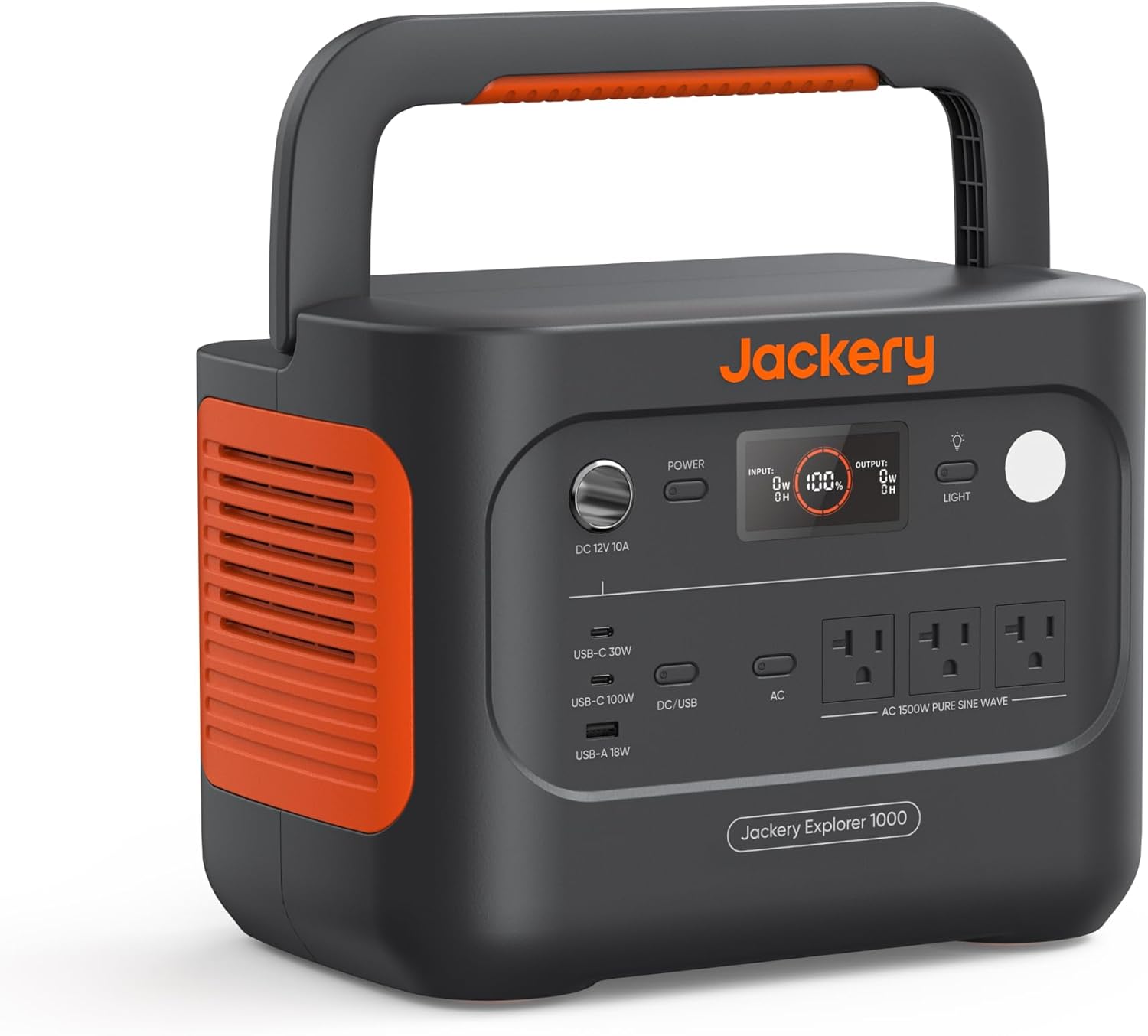
Here is where Jackery shines. The Explorer 1000 v2 pairs seamlessly with Jackery’s SolarSaga panels, which are widely regarded as some of the most reliable and well-built portable solar panels available. Jackery’s solar bundles are competitively priced and the panels fold up cleanly for transport. EcoFlow’s solar panels are capable, but Jackery’s ecosystem feels more polished and purpose-built for off-grid solar use.
Portability
At 24.2 lbs versus 28.6 lbs, the Jackery is noticeably lighter. For backpackers, car campers who carry gear over distance, or anyone who values a lighter load, that four-pound difference adds up.
2kWh Tier: EcoFlow DELTA Pro 3 vs Jackery Explorer 2000 Plus
| Spec | EcoFlow DELTA Pro 3 | Jackery Explorer 2000 Plus |
|---|---|---|
| Capacity | 4096Wh | 2042Wh |
| AC Output | 4000W (8000W surge) | 3000W (6000W surge) |
| Weight | 62.8 lbs | 61.5 lbs |
| Battery Type | LFP | LFP |
| AC Charging Speed | 0-80% in 2.7 hrs | 0-80% in 2 hrs |
| Solar Input | 1600W max | 1000W max |
| Expansion | Up to 12kWh | Up to 12kWh |
| Price (MSRP) | $2,999 | $1,999 |
Expandability and Capacity
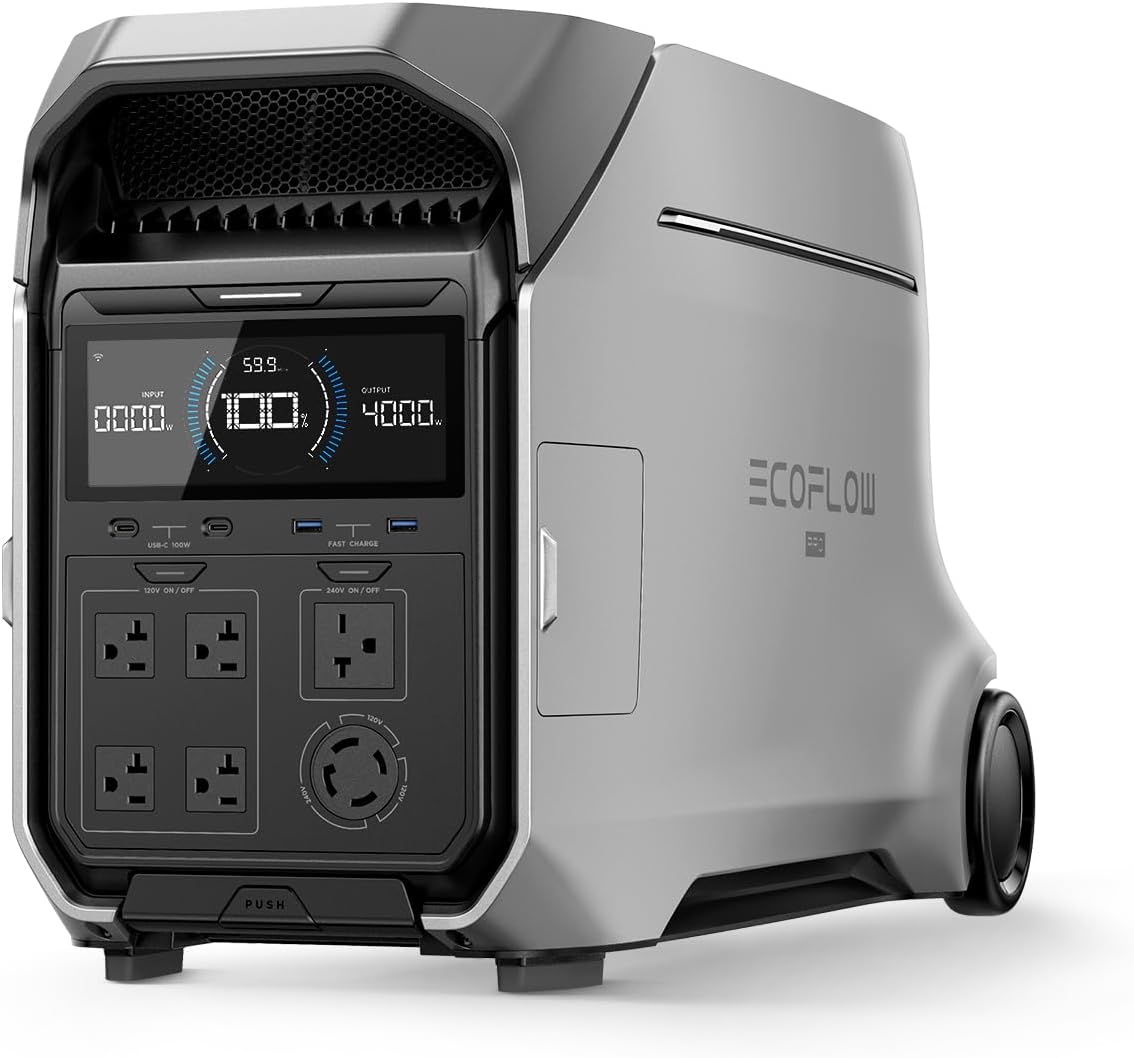
Both units support expansion batteries to scale up capacity, and both can reach roughly 12kWh with add-on packs. However, the EcoFlow DELTA Pro 3 starts with a significantly larger base capacity of 4096Wh compared to the Jackery’s 2042Wh. If you need serious baseline capacity out of the box, EcoFlow delivers more per unit.
Output and Whole-Home Use
The DELTA Pro 3 outputs 4000W continuous, enough to run most household circuits during a power outage. The Jackery Explorer 2000 Plus is no lightweight at 3000W, but the EcoFlow’s higher ceiling makes it better suited for whole-home backup scenarios with higher-draw appliances running simultaneously.
Price and Value
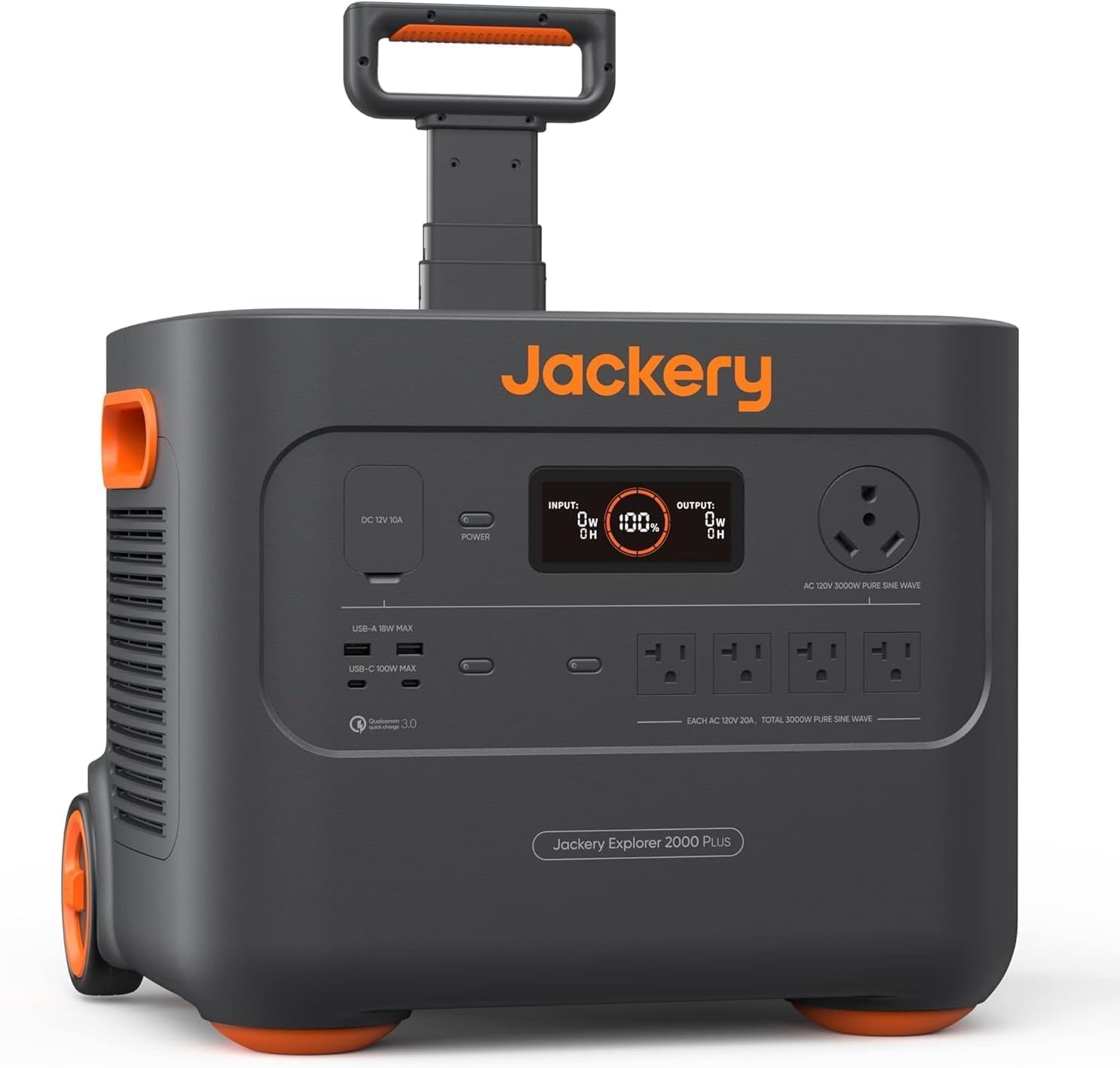
This is where the conversation shifts. The Jackery Explorer 2000 Plus comes in at $1,999 versus $2,999 for the DELTA Pro 3. That is a $1,000 difference. For many buyers, the Jackery offers more than enough power and expandability at a substantially lower entry price. Dollar for dollar, the Jackery is arguably the better value if you do not need 4kWh out of the box.
Brand-Level Takeaways
Innovation: EcoFlow wins. X-Stream charging, higher wattage outputs, and aggressive firmware updates keep their products at the cutting edge.
Reliability and Simplicity: Jackery wins. Their products are straightforward, their app is cleaner, and their track record for long-term reliability is excellent. Less can go wrong when the design is simpler.
Solar Ecosystem: Jackery wins. Better panel build quality, more cohesive bundles, and a solar-first design philosophy.
Raw Power: EcoFlow wins. Higher output across every tier, with more headroom for demanding loads.
Price: Jackery wins at most tiers, sometimes by a significant margin.
The Verdict
Choose EcoFlow if you want the fastest charging, highest output, and most expandable system available. EcoFlow is the brand for power users who want to push the limits of what a portable power station can do.
Choose Jackery if you value reliability, simplicity, a best-in-class solar setup, and a lower price tag. Jackery is the brand for people who want dependable portable power without the complexity.
Both are excellent choices. The right one depends entirely on what you prioritize. Use our comparison tool to put any two models side by side, or browse all power station rankings to see how both brands stack up against the full market.
Related Reading
- Best 1000Wh Power Stations 2026 — the DELTA 3 Plus and Explorer 1000 v2 compared against Anker and Bluetti competitors
- EcoFlow DELTA Pro 3 vs. Jackery Explorer 2000 Plus — an in-depth head-to-head at the 2kWh tier
- Solar Panel Compatibility Guide — which panels work with which stations, including cross-brand pairings
- LiFePO4 vs. NMC Batteries — both brands now use LFP, but here is why that matters
Frequently Asked Questions
Is EcoFlow or Jackery better in 2026?
Neither brand is universally better. EcoFlow wins on charging speed, raw power output, and expandability. Jackery wins on reliability, simplicity, solar ecosystem quality, and price. Your choice depends on whether you prioritize performance or value and ease of use.
Which brand has better solar panels, EcoFlow or Jackery?
Jackery has the edge in solar ecosystem quality. Their SolarSaga panels are widely regarded as some of the most reliable and well-built portable panels available, with polished bundles and a solar-first design philosophy.
Are EcoFlow power stations worth the higher price over Jackery?
EcoFlow stations typically cost $100 to $1,000 more depending on the tier, but deliver faster charging, higher output, and more expandability. If you need maximum performance and future scalability, the premium is justified. For straightforward portable power, Jackery offers excellent value at lower prices.
Read the Full Reviews
EcoFlow
EcoFlow DELTA 3 Plus
EcoFlow's newest mid-range flagship. The DELTA 3 Plus improves on the Delta 2 with faster charging, LiFePO4 chemistry, and UPS functionality — all at a lower price.
Capacity
1024Wh
Output
1800W
Weight
27.6 lbs
Jackery
Jackery Explorer 1000 v2
A reliable, well-rounded power station ideal for camping trips and emergency backup. Fast charging and a lightweight design make it easy to grab and go.
Capacity
1070Wh
Output
1500W
Weight
22 lbs
EcoFlow
EcoFlow DELTA Pro 3
The ultimate home backup power station. The DELTA Pro 3 can power your entire home during an outage and expand to a massive 48kWh with additional batteries.
Capacity
4096Wh
Output
4000W
Weight
115 lbs
Jackery
Jackery Explorer 2000 Plus
Jackery's flagship expandable power station. With 2kWh base capacity expandable to 24kWh, it's a serious home backup solution that can also handle RV and off-grid living.
Capacity
2042Wh
Output
3000W
Weight
61.5 lbs
More Comparisons
Anker SOLIX C1000 Gen 2 vs EcoFlow DELTA 3 Plus: The Ultimate 1kWh Showdown (2026)
Read comparison →
Anker SOLIX C800 Plus vs Bluetti AC70: Best Mid-Range Power Station Under $650?
Read comparison →
Battle Born 100Ah vs LiTime 100Ah: Which RV Battery Is Better?
Read comparison →
Best 1000Wh Power Station 2026: 4-Way Comparison
Read comparison →
Best 2,000Wh Power Station for Home Backup: Jackery vs EcoFlow vs Bluetti
Read comparison →
Best Portable Power Stations for Camping in 2026
Read comparison →
Best Power Station for RV and Van Life: EcoFlow vs Jackery vs Bluetti
Read comparison →
Bluetti AC180 vs EcoFlow Delta 2: Best Mid-Range Power Station?
Read comparison →
Bluetti AC200P vs Elite 200 V2: Is the Upgrade Worth It?
Read comparison →
Bluetti AC70 vs Anker SOLIX C1000: Best Budget Power Station for Camping
Read comparison →
ChargePoint Home Flex vs Wallbox Pulsar Plus: Which EV Charger Is Better?
Read comparison →
EcoFlow 220W Bifacial vs Jackery SolarSaga 200W: Which Solar Panel Is Better?
Read comparison →
EcoFlow Delta 2 vs Delta 2 Max: Which EcoFlow Should You Buy?
Read comparison →
EcoFlow DELTA 3 Plus vs Anker SOLIX C1000: Which 1kWh Station Wins?
Read comparison →
EcoFlow DELTA 3 Plus vs Anker SOLIX C1000: Which 1,000Wh Power Station Is Better?
Read comparison →
EcoFlow DELTA 3 vs DELTA 3 Plus: Is the Plus Worth $130 More?
Read comparison →
EcoFlow DELTA Pro 3 vs Jackery Explorer 2000 Plus: Best Large Power Station?
Read comparison →
EcoFlow RIVER 3 Plus vs Jackery Explorer 600 Plus: Compact Power Compared
Read comparison →
EcoFlow RIVER 3 vs Jackery Explorer 100 Plus: Best Compact Power Station?
Read comparison →
EcoFlow Wave 2 vs Zero Breeze Mark 2: Best Portable AC for Camping in 2026
Read comparison →
Emporia Energy Level 2 vs Lectron V-BOX 48A: Best Budget EV Charger 2026
Read comparison →
Goal Zero Yeti 1000X vs Jackery Explorer 1000 v2: Premium vs Value
Read comparison →
Honda EU2200i vs EcoFlow DELTA Pro 3: Generator vs Power Station
Read comparison →
Jackery Explorer 1000 v2 vs Anker SOLIX C1000: Best Mid-Range Power Station
Read comparison →
Jackery Explorer 2000 v2 vs 2000 Plus: Which Jackery 2kWh Station Should You Buy?
Read comparison →
Jackery SolarSaga 200W vs Bluetti PV200: Which Solar Panel Is Better?
Read comparison →
Jackery vs Bluetti 2026: Which Brand Makes the Better Power Station?
Read comparison →
Renogy 200Ah Smart vs Redodo 200Ah: Which RV Battery Is Better?
Read comparison →
Segway Cube 2000 vs Jackery Explorer 2000 v2: Value vs Refinement
Read comparison →
Tesla Wall Connector vs ChargePoint Home Flex: Which EV Charger Is Better?
Read comparison →
VTOMAN FlashSpeed 1500 vs Bluetti AC180: Mid-Range Showdown
Read comparison →
VTOMAN FlashSpeed 1500 vs EcoFlow DELTA 3 Plus: Value Challenger vs Proven Champion
Read comparison →
Yoshino B2000 SST vs Bluetti Elite 200 V2: Next-Gen 2kWh Battle
Read comparison →