Honda EU2200i vs EcoFlow DELTA Pro 3: Generator vs Power Station

TL;DR
Honda EU2200i gas generator vs EcoFlow DELTA Pro 3 battery power station: two fundamentally different approaches to backup power compared on runtime, output, noise, and total cost.
Specs Comparison
| Spec | Honda EU2200i | EcoFlow DELTA Pro 3 |
|---|---|---|
| Rating | 4.8 | 4.8 |
| Watts | 1800W | 4000W ✓ |
| Weight | 46.5 lbs ✓ | 115 lbs |
| Noise | 48dB ✓ | — |
| Surge | 2200W | 8000W ✓ |
| Price | $1149 ✓ | $1999 |
| Charge Time | — | 1.5 hrs ✓ |
| AC Outlets | — | 6 |
| USB-C | — | 2 |
| USB-A | — | 4 |
| Check Price on Amazon | Check Price on Amazon |
This is not a typical apples-to-apples comparison. The Honda EU2200i is a gas-powered inverter generator. The EcoFlow DELTA Pro 3 is a battery-powered portable power station. They solve the same fundamental problem, keeping your devices and appliances running when the grid goes down, but they do it in completely different ways. Understanding which philosophy fits your life is the real question here.
Head-to-Head Specs
| Spec | Honda EU2200i | EcoFlow DELTA Pro 3 |
|---|---|---|
| Rated Output | 1800W (2200W surge) | 4000W (8000W surge) |
| Energy Source | Gasoline | Rechargeable LFP Battery |
| Capacity / Runtime | Unlimited (with fuel) | 4096Wh (expandable to 12kWh) |
| Runtime at 500W | ~8.1 hrs per tank | ~7 hrs (base battery) |
| Noise Level | 48-57 dBA | Near silent |
| Weight | 47 lbs | 62.8 lbs |
| Indoor Use | No (carbon monoxide risk) | Yes |
| Maintenance | Oil changes, spark plugs, fuel stabilizer | None |
| Fuel Cost | Ongoing (gasoline) | Electricity (pennies per charge) |
| Solar Charging | No | Yes (1600W max input) |
| Price (MSRP) | $1,149 | $2,999 |
Runtime and Energy
This is the Honda’s strongest argument. As long as you have gasoline, the EU2200i runs indefinitely. Fill the tank, run for eight hours at moderate load, refill, and repeat. During a multi-day power outage, this unlimited runtime is a genuine advantage that no battery power station can fully replicate.
The EcoFlow DELTA Pro 3 starts with 4096Wh of stored energy and can expand to 12kWh with additional batteries. At 500W of draw, the base unit runs for about seven hours. With expansion batteries maxed out, you can push that to roughly 20 hours. That covers most outages, but a prolonged multi-day grid failure will eventually drain the battery. Solar panels can extend runtime during daylight hours, but you are still dependent on weather conditions.
Output Power
The EcoFlow DELTA Pro 3 dramatically outperforms the Honda here. With 4000W of continuous output and an 8000W surge, it can power an entire home circuit panel. The Honda EU2200i is limited to 1800W continuous, which is enough for a refrigerator, some lights, and a few devices but not enough for a high-draw appliance like a large window AC unit running simultaneously with other loads.
If raw output matters, the EcoFlow is in a different league entirely.
Noise
This is one of the most underappreciated differences. The Honda EU2200i is quiet for a generator at 48 to 57 dBA, roughly the volume of a normal conversation. But it is still audible, and in a quiet neighborhood or campsite, it will be noticed. Running it at night may disturb your sleep or your neighbors.
The EcoFlow DELTA Pro 3 is essentially silent. There is no engine, no exhaust, no vibration. It sits in your living room and powers your house without making a sound. For apartment dwellers, suburban homeowners with close neighbors, or anyone who values quiet, this difference is transformative.
Indoor Use and Safety
The Honda EU2200i produces carbon monoxide and must be operated outdoors, at least 20 feet from any building opening. This means running extension cords, dealing with weather exposure, and accepting the security risk of leaving an expensive generator outside during an outage.
The EcoFlow DELTA Pro 3 produces zero emissions and is perfectly safe to operate indoors. Set it in your hallway, plug in your refrigerator, and go to bed. No fumes, no fire risk, no theft concern. For indoor convenience and safety, the battery power station is the clear winner.
Maintenance
The Honda EU2200i requires regular maintenance: oil changes, spark plug replacements, fuel stabilizer if stored for extended periods, and occasional carburetor cleaning. If you do not maintain it, it may not start when you need it most.
The EcoFlow DELTA Pro 3 requires zero maintenance. Keep it charged, and it is ready when you need it. LFP batteries maintain their charge well over months of storage, and the unit will be ready to go at a moment’s notice.
Cost
The Honda EU2200i costs $1,149 upfront, roughly $1,850 less than the EcoFlow’s $2,999. However, the Honda incurs ongoing fuel costs, maintenance expenses, and eventual engine wear. The EcoFlow charges from your wall outlet for pennies and has no consumable parts. Over a five to ten year ownership period, the total cost of ownership gap narrows considerably, though the Honda likely remains cheaper overall for light use.
If you add solar panels to the EcoFlow, you can recharge for free during outages, which no gas generator can match.
The Verdict
Choose the Honda EU2200i if you need unlimited runtime for extended multi-day outages, you have outdoor space to run a generator safely, you are comfortable with basic engine maintenance, and you want the lowest upfront cost. The Honda is the right choice for rural properties, job sites, and anyone who prioritizes runtime above all else.
Choose the EcoFlow DELTA Pro 3 if you want silent operation, indoor use, zero maintenance, higher output power, and the option to recharge from solar. The EcoFlow is the right choice for suburban homeowners, apartment dwellers, and anyone who values convenience, safety, and quiet over unlimited runtime.
These are two fundamentally different products. The right choice depends not on which is “better” but on which philosophy aligns with your needs.
Frequently Asked Questions
Can a battery power station replace a gas generator for home backup?
For most outages lasting under 24 hours, the EcoFlow DELTA Pro 3 can replace a gas generator with the advantages of silent operation, indoor use, and zero maintenance. For multi-day outages, a gas generator like the Honda EU2200i offers unlimited runtime as long as you have fuel.
Can you use the EcoFlow DELTA Pro 3 indoors?
Yes, the EcoFlow DELTA Pro 3 produces zero emissions and is completely safe to use indoors. Unlike gas generators, there is no carbon monoxide risk, no fumes, and no fire hazard from exhaust.
Is a gas generator or battery power station cheaper in the long run?
The Honda EU2200i has a much lower upfront cost ($1,149 vs $2,999) but incurs ongoing fuel and maintenance expenses. The EcoFlow DELTA Pro 3 recharges for pennies from a wall outlet with zero maintenance. Over 5-10 years the total cost gap narrows, though the Honda likely remains cheaper for light use.
Read the Full Reviews
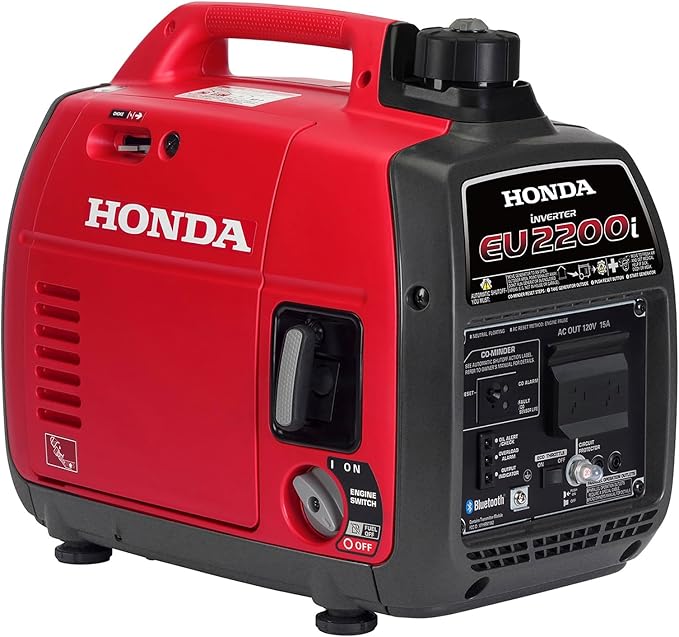
Honda
Honda EU2200i
The gold standard in portable inverter generators. Honda's legendary reliability, whisper-quiet 48 dB operation, and clean sine wave output make it the top choice for camping and home backup.
Watts
1800W
Weight
46.5 lbs
Noise
48dB
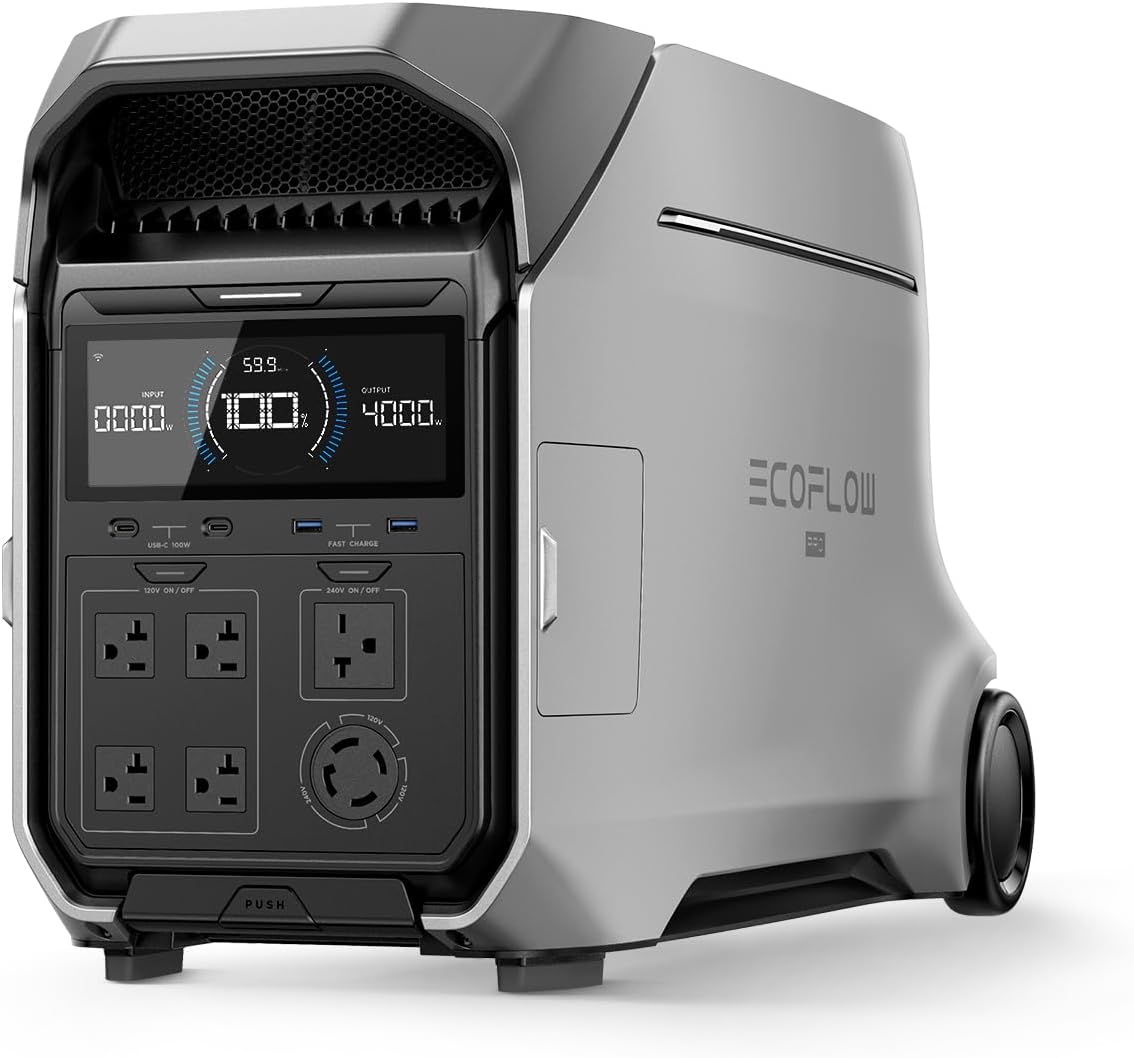
EcoFlow
EcoFlow DELTA Pro 3
The ultimate home backup power station. The DELTA Pro 3 can power your entire home during an outage and expand to a massive 48kWh with additional batteries.
Capacity
4096Wh
Output
4000W
Weight
115 lbs
More Comparisons
Anker SOLIX C1000 Gen 2 vs EcoFlow DELTA 3 Plus: The Ultimate 1kWh Showdown (2026)
Read comparison →
Anker SOLIX C800 Plus vs Bluetti AC70: Best Mid-Range Power Station Under $650?
Read comparison →
Battle Born 100Ah vs LiTime 100Ah: Which RV Battery Is Better?
Read comparison →
Best 1000Wh Power Station 2026: 4-Way Comparison
Read comparison →
Best 2,000Wh Power Station for Home Backup: Jackery vs EcoFlow vs Bluetti
Read comparison →
Best Portable Power Stations for Camping in 2026
Read comparison →
Best Power Station for RV and Van Life: EcoFlow vs Jackery vs Bluetti
Read comparison →
Bluetti AC180 vs EcoFlow Delta 2: Best Mid-Range Power Station?
Read comparison →
Bluetti AC200P vs Elite 200 V2: Is the Upgrade Worth It?
Read comparison →
Bluetti AC70 vs Anker SOLIX C1000: Best Budget Power Station for Camping
Read comparison →
ChargePoint Home Flex vs Wallbox Pulsar Plus: Which EV Charger Is Better?
Read comparison →
EcoFlow 220W Bifacial vs Jackery SolarSaga 200W: Which Solar Panel Is Better?
Read comparison →
EcoFlow Delta 2 vs Delta 2 Max: Which EcoFlow Should You Buy?
Read comparison →
EcoFlow DELTA 3 Plus vs Anker SOLIX C1000: Which 1kWh Station Wins?
Read comparison →
EcoFlow DELTA 3 Plus vs Anker SOLIX C1000: Which 1,000Wh Power Station Is Better?
Read comparison →
EcoFlow DELTA 3 vs DELTA 3 Plus: Is the Plus Worth $130 More?
Read comparison →
EcoFlow DELTA Pro 3 vs Jackery Explorer 2000 Plus: Best Large Power Station?
Read comparison →
EcoFlow RIVER 3 Plus vs Jackery Explorer 600 Plus: Compact Power Compared
Read comparison →
EcoFlow RIVER 3 vs Jackery Explorer 100 Plus: Best Compact Power Station?
Read comparison →
EcoFlow vs Jackery 2026: Which Brand Is Better?
Read comparison →
EcoFlow Wave 2 vs Zero Breeze Mark 2: Best Portable AC for Camping in 2026
Read comparison →
Emporia Energy Level 2 vs Lectron V-BOX 48A: Best Budget EV Charger 2026
Read comparison →
Goal Zero Yeti 1000X vs Jackery Explorer 1000 v2: Premium vs Value
Read comparison →
Jackery Explorer 1000 v2 vs Anker SOLIX C1000: Best Mid-Range Power Station
Read comparison →
Jackery Explorer 2000 v2 vs 2000 Plus: Which Jackery 2kWh Station Should You Buy?
Read comparison →
Jackery SolarSaga 200W vs Bluetti PV200: Which Solar Panel Is Better?
Read comparison →
Jackery vs Bluetti 2026: Which Brand Makes the Better Power Station?
Read comparison →
Renogy 200Ah Smart vs Redodo 200Ah: Which RV Battery Is Better?
Read comparison →
Segway Cube 2000 vs Jackery Explorer 2000 v2: Value vs Refinement
Read comparison →
Tesla Wall Connector vs ChargePoint Home Flex: Which EV Charger Is Better?
Read comparison →
VTOMAN FlashSpeed 1500 vs Bluetti AC180: Mid-Range Showdown
Read comparison →
VTOMAN FlashSpeed 1500 vs EcoFlow DELTA 3 Plus: Value Challenger vs Proven Champion
Read comparison →
Yoshino B2000 SST vs Bluetti Elite 200 V2: Next-Gen 2kWh Battle
Read comparison →