Jackery SolarSaga 200W vs Bluetti PV200: Which Solar Panel Is Better?

TL;DR
Comparing the Jackery SolarSaga 200W and Bluetti PV200 portable solar panels. We evaluate efficiency, weight, connectors, and price to help you pick the right 200W panel.
Specs Comparison
| Spec | Jackery SolarSaga 200W | Bluetti PV200 |
|---|---|---|
| Rating | 4.4 | 4.3 |
| Wattage | 200W ⬤ | 200W ⬤ |
| Weight | 17.6 lbs | 16.1 lbs ✓ |
| Efficiency | 24.3% ✓ | 23.4% |
| Price | $499 | $399 ✓ |
| Check Price on Amazon | Check Price on Amazon |
Jackery SolarSaga 200W vs Bluetti PV200: Which Solar Panel Is Better?
Portable solar panels in the 200W class hit a sweet spot for most off-grid users: enough wattage to meaningfully charge a mid-size power station in a few hours, but still light enough for one person to carry and set up. The Jackery SolarSaga 200W and the Bluetti PV200 are two of the most popular options in this category, and they look similar on paper. But a $100 price difference and a critical connector choice separate them in ways that matter for long-term ownership. Here is how they compare.
Head-to-Head Spec Comparison
| Spec | Jackery SolarSaga 200W | Bluetti PV200 |
|---|---|---|
| Rated Power | 200W | 200W |
| Cell Efficiency | 24.3% | 23.4% |
| Weight | 17.6 lbs | 16.1 lbs |
| Connector Type | Anderson | MC4 |
| Foldable | Yes | Yes |
| Water Resistance | IP65 | IP65 |
| Price (MSRP) | ~$499 | ~$399 |
Efficiency
The Jackery SolarSaga 200W holds a slight edge in cell efficiency at 24.3% compared to the Bluetti PV200’s 23.4%. In real-world terms, this means the Jackery can extract marginally more power from the same amount of sunlight. Under ideal conditions with direct sun, you might see the Jackery produce 5-10W more than the Bluetti at any given moment.
That said, the difference is less than one percentage point. Both panels use monocrystalline silicon cells, and both will produce roughly similar output on a typical sunny day. Factors like panel angle, cloud cover, and temperature will have a far greater impact on your actual harvest than this small efficiency gap. The Jackery’s efficiency advantage is real but unlikely to be the deciding factor for most buyers.
Weight and Portability
The Bluetti PV200 weighs 16.1 lbs, making it 1.5 lbs lighter than the Jackery SolarSaga 200W at 17.6 lbs. Both panels fold into a briefcase-style form factor for transport. A pound and a half may not sound like much, but when you are hauling a panel along with a power station, camp chairs, and coolers, every ounce counts. The Bluetti has a slight edge here for backpackers and car campers who are already packing tight.
Both panels share an IP65 water resistance rating, meaning they can handle light rain and splashes but should not be submerged. Neither panel requires special weather considerations beyond common sense: bring them in during a thunderstorm, and try to keep the connector ends dry.
Connectors: The Deciding Factor
This is where the comparison gets interesting. The Jackery SolarSaga 200W uses an Anderson connector, which is Jackery’s proprietary standard. It plugs directly into Jackery power stations without any adapters, creating a clean, reliable connection. But if you ever want to use this panel with a non-Jackery station, you will need an Anderson-to-MC4 adapter, which adds cost and introduces another potential point of failure.
The Bluetti PV200 uses MC4 connectors, which are the universal standard in the solar industry. MC4 connectors work natively with Bluetti stations, EcoFlow stations, and virtually every other portable power station on the market. They also connect directly to any standard solar charge controller, which means the PV200 can integrate into a DIY RV or cabin solar setup without modification. For a detailed guide on panel compatibility, see our article on solar panel and power station compatibility.
If you already own a Jackery power station and plan to stay in that ecosystem, the Anderson connector is a non-issue. But if you own multiple brands or might switch down the road, the Bluetti’s MC4 connectors provide far more flexibility.
Price
The Bluetti PV200 retails for approximately $399, while the Jackery SolarSaga 200W comes in at $499. That is a $100 difference for panels with nearly identical power output and similar build quality. The Jackery’s marginally higher efficiency does not come close to justifying the premium when both panels are rated at the same 200W output.
For buyers assembling a multi-panel solar array, that $100 gap multiplies quickly. Two Bluetti PV200 panels cost $798 versus $998 for two Jackery SolarSaga 200W panels. The $200 savings on a two-panel setup could go toward a cable organizer, a panel carry bag, or simply stay in your pocket. If you are looking for more options, check out our roundup of the best solar panels for power stations.
Verdict
The Bluetti PV200 is the better buy for most people. It delivers the same rated wattage as the Jackery SolarSaga 200W, weighs less, uses universal MC4 connectors that work with practically any power station, and costs $100 less. The only meaningful trade-off is a sub-one-percent efficiency difference that will rarely matter in practice.
Choose the Bluetti PV200 if you want the best value in a 200W portable solar panel. The universal MC4 connectors future-proof your investment, the lighter weight makes transport easier, and the $399 price leaves room in your budget for other gear. This is the panel to buy unless you have a specific reason not to.
Choose the Jackery SolarSaga 200W if you are already invested in the Jackery ecosystem and want a guaranteed plug-and-play experience with your Jackery power station. The slightly higher cell efficiency is a nice bonus, and the Anderson connector ensures a rock-solid connection with Jackery hardware. Just know that you are paying a premium for ecosystem lock-in.
Frequently Asked Questions
Can the Bluetti PV200 work with non-Bluetti power stations?
Yes, the Bluetti PV200 uses standard MC4 connectors, which are compatible with virtually every portable power station on the market including EcoFlow, Jackery (with adapter), and most other brands.
Does the Jackery SolarSaga 200W work with EcoFlow power stations?
Not directly. The Jackery SolarSaga 200W uses Anderson connectors, which are Jackery's proprietary standard. You would need an Anderson-to-MC4 adapter to connect it to an EcoFlow or other non-Jackery station.
Is the Jackery SolarSaga 200W worth $100 more than the Bluetti PV200?
For most buyers, no. The Jackery's slightly higher 24.3% cell efficiency (vs 23.4%) produces only marginal real-world gains. The Bluetti PV200 delivers the same 200W rated output, weighs less, uses universal MC4 connectors, and costs $100 less.
Read the Full Reviews
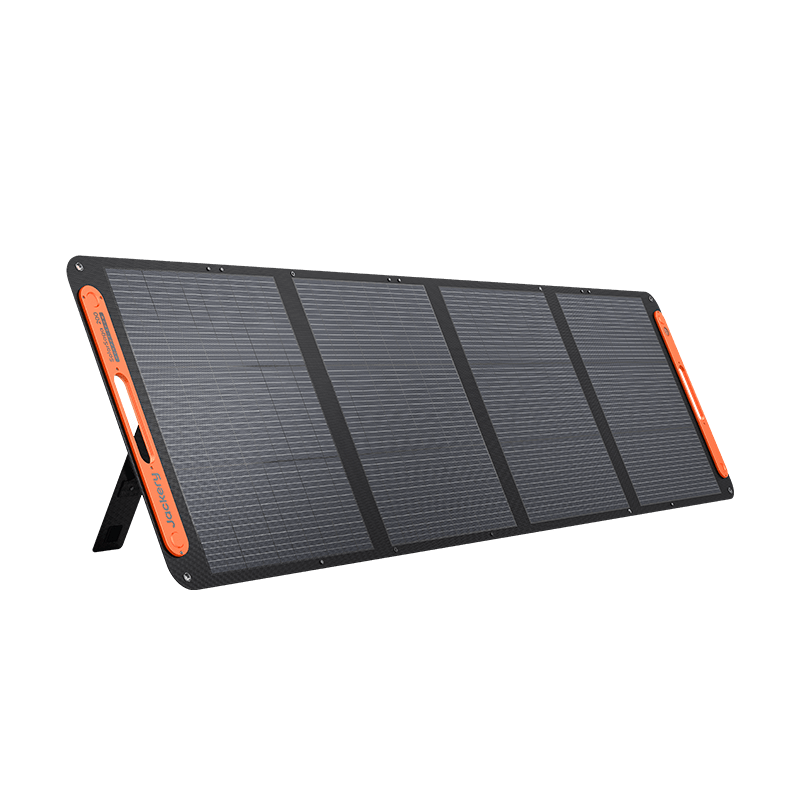
Jackery
Jackery SolarSaga 200W
Jackery's flagship foldable solar panel with the highest cell efficiency in its class at 24.3%. Designed for seamless pairing with Jackery Explorer power stations.
Wattage
200W
Weight
17.6 lbs
Efficiency
24.3%
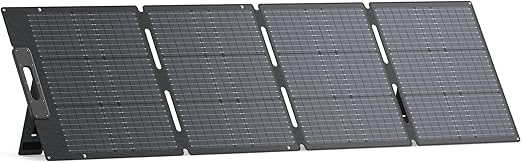
Bluetti
Bluetti PV200
The best value in 200W portable solar panels. Standard MC4 connectors make it compatible with nearly any power station, and at 16 lbs it's the lightest in its class.
Wattage
200W
Weight
16.1 lbs
Efficiency
23.4%
More Comparisons
Anker SOLIX C1000 Gen 2 vs EcoFlow DELTA 3 Plus: The Ultimate 1kWh Showdown (2026)
Read comparison →
Anker SOLIX C800 Plus vs Bluetti AC70: Best Mid-Range Power Station Under $650?
Read comparison →
Battle Born 100Ah vs LiTime 100Ah: Which RV Battery Is Better?
Read comparison →
Best 1000Wh Power Station 2026: 4-Way Comparison
Read comparison →
Best 2,000Wh Power Station for Home Backup: Jackery vs EcoFlow vs Bluetti
Read comparison →
Best Portable Power Stations for Camping in 2026
Read comparison →
Best Power Station for RV and Van Life: EcoFlow vs Jackery vs Bluetti
Read comparison →
Bluetti AC180 vs EcoFlow Delta 2: Best Mid-Range Power Station?
Read comparison →
Bluetti AC200P vs Elite 200 V2: Is the Upgrade Worth It?
Read comparison →
Bluetti AC70 vs Anker SOLIX C1000: Best Budget Power Station for Camping
Read comparison →
ChargePoint Home Flex vs Wallbox Pulsar Plus: Which EV Charger Is Better?
Read comparison →
EcoFlow 220W Bifacial vs Jackery SolarSaga 200W: Which Solar Panel Is Better?
Read comparison →
EcoFlow Delta 2 vs Delta 2 Max: Which EcoFlow Should You Buy?
Read comparison →
EcoFlow DELTA 3 Plus vs Anker SOLIX C1000: Which 1kWh Station Wins?
Read comparison →
EcoFlow DELTA 3 Plus vs Anker SOLIX C1000: Which 1,000Wh Power Station Is Better?
Read comparison →
EcoFlow DELTA 3 vs DELTA 3 Plus: Is the Plus Worth $130 More?
Read comparison →
EcoFlow DELTA Pro 3 vs Jackery Explorer 2000 Plus: Best Large Power Station?
Read comparison →
EcoFlow RIVER 3 Plus vs Jackery Explorer 600 Plus: Compact Power Compared
Read comparison →
EcoFlow RIVER 3 vs Jackery Explorer 100 Plus: Best Compact Power Station?
Read comparison →
EcoFlow vs Jackery 2026: Which Brand Is Better?
Read comparison →
EcoFlow Wave 2 vs Zero Breeze Mark 2: Best Portable AC for Camping in 2026
Read comparison →
Emporia Energy Level 2 vs Lectron V-BOX 48A: Best Budget EV Charger 2026
Read comparison →
Goal Zero Yeti 1000X vs Jackery Explorer 1000 v2: Premium vs Value
Read comparison →
Honda EU2200i vs EcoFlow DELTA Pro 3: Generator vs Power Station
Read comparison →
Jackery Explorer 1000 v2 vs Anker SOLIX C1000: Best Mid-Range Power Station
Read comparison →
Jackery Explorer 2000 v2 vs 2000 Plus: Which Jackery 2kWh Station Should You Buy?
Read comparison →
Jackery vs Bluetti 2026: Which Brand Makes the Better Power Station?
Read comparison →
Renogy 200Ah Smart vs Redodo 200Ah: Which RV Battery Is Better?
Read comparison →
Segway Cube 2000 vs Jackery Explorer 2000 v2: Value vs Refinement
Read comparison →
Tesla Wall Connector vs ChargePoint Home Flex: Which EV Charger Is Better?
Read comparison →
VTOMAN FlashSpeed 1500 vs Bluetti AC180: Mid-Range Showdown
Read comparison →
VTOMAN FlashSpeed 1500 vs EcoFlow DELTA 3 Plus: Value Challenger vs Proven Champion
Read comparison →
Yoshino B2000 SST vs Bluetti Elite 200 V2: Next-Gen 2kWh Battle
Read comparison →