EcoFlow 220W Bifacial vs Jackery SolarSaga 200W: Which Solar Panel Is Better?

TL;DR
Comparing the EcoFlow 220W Bifacial Solar Panel and the Jackery SolarSaga 200W. We break down bifacial design, weatherproofing, weight, and value to find the better portable solar panel.
Specs Comparison
| Spec | EcoFlow 220W Bifacial Solar Panel | Jackery SolarSaga 200W |
|---|---|---|
| Rating | 4.6 | 4.4 |
| Wattage | 220W ✓ | 200W |
| Weight | 20.7 lbs | 17.6 lbs ✓ |
| Efficiency | 23% | 24.3% ✓ |
| Price | $449 ✓ | $499 |
| Check Price on Amazon | Check Price on Amazon |
EcoFlow 220W Bifacial vs Jackery SolarSaga 200W: Which Solar Panel Is Better?
On paper, the EcoFlow 220W Bifacial Solar Panel and the Jackery SolarSaga 200W look like a straightforward 220W-versus-200W matchup. But the EcoFlow brings two features that change the equation entirely: a bifacial cell design that harvests light from both sides and an IP68 waterproof rating that shrugs off serious weather. The Jackery counters with lighter weight and higher cell efficiency. At $449 versus $499, the price even favors the higher-wattage EcoFlow. Here is how these two popular panels compare across every category that matters.
Head-to-Head Spec Comparison
| Spec | EcoFlow 220W Bifacial | Jackery SolarSaga 200W |
|---|---|---|
| Rated Power | 220W (front) | 200W |
| Bifacial Bonus | Up to +25% from rear | N/A |
| Cell Efficiency | 23% | 24.3% |
| Weight | 20.7 lbs | 17.6 lbs |
| Water Resistance | IP68 | IP65 |
| Connector Type | MC4 | Anderson |
| Foldable | Yes | Yes |
| Price (MSRP) | ~$449 | ~$499 |
Power Output and Bifacial Design
The EcoFlow panel is rated at 220W from the front face alone, which already gives it a 20W edge over the Jackery’s 200W rating. But the real story is the bifacial design. The rear of the EcoFlow panel can absorb reflected light from the ground, snow, or light-colored surfaces, potentially adding up to 25% more output. In practice, this means the EcoFlow could produce 250W or more when set up over concrete, sand, or snow, surfaces that bounce significant amounts of light back up toward the panel.
The Jackery SolarSaga 200W has a higher cell efficiency at 24.3% compared to the EcoFlow’s 23%, but this advantage only applies to the front face. When you factor in the EcoFlow’s bifacial capability, the total energy harvest over the course of a day will almost always favor the EcoFlow, especially in environments with reflective ground surfaces. For a deeper look at getting the most from your panel setup, see our guide on solar panel and power station compatibility.
Weatherproofing
The EcoFlow 220W carries an IP68 rating, which means it is fully protected against dust ingress and can withstand prolonged submersion in water. In practical terms, you can leave this panel deployed during a rainstorm without a second thought. The Jackery SolarSaga 200W has an IP65 rating, which protects against low-pressure water jets and dust but is not rated for heavy rain or submersion.
For campers and RV owners who deploy panels for days at a time, the IP68 rating eliminates the hassle of scrambling to pack up panels when weather moves in. It also provides peace of mind in humid environments where morning dew and condensation are constant. The IP65 rating on the Jackery is adequate for occasional light rain, but most owners will want to bring it under cover during anything more than a drizzle.
Weight and Portability
This is the Jackery’s strongest category. At 17.6 lbs, the SolarSaga 200W is more than 3 lbs lighter than the EcoFlow’s 20.7 lbs. That gap is noticeable when you are carrying a panel from your vehicle to a campsite, and it compounds if you are managing multiple panels. Both panels fold into a portable form factor, but the Jackery is simply easier to handle.
If you frequently hike to your setup location or prioritize keeping pack weight to a minimum, the Jackery has a meaningful advantage. For car campers and RV owners who only carry panels a short distance, the weight difference is less of a concern. Consider what your typical use case looks like before weighting this category too heavily.
Connectors
The EcoFlow 220W uses standard MC4 connectors, the universal solar industry standard. These work natively with EcoFlow stations, Bluetti stations, and most other portable power stations, as well as standard solar charge controllers for DIY installations.
The Jackery SolarSaga 200W uses an Anderson connector, which plugs directly into Jackery power stations but requires an adapter for use with other brands. If you own exclusively Jackery products, this is fine. If you want flexibility to use your panel across different ecosystems, the EcoFlow’s MC4 connectors are the more versatile choice.
Price
The EcoFlow 220W Bifacial sells for approximately $449, while the Jackery SolarSaga 200W costs $499. The EcoFlow is not only $50 cheaper but also delivers 20W more rated output plus bifacial capability. On a pure price-per-watt basis, the EcoFlow wins convincingly, and the gap widens further when you account for the bifacial bonus. For more solar panel options, check out our roundup of the best solar panels for power stations.
Verdict
The EcoFlow 220W Bifacial Solar Panel is the better choice for most buyers. It produces more power, captures bonus energy from reflected light, offers superior IP68 weatherproofing, uses universal MC4 connectors, and costs $50 less than the Jackery. That is a rare combination of advantages in a single product.
Choose the EcoFlow 220W Bifacial Solar Panel if you want maximum power output and all-weather durability at a competitive price. The bifacial design is a genuine differentiator, especially if you camp on sand, snow, or concrete. The IP68 rating means you can deploy and forget, even when rain is in the forecast.
Choose the Jackery SolarSaga 200W if weight is your top priority and you are already committed to the Jackery ecosystem. At 17.6 lbs, it is one of the lighter 200W panels available, and the Anderson connector provides a seamless experience with Jackery stations. Just understand that you are paying more for less wattage and giving up the bifacial advantage.
Frequently Asked Questions
What does bifacial mean on the EcoFlow 220W solar panel?
Bifacial means the panel can absorb light from both sides. The rear face captures reflected light from the ground, snow, or light-colored surfaces, potentially adding up to 25% more output beyond the 220W front-face rating.
Can you leave the EcoFlow 220W bifacial panel out in the rain?
Yes, the EcoFlow 220W Bifacial panel has an IP68 waterproof rating, meaning it can withstand heavy rain and even prolonged submersion. The Jackery SolarSaga 200W has a lower IP65 rating and should be brought under cover during heavy rain.
Is the EcoFlow 220W or Jackery SolarSaga 200W a better deal?
The EcoFlow 220W Bifacial is the better deal at $449 versus the Jackery's $499. It delivers 20W more rated output, bifacial bonus energy, superior IP68 weatherproofing, and universal MC4 connectors, all for $50 less.
Read the Full Reviews
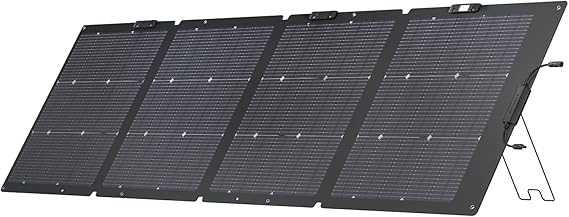
EcoFlow's highest-output portable solar panel with bifacial N-type cells that capture reflected light from both sides. Built-in kickstand and IP68 rating make it ideal for any outdoor setup.
Wattage
220W
Weight
20.7 lbs
Efficiency
23%
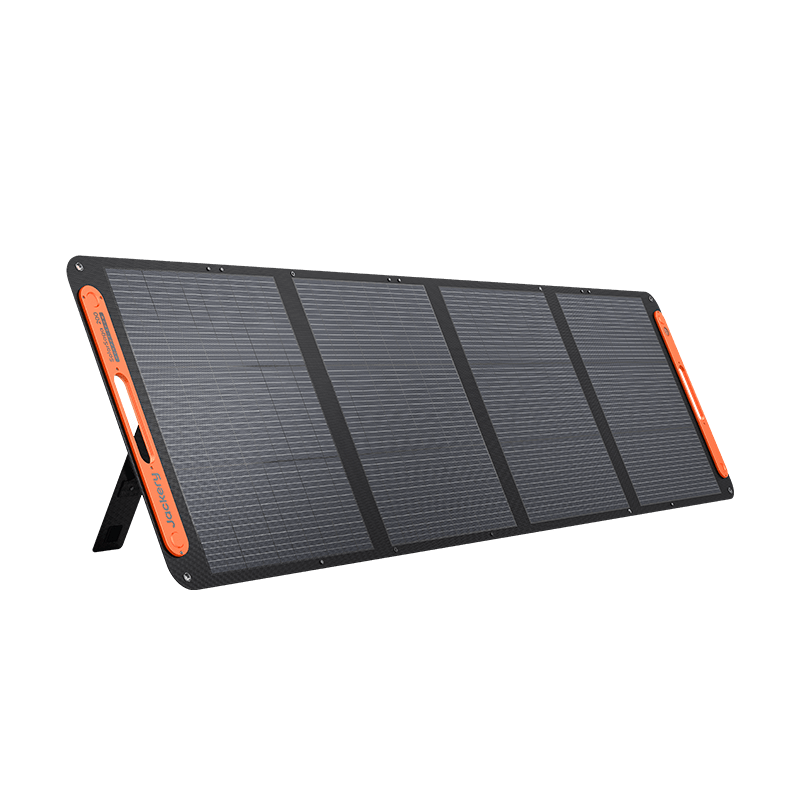
Jackery
Jackery SolarSaga 200W
Jackery's flagship foldable solar panel with the highest cell efficiency in its class at 24.3%. Designed for seamless pairing with Jackery Explorer power stations.
Wattage
200W
Weight
17.6 lbs
Efficiency
24.3%
More Comparisons
Anker SOLIX C1000 Gen 2 vs EcoFlow DELTA 3 Plus: The Ultimate 1kWh Showdown (2026)
Read comparison →
Anker SOLIX C800 Plus vs Bluetti AC70: Best Mid-Range Power Station Under $650?
Read comparison →
Battle Born 100Ah vs LiTime 100Ah: Which RV Battery Is Better?
Read comparison →
Best 1000Wh Power Station 2026: 4-Way Comparison
Read comparison →
Best 2,000Wh Power Station for Home Backup: Jackery vs EcoFlow vs Bluetti
Read comparison →
Best Portable Power Stations for Camping in 2026
Read comparison →
Best Power Station for RV and Van Life: EcoFlow vs Jackery vs Bluetti
Read comparison →
Bluetti AC180 vs EcoFlow Delta 2: Best Mid-Range Power Station?
Read comparison →
Bluetti AC200P vs Elite 200 V2: Is the Upgrade Worth It?
Read comparison →
Bluetti AC70 vs Anker SOLIX C1000: Best Budget Power Station for Camping
Read comparison →
ChargePoint Home Flex vs Wallbox Pulsar Plus: Which EV Charger Is Better?
Read comparison →
EcoFlow Delta 2 vs Delta 2 Max: Which EcoFlow Should You Buy?
Read comparison →
EcoFlow DELTA 3 Plus vs Anker SOLIX C1000: Which 1kWh Station Wins?
Read comparison →
EcoFlow DELTA 3 Plus vs Anker SOLIX C1000: Which 1,000Wh Power Station Is Better?
Read comparison →
EcoFlow DELTA 3 vs DELTA 3 Plus: Is the Plus Worth $130 More?
Read comparison →
EcoFlow DELTA Pro 3 vs Jackery Explorer 2000 Plus: Best Large Power Station?
Read comparison →
EcoFlow RIVER 3 Plus vs Jackery Explorer 600 Plus: Compact Power Compared
Read comparison →
EcoFlow RIVER 3 vs Jackery Explorer 100 Plus: Best Compact Power Station?
Read comparison →
EcoFlow vs Jackery 2026: Which Brand Is Better?
Read comparison →
EcoFlow Wave 2 vs Zero Breeze Mark 2: Best Portable AC for Camping in 2026
Read comparison →
Emporia Energy Level 2 vs Lectron V-BOX 48A: Best Budget EV Charger 2026
Read comparison →
Goal Zero Yeti 1000X vs Jackery Explorer 1000 v2: Premium vs Value
Read comparison →
Honda EU2200i vs EcoFlow DELTA Pro 3: Generator vs Power Station
Read comparison →
Jackery Explorer 1000 v2 vs Anker SOLIX C1000: Best Mid-Range Power Station
Read comparison →
Jackery Explorer 2000 v2 vs 2000 Plus: Which Jackery 2kWh Station Should You Buy?
Read comparison →
Jackery SolarSaga 200W vs Bluetti PV200: Which Solar Panel Is Better?
Read comparison →
Jackery vs Bluetti 2026: Which Brand Makes the Better Power Station?
Read comparison →
Renogy 200Ah Smart vs Redodo 200Ah: Which RV Battery Is Better?
Read comparison →
Segway Cube 2000 vs Jackery Explorer 2000 v2: Value vs Refinement
Read comparison →
Tesla Wall Connector vs ChargePoint Home Flex: Which EV Charger Is Better?
Read comparison →
VTOMAN FlashSpeed 1500 vs Bluetti AC180: Mid-Range Showdown
Read comparison →
VTOMAN FlashSpeed 1500 vs EcoFlow DELTA 3 Plus: Value Challenger vs Proven Champion
Read comparison →
Yoshino B2000 SST vs Bluetti Elite 200 V2: Next-Gen 2kWh Battle
Read comparison →