EcoFlow DELTA Pro 3 vs Jackery Explorer 2000 Plus: Best Large Power Station?

TL;DR
Comparing the EcoFlow DELTA Pro 3 and Jackery Explorer 2000 Plus, two premium large-capacity power stations at $1999. We analyze capacity, output, charging, portability, and value to find the better buy.
Specs Comparison
| Spec | EcoFlow DELTA Pro 3 | Jackery Explorer 2000 Plus |
|---|---|---|
| Rating | 4.8 | 4.7 |
| Capacity | 4096Wh ✓ | 2042Wh |
| Output | 4000W ✓ | 3000W |
| Weight | 115 lbs | 61.5 lbs ✓ |
| Surge | 8000W ✓ | 6000W |
| Price | $1999 ⬤ | $1999 ⬤ |
| Charge Time | 1.5 hrs ✓ | 2 hrs |
| AC Outlets | 6 | 5 |
| USB-C | 2 | 2 |
| USB-A | 4 | 2 |
| Check Price on Amazon | Check Price on Amazon |
EcoFlow DELTA Pro 3 vs Jackery Explorer 2000 Plus: Best Large Power Station?
When you need serious portable power, the conversation inevitably narrows to two heavyweights: the EcoFlow DELTA Pro 3 and the Jackery Explorer 2000 Plus. Both command a $1999 price tag, both target the premium end of the market, and both promise to run demanding appliances and tools that smaller stations simply cannot handle. But these two machines take very different approaches to the same problem. The EcoFlow doubles down on raw capacity and output power, while the Jackery prioritizes portability and simplicity. Understanding those tradeoffs is the key to choosing correctly.
Head-to-Head Spec Comparison
| Spec | EcoFlow DELTA Pro 3 | Jackery Explorer 2000 Plus |
|---|---|---|
| Capacity | 4096Wh | 2042Wh |
| AC Output | 4000W (8000W surge) | 3000W (6000W surge) |
| Battery Type | LFP (LiFePO4) | LFP (LiFePO4) |
| Cycle Life | 4000+ cycles to 80% | 4000+ cycles to 80% |
| AC Charging Speed | 0-100% in ~2.4 hours | 0-100% in ~2 hours |
| Solar Input | 1600W max | 1200W max |
| Expandable | Yes, up to 12kWh | Yes, up to ~12kWh |
| UPS Mode | Yes | No |
| Weight | 67.5 lbs | 61.5 lbs |
| Price (MSRP) | $1,999 | $1,999 |
Capacity
This is where the EcoFlow DELTA Pro 3 makes its strongest case. At 4096Wh, it packs exactly double the capacity of the Jackery Explorer 2000 Plus’s 2042Wh, all at the same $1999 price point. That means twice the runtime for any given appliance: where the Jackery might power a full-size refrigerator for 24 hours, the EcoFlow could theoretically keep it running for two full days.
On a pure cost-per-watt-hour basis, the math is straightforward. The DELTA Pro 3 delivers roughly $0.49 per Wh, while the Explorer 2000 Plus comes in at $0.98 per Wh. That is a remarkable difference at the same sticker price.
Both stations offer expandability into the 12kWh range with additional batteries, so either can grow into a whole-home backup system over time.
Output
The EcoFlow DELTA Pro 3 pushes 4000W of continuous AC power with an 8000W surge rating. That is enough to run a window air conditioner, a microwave, and a few other appliances simultaneously without breaking a sweat. The Jackery Explorer 2000 Plus tops out at 3000W continuous with a 6000W surge. While 3000W is still impressive and will handle most household appliances individually, the DELTA Pro 3’s extra 1000W of headroom provides significantly more flexibility for running multiple high-draw devices at the same time.
The EcoFlow also includes a UPS mode, enabling it to serve as an automatic backup for critical home electronics. When connected between the wall outlet and your equipment, it switches over in milliseconds during a power failure. The Jackery does not offer this feature, which limits its usefulness as a passive home backup solution.
Charging Speed
Despite having double the capacity, the EcoFlow DELTA Pro 3 takes only about 2.4 hours to reach a full charge from a wall outlet. The Jackery Explorer 2000 Plus, with half the capacity, charges fully in approximately 2 hours. Both are fast for their respective sizes, but the EcoFlow’s ability to fill a 4kWh battery in under 2.5 hours is particularly impressive.
For solar charging, the DELTA Pro 3 accepts up to 1600W of solar input, while the Jackery maxes out at 1200W. If you’re building a substantial solar setup for off-grid use or emergency preparedness, the EcoFlow can take advantage of a larger panel array and recharge faster in sunlight.
Portability
This is the one area where the Jackery Explorer 2000 Plus fights back. At 61.5 lbs, it is roughly 6 pounds lighter than the DELTA Pro 3’s 67.5 lbs. More importantly, the Jackery manages to be lighter while still being a very capable station. Neither of these units is what anyone would call “portable” in the backpacking sense. Both require two hands or a cart to move any real distance. But the Jackery’s weight advantage, combined with its slightly more compact form factor, makes it the easier choice when you need to load and unload the station from a vehicle regularly.
If your station will spend most of its life in one spot, such as a garage, home office, or RV, the weight difference is irrelevant. But for frequent camping trips or tailgating, those 6 pounds add up over time.
Price
Both stations carry an identical $1999 MSRP, which makes the value comparison straightforward. The EcoFlow DELTA Pro 3 delivers double the capacity, higher output, UPS mode, and greater solar input at the same price. On a feature-per-dollar basis, the DELTA Pro 3 is the clear winner.
The Jackery Explorer 2000 Plus is not overpriced for what it offers. It is a well-built, reliable station from a trusted brand. But the DELTA Pro 3 simply delivers more for the same money. The Jackery’s value proposition rests primarily on its lighter weight and the Jackery ecosystem, which some users may prefer for its simplicity and customer support.
Verdict
At the same $1999 price, the EcoFlow DELTA Pro 3 offers a compelling advantage in almost every measurable category. But specs alone don’t tell the whole story.
Choose the EcoFlow DELTA Pro 3 if you want maximum capacity and output for your dollar, need UPS functionality, or plan to build a large-scale home backup system. Its 4096Wh battery at this price point is hard to beat, and the 4000W output handles virtually any household appliance.
Choose the Jackery Explorer 2000 Plus if portability is a top priority and you don’t need 4kWh of capacity. The lighter weight makes it easier to transport for camping and outdoor use. It is also a strong pick if you’re already invested in the Jackery ecosystem and value brand consistency across your portable power gear.
Frequently Asked Questions
Which is better, the EcoFlow DELTA Pro 3 or Jackery 2000 Plus?
The EcoFlow DELTA Pro 3 offers better value with double the capacity (4,096Wh vs 2,042Wh), higher output (4,000W vs 3,000W), and UPS mode, all at the same $1,999 price. The Jackery wins only on portability, being 6 lbs lighter.
Why does the EcoFlow DELTA Pro 3 have twice the capacity as the Jackery 2000 Plus at the same price?
EcoFlow has aggressively priced the DELTA Pro 3 to lead on value in the premium segment. At $0.49 per Wh vs Jackery's $0.98 per Wh, the EcoFlow delivers significantly more capacity per dollar, though the Jackery offers a lighter form factor and strong brand ecosystem.
Can the EcoFlow DELTA Pro 3 and Jackery 2000 Plus be used for whole-home backup?
Both can expand to approximately 12kWh with additional batteries, making them viable for whole-home backup. However, only the EcoFlow DELTA Pro 3 offers UPS mode for automatic switchover during outages, making it more practical for always-on home backup use.
Read the Full Reviews
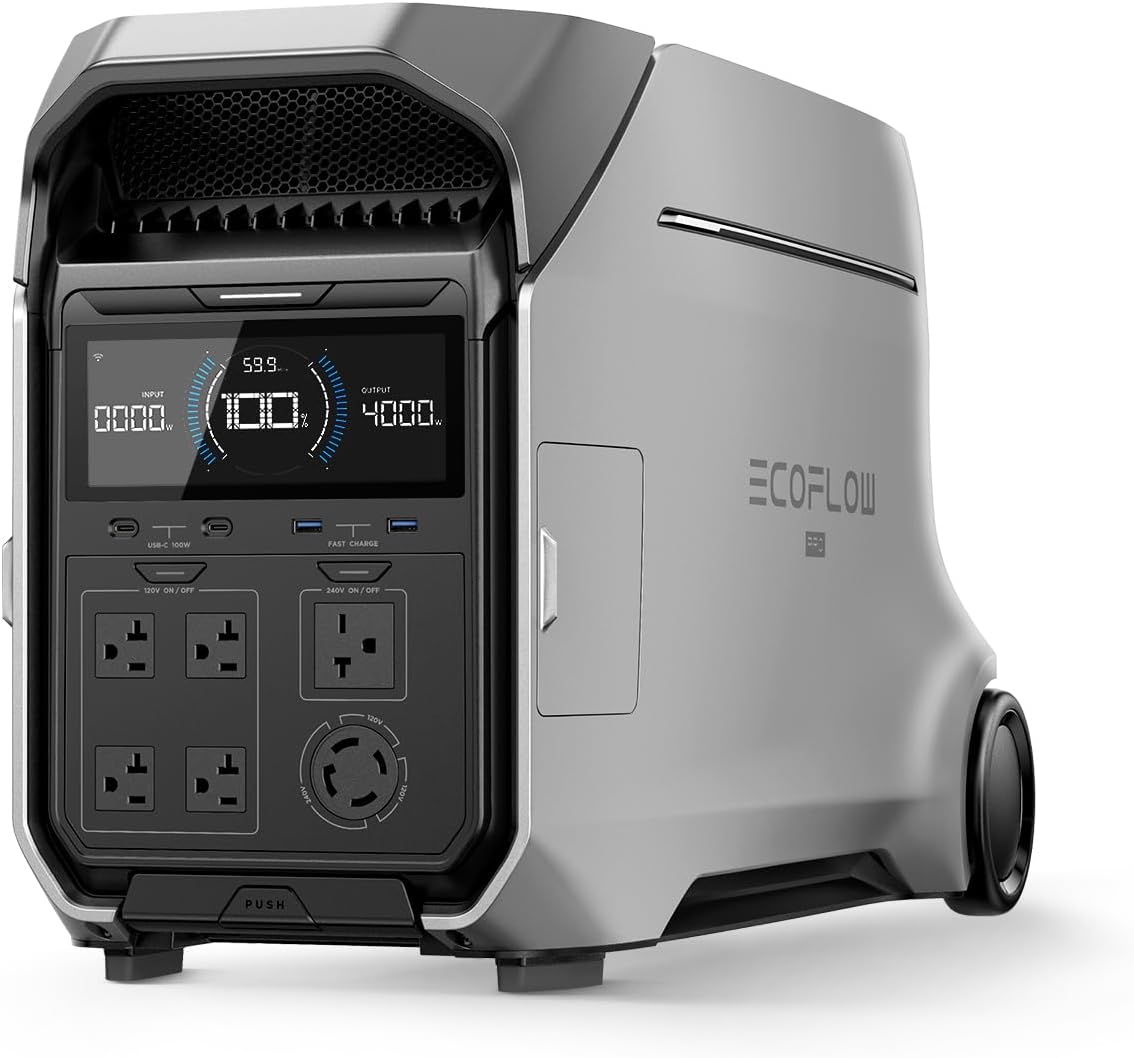
EcoFlow
EcoFlow DELTA Pro 3
The ultimate home backup power station. The DELTA Pro 3 can power your entire home during an outage and expand to a massive 48kWh with additional batteries.
Capacity
4096Wh
Output
4000W
Weight
115 lbs
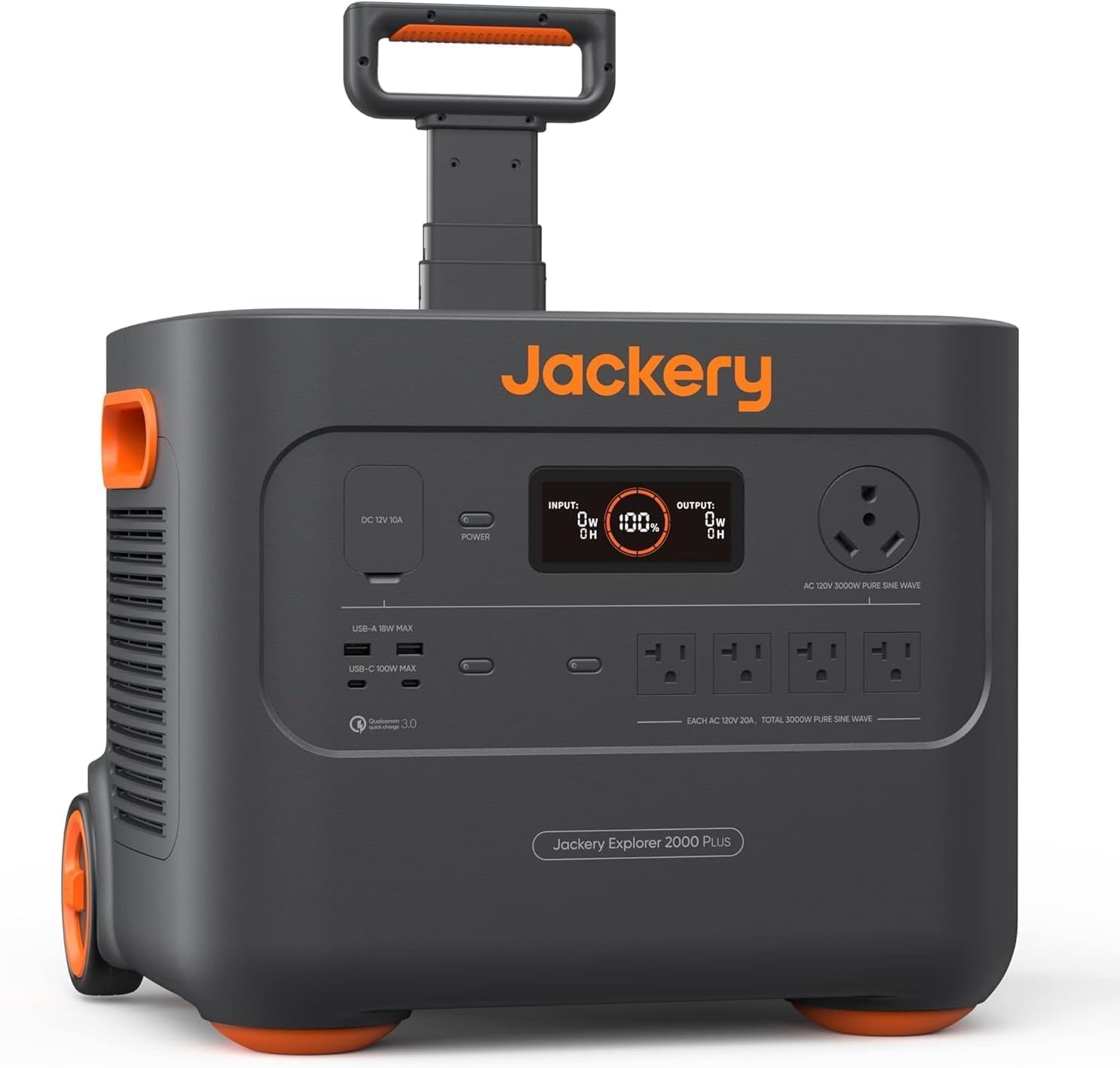
Jackery
Jackery Explorer 2000 Plus
Jackery's flagship expandable power station. With 2kWh base capacity expandable to 24kWh, it's a serious home backup solution that can also handle RV and off-grid living.
Capacity
2042Wh
Output
3000W
Weight
61.5 lbs
More Comparisons
Anker SOLIX C1000 Gen 2 vs EcoFlow DELTA 3 Plus: The Ultimate 1kWh Showdown (2026)
Read comparison →
Anker SOLIX C800 Plus vs Bluetti AC70: Best Mid-Range Power Station Under $650?
Read comparison →
Battle Born 100Ah vs LiTime 100Ah: Which RV Battery Is Better?
Read comparison →
Best 1000Wh Power Station 2026: 4-Way Comparison
Read comparison →
Best 2,000Wh Power Station for Home Backup: Jackery vs EcoFlow vs Bluetti
Read comparison →
Best Portable Power Stations for Camping in 2026
Read comparison →
Best Power Station for RV and Van Life: EcoFlow vs Jackery vs Bluetti
Read comparison →
Bluetti AC180 vs EcoFlow Delta 2: Best Mid-Range Power Station?
Read comparison →
Bluetti AC200P vs Elite 200 V2: Is the Upgrade Worth It?
Read comparison →
Bluetti AC70 vs Anker SOLIX C1000: Best Budget Power Station for Camping
Read comparison →
ChargePoint Home Flex vs Wallbox Pulsar Plus: Which EV Charger Is Better?
Read comparison →
EcoFlow 220W Bifacial vs Jackery SolarSaga 200W: Which Solar Panel Is Better?
Read comparison →
EcoFlow Delta 2 vs Delta 2 Max: Which EcoFlow Should You Buy?
Read comparison →
EcoFlow DELTA 3 Plus vs Anker SOLIX C1000: Which 1kWh Station Wins?
Read comparison →
EcoFlow DELTA 3 Plus vs Anker SOLIX C1000: Which 1,000Wh Power Station Is Better?
Read comparison →
EcoFlow DELTA 3 vs DELTA 3 Plus: Is the Plus Worth $130 More?
Read comparison →
EcoFlow RIVER 3 Plus vs Jackery Explorer 600 Plus: Compact Power Compared
Read comparison →
EcoFlow RIVER 3 vs Jackery Explorer 100 Plus: Best Compact Power Station?
Read comparison →
EcoFlow vs Jackery 2026: Which Brand Is Better?
Read comparison →
EcoFlow Wave 2 vs Zero Breeze Mark 2: Best Portable AC for Camping in 2026
Read comparison →
Emporia Energy Level 2 vs Lectron V-BOX 48A: Best Budget EV Charger 2026
Read comparison →
Goal Zero Yeti 1000X vs Jackery Explorer 1000 v2: Premium vs Value
Read comparison →
Honda EU2200i vs EcoFlow DELTA Pro 3: Generator vs Power Station
Read comparison →
Jackery Explorer 1000 v2 vs Anker SOLIX C1000: Best Mid-Range Power Station
Read comparison →
Jackery Explorer 2000 v2 vs 2000 Plus: Which Jackery 2kWh Station Should You Buy?
Read comparison →
Jackery SolarSaga 200W vs Bluetti PV200: Which Solar Panel Is Better?
Read comparison →
Jackery vs Bluetti 2026: Which Brand Makes the Better Power Station?
Read comparison →
Renogy 200Ah Smart vs Redodo 200Ah: Which RV Battery Is Better?
Read comparison →
Segway Cube 2000 vs Jackery Explorer 2000 v2: Value vs Refinement
Read comparison →
Tesla Wall Connector vs ChargePoint Home Flex: Which EV Charger Is Better?
Read comparison →
VTOMAN FlashSpeed 1500 vs Bluetti AC180: Mid-Range Showdown
Read comparison →
VTOMAN FlashSpeed 1500 vs EcoFlow DELTA 3 Plus: Value Challenger vs Proven Champion
Read comparison →
Yoshino B2000 SST vs Bluetti Elite 200 V2: Next-Gen 2kWh Battle
Read comparison →