ChargePoint Home Flex vs Wallbox Pulsar Plus: Which EV Charger Is Better?

TL;DR
Comparing the ChargePoint Home Flex and Wallbox Pulsar Plus 48A Level 2 EV chargers. We evaluate amperage, installation options, smart features, and design to find the best home charger.
Specs Comparison
| Spec | ChargePoint Home Flex | Wallbox Pulsar Plus 48A |
|---|---|---|
| Rating | 4.6 | 4.5 |
| Max Power | 12kW ✓ | 11.5kW |
| Amps | 50A ✓ | 48A |
| Cord | 23ft | 25ft ✓ |
| Price | $700 | $649 ✓ |
| Check Price on Amazon | Check Price on Amazon |
ChargePoint Home Flex vs Wallbox Pulsar Plus: Which EV Charger Is Better?
If you are shopping for a Level 2 home EV charger, the ChargePoint Home Flex and the Wallbox Pulsar Plus 48A are two of the most recommended options. Both deliver fast charging speeds, both have polished companion apps, and both come from companies with deep roots in the EV charging industry. But they take different approaches to installation flexibility, multi-car households, and physical design. The right choice depends on how you plan to install your charger and whether you charge more than one vehicle at home. Here is the full breakdown.
Head-to-Head Spec Comparison
| Spec | ChargePoint Home Flex | Wallbox Pulsar Plus 48A |
|---|---|---|
| Max Amperage | 50A | 48A |
| Max Charging Power | 12kW (240V) | 11.5kW (240V) |
| Cable Length | 23 ft | 25 ft |
| Installation | NEMA 14-50 plug-in or hardwired | Hardwired only |
| Amperage Adjustable | Yes (16A-50A) | No |
| Power Sharing | No | Yes |
| Smart Features | App, scheduling, energy tracking | App, scheduling, energy tracking |
| Design | Rectangular, ~19 lbs | Compact round, ~12 lbs |
| Price (MSRP) | ~$700 | ~$649 |
Charging Speed
The ChargePoint Home Flex delivers up to 50A at 240V for a maximum of 12kW of charging power. The Wallbox Pulsar Plus 48A provides 48A at 240V for approximately 11.5kW. In practice, this difference is negligible. Most EVs cannot even take full advantage of the difference between 48A and 50A charging, and both units will add roughly 30-40 miles of range per hour depending on your vehicle’s onboard charger. You will not notice a meaningful charging speed difference between these two in daily use.
Where the ChargePoint distinguishes itself is adjustable amperage. You can set the Home Flex anywhere from 16A to 50A through the app, which is useful if your home’s electrical panel has limited capacity or if you want to reduce charging power during peak electricity rate hours. The Wallbox does not offer this level of amperage adjustment.
Installation Flexibility
This is one of the biggest differentiators. The ChargePoint Home Flex can be installed either as a plug-in unit using a standard NEMA 14-50 outlet or hardwired directly to your electrical panel. The plug-in option is a significant advantage for renters, for people who might move, or for anyone who wants the ability to unplug and take their charger with them. It also makes installation simpler and often cheaper since an electrician only needs to install an outlet rather than run conduit and hardwire the unit.
The Wallbox Pulsar Plus 48A requires hardwired installation only. This means a permanent connection to your electrical panel, which typically requires a licensed electrician and potentially a permit. Once installed, it is not easily moved. For homeowners who plan to keep their charger in one location for years, hardwiring is perfectly fine. But for anyone who values portability or flexibility, the ChargePoint’s plug-in option is a clear win.
Multi-Car Households and Power Sharing
The Wallbox Pulsar Plus fights back with power sharing, a feature the ChargePoint lacks entirely. If you install two Wallbox Pulsar Plus units in your garage, they can dynamically share the available electrical capacity between both chargers. This means you can charge two EVs overnight from a single circuit without overloading your panel, and the system will automatically balance the power distribution based on each vehicle’s needs.
For households with two EVs, this is a compelling advantage. Without power sharing, charging two vehicles simultaneously typically requires a panel upgrade or two separate high-amperage circuits, both of which add significant cost. The Wallbox’s power sharing can eliminate that expense entirely. If you are considering a multi-EV setup, see our guide to the best Level 2 EV chargers for a broader look at your options.
Design and Build
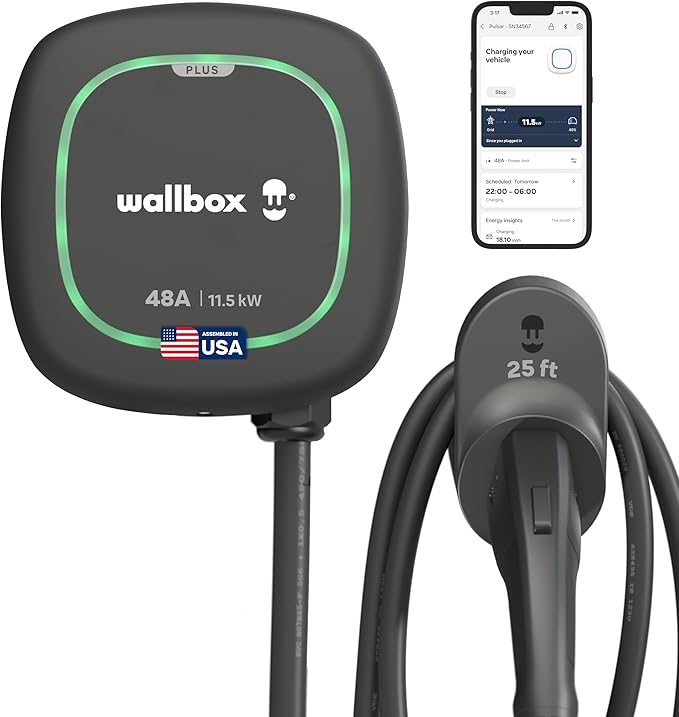
The Wallbox Pulsar Plus is notably more compact and lighter than the ChargePoint Home Flex. At roughly 12 lbs with a sleek round design, the Pulsar Plus looks like it belongs in a modern garage. The ChargePoint is a larger rectangular unit at around 19 lbs. Both are built to withstand outdoor installation, but the Wallbox wins on aesthetics for buyers who care about how their charger looks on the wall.
The Wallbox also has a slightly longer cable at 25 ft versus the ChargePoint’s 23 ft, which gives you a bit more reach if your parking position varies or if your charging port is on the far side of the vehicle.
Smart Features and App
Both chargers offer polished smartphone apps with scheduling, energy usage tracking, and charging session history. ChargePoint’s app benefits from the company’s massive public charging network; if you use ChargePoint public stations, having your home and public charging data in one app is convenient. Wallbox’s app is clean and intuitive, with the added power sharing management for multi-unit setups. Neither app is significantly better than the other for basic home charging management.
Price
The Wallbox Pulsar Plus 48A retails for approximately $649, while the ChargePoint Home Flex costs around $700. The $51 difference is modest in the context of a home EV charging installation, where electrician costs often dwarf the charger price itself. Both units may qualify for federal or local EV charger tax credits, so check your eligibility before buying. For Tesla owners specifically, it is also worth considering the Tesla Wall Connector vs ChargePoint Home Flex matchup.
Verdict
Both the ChargePoint Home Flex and Wallbox Pulsar Plus 48A are excellent Level 2 chargers that will serve most EV owners well. The right pick depends on your specific situation.
Choose the ChargePoint Home Flex if you want maximum installation flexibility. The plug-in option makes it ideal for renters, people who may move, or anyone who wants a simpler installation. Adjustable amperage is a practical bonus for homes with limited electrical capacity. It is the safer, more versatile choice.
Choose the Wallbox Pulsar Plus 48A if you have two EVs or plan to add a second vehicle soon. Power sharing between two units is a feature no other major charger in this price range offers. The more compact design and lower price are nice bonuses. For single-car households committed to a permanent installation, it is also a solid pick on design and value alone.
Frequently Asked Questions
Can the Wallbox Pulsar Plus be plugged into an outlet or does it require hardwiring?
The Wallbox Pulsar Plus 48A requires hardwired installation only, meaning it must be permanently connected to your electrical panel by a licensed electrician. If you want a plug-in option, the ChargePoint Home Flex supports both NEMA 14-50 plug-in and hardwired installation.
Which is better for charging two EVs at home, ChargePoint Home Flex or Wallbox Pulsar Plus?
The Wallbox Pulsar Plus is better for two-EV households because it supports power sharing between two units on a single circuit. The ChargePoint Home Flex does not offer power sharing, so charging two cars simultaneously would require separate high-amperage circuits or a panel upgrade.
Is there a noticeable charging speed difference between the ChargePoint Home Flex and Wallbox Pulsar Plus?
No. The ChargePoint delivers up to 50A (12kW) and the Wallbox delivers 48A (11.5kW), but this difference is negligible in practice. Both add roughly 30-40 miles of range per hour, and most EVs cannot take advantage of the small gap between them.
Read the Full Reviews

ChargePoint
ChargePoint Home Flex
The most versatile Level 2 home EV charger. Adjustable 16-50A output, a 23-foot cable, and the best companion app in the business make it the top pick for any EV owner.
Max Power
12kW
Amps
50A
Cord
23ft
Wallbox
Wallbox Pulsar Plus 48A
A beautifully designed smart EV charger with one of the smallest footprints in its class. The myWallbox app, power sharing, and 48A output make it a top pick for connected homes.
Max Power
11.5kW
Amps
48A
Cord
25ft
More Comparisons
Anker SOLIX C1000 Gen 2 vs EcoFlow DELTA 3 Plus: The Ultimate 1kWh Showdown (2026)
Read comparison →
Anker SOLIX C800 Plus vs Bluetti AC70: Best Mid-Range Power Station Under $650?
Read comparison →
Battle Born 100Ah vs LiTime 100Ah: Which RV Battery Is Better?
Read comparison →
Best 1000Wh Power Station 2026: 4-Way Comparison
Read comparison →
Best 2,000Wh Power Station for Home Backup: Jackery vs EcoFlow vs Bluetti
Read comparison →
Best Portable Power Stations for Camping in 2026
Read comparison →
Best Power Station for RV and Van Life: EcoFlow vs Jackery vs Bluetti
Read comparison →
Bluetti AC180 vs EcoFlow Delta 2: Best Mid-Range Power Station?
Read comparison →
Bluetti AC200P vs Elite 200 V2: Is the Upgrade Worth It?
Read comparison →
Bluetti AC70 vs Anker SOLIX C1000: Best Budget Power Station for Camping
Read comparison →
EcoFlow 220W Bifacial vs Jackery SolarSaga 200W: Which Solar Panel Is Better?
Read comparison →
EcoFlow Delta 2 vs Delta 2 Max: Which EcoFlow Should You Buy?
Read comparison →
EcoFlow DELTA 3 Plus vs Anker SOLIX C1000: Which 1kWh Station Wins?
Read comparison →
EcoFlow DELTA 3 Plus vs Anker SOLIX C1000: Which 1,000Wh Power Station Is Better?
Read comparison →
EcoFlow DELTA 3 vs DELTA 3 Plus: Is the Plus Worth $130 More?
Read comparison →
EcoFlow DELTA Pro 3 vs Jackery Explorer 2000 Plus: Best Large Power Station?
Read comparison →
EcoFlow RIVER 3 Plus vs Jackery Explorer 600 Plus: Compact Power Compared
Read comparison →
EcoFlow RIVER 3 vs Jackery Explorer 100 Plus: Best Compact Power Station?
Read comparison →
EcoFlow vs Jackery 2026: Which Brand Is Better?
Read comparison →
EcoFlow Wave 2 vs Zero Breeze Mark 2: Best Portable AC for Camping in 2026
Read comparison →
Emporia Energy Level 2 vs Lectron V-BOX 48A: Best Budget EV Charger 2026
Read comparison →
Goal Zero Yeti 1000X vs Jackery Explorer 1000 v2: Premium vs Value
Read comparison →
Honda EU2200i vs EcoFlow DELTA Pro 3: Generator vs Power Station
Read comparison →
Jackery Explorer 1000 v2 vs Anker SOLIX C1000: Best Mid-Range Power Station
Read comparison →
Jackery Explorer 2000 v2 vs 2000 Plus: Which Jackery 2kWh Station Should You Buy?
Read comparison →
Jackery SolarSaga 200W vs Bluetti PV200: Which Solar Panel Is Better?
Read comparison →
Jackery vs Bluetti 2026: Which Brand Makes the Better Power Station?
Read comparison →
Renogy 200Ah Smart vs Redodo 200Ah: Which RV Battery Is Better?
Read comparison →
Segway Cube 2000 vs Jackery Explorer 2000 v2: Value vs Refinement
Read comparison →
Tesla Wall Connector vs ChargePoint Home Flex: Which EV Charger Is Better?
Read comparison →
VTOMAN FlashSpeed 1500 vs Bluetti AC180: Mid-Range Showdown
Read comparison →
VTOMAN FlashSpeed 1500 vs EcoFlow DELTA 3 Plus: Value Challenger vs Proven Champion
Read comparison →
Yoshino B2000 SST vs Bluetti Elite 200 V2: Next-Gen 2kWh Battle
Read comparison →